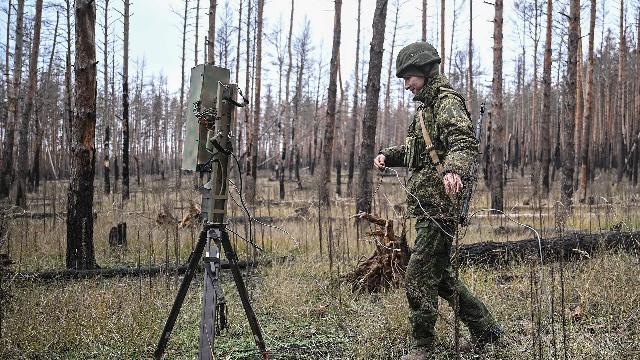
New mobile electronic warfare groups will help secure entire areas from enemy UAVs.
Russian troops have created anti—drone "fire brigades" - mobile electronic warfare groups. Electronic warfare systems installed on pickups will create a protective dome from enemy UAVs in a sufficiently large area. Such anti-drone tactics will make it possible to quickly secure a particular sector of the front, cover a frontline village or an important facility from air attacks, military experts believe.
"Electronic workers" on pickups
Mobile electronic warfare groups have been formed in the troops. Their main task is to detect the enemy's FPV drones and land them before striking. Special detectors find UAVs, and electronic warfare equipment allows you to create a jamming dome over a fairly large area, sources in the Russian Defense Ministry told Izvestia.
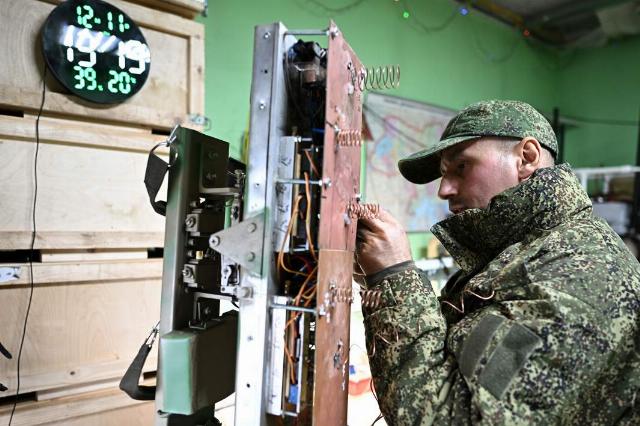
Photo: RIA Novosti/Sergey Bobylev
Image source: iz.ru
EW mobile groups travel in off-road pickups. A portable electronic warfare system, a gasoline generator for supplying electricity to the equipment, ammunition and spare fuel cans are located in the back of the car, the interlocutors of the publication explained.
This group includes several people. If necessary, they move by car to the area where a UAV attack is expected, deploy an electronic warfare system and begin monitoring the sky using special drone detectors.
The electronic warfare system is activated when enemy drones are detected. During operation, it suppresses the communication channel of the drone, after which it loses direction and falls down, the interlocutors of the publication noted.
Mobile groups cover not only troops, but also settlements in the immediate rear. They try to be proactive: they determine the likely directions of strikes and advance to duty in advance. This helps them to repel the enemy's attacks before his drones break deep into our positions, the interlocutors of the publication explained.
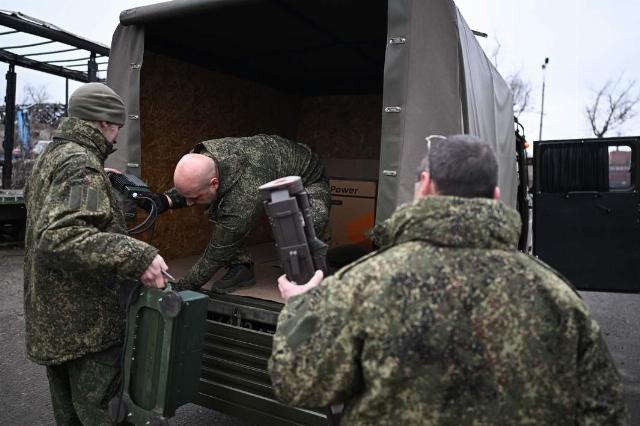
Photo: RIA Novosti/Sergey Bobylev
Image source: iz.ru
"EW mobile groups cannot be used for long periods of time," Sergei Kurapov, an instructor in training UAV operators, told Izvestia. — Their main trump card is surprise. They must "lay" enemy drones on the ground in the right area and quickly leave it. Otherwise, they will be noticed by electronic intelligence and the enemy will strike back.
The new groups will be effective against drones that are controlled by radio, and under certain conditions, also against Starlink devices, the expert noted.
For this reason, the new units must cover mobile firing groups (MOG) with anti-aircraft small arms. They will allow to repel the attack of drones, which are controlled by fiber-optic cable and are not affected by electronic warfare.
Without electronic warfare systems, it is impossible to effectively conduct military operations or protect important facilities, military expert Yuri Knutov told Izvestia.
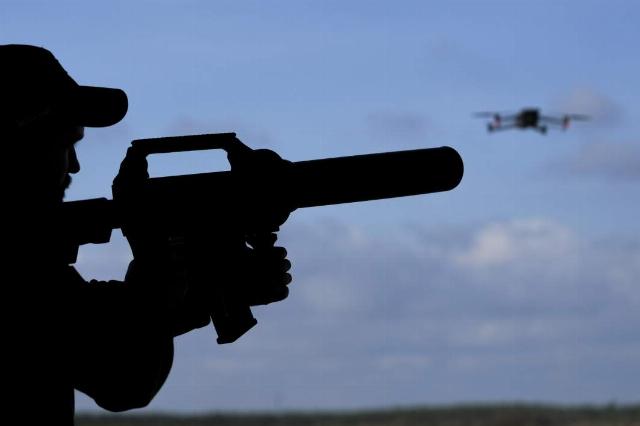
Photo: IZVESTIA/Dmitry Korotaev
Image source: iz.ru
"We need to deal with drones comprehensively," he explained. — Anti-drone defense should be based on the use of electronic warfare, small arms, interceptor drones, and anti-aircraft artillery. When fighting aircraft-type vehicles, it is necessary to use short-range air defense systems.
Moreover, electronic warfare systems play one of the main roles, the expert noted. If the frequencies at which the UAVs of the Armed Forces of Ukraine operate are precisely determined, then our complexes can land all radio-controlled Ukrainian UAVs in the desired area.
The appearance of such groups is dictated by time, the head of the Department of Political Analysis and Socio-Psychological Processes at the Russian University of Economics told Izvestia. Plekhanova, Colonel Andrey Koshkin.
"Depending on the electronic warfare systems, they will be effective not only at the front or in the frontline zone, but also in the deep rear when protecting industrial facilities, such as oil refineries," he said.
Deadly rivalry between electronic warfare and drones
A race of electronic warfare systems against UAVs is currently unfolding in the zone of a special military operation, both tactical and long—range aircraft types, explained Yuri Knutov.
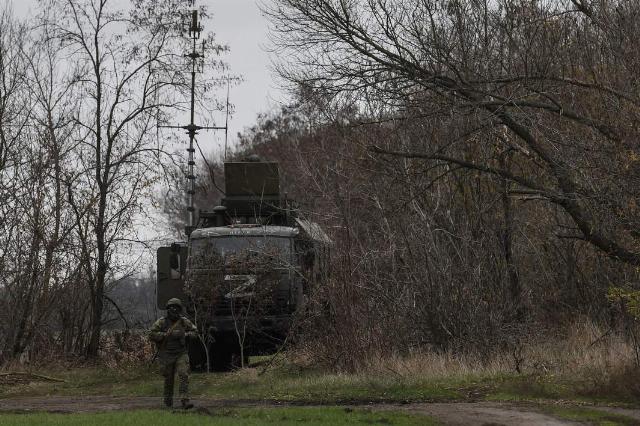
Photo: RIA Novosti/Konstantin Mikhalchevsky
Image source: iz.ru
"Enemy drones change the frequencies they operate at about once every three months and make other improvements," he noted. — Our fighters identify them and reconfigure electronic warfare systems, identify other weaknesses.
Moreover, the Russian army has experience in building strong zonal defense against drones, meaning the Dome of Donbass system, Yuri Knutov noted.
Among other things, it is based on a multi-frequency system for suppressing enemy radio control and navigation channels, which makes it possible to effectively influence the receiving devices of enemy drones.
— If there was no such system, there would be dozens of times more problems, — said Yuri Knutov.
Arrows on the UAV
The methods of dealing with enemy UAVs are constantly being improved. On the territory of the LPR, DPR, Kherson and Zaporizhia regions, new mobile firing groups were formed under the military commandant's offices, which are responsible for detecting and destroying enemy unmanned aerial vehicles (UAVs), Izvestia wrote.
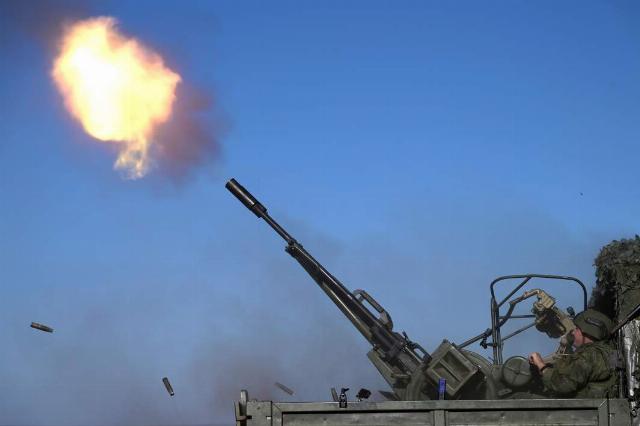
Photo: RIA Novosti/Evgeny Biyatov
Image source: iz.ru
These groups are armed with anti-aircraft guns, heavy machine guns and smoothbore rifles. All heavy weapons are installed on mobile platforms, which allows you to quickly respond to threats.
The units are part of the military commandant's offices and are responsible not only for the protection of military infrastructure, but also for the security of settlements where civilians remain.
Fighters of such groups undergo compulsory training at training grounds, where they gain skills in the use of weapons and anti-drone equipment. An important aspect of training is psychological stability. "Drone hunters" must be prepared for attacks and not panic. The training program is constantly updated, taking into account combat experience and changes in enemy tactics.
Bogdan Stepovoy
