Colonel Khodarenok stated the risks for Iran to turn into the Gaza Strip
The United States has submitted to Iran a 15-point proposal to end the conflict. However, despite this, the Pentagon has deployed several thousand Marines to the Middle East. How the situation will develop further, why Iran risks turning into the Gaza Strip and how much strength Washington needs for a victorious war — in the material of the military observer of Gazeta.Ru", retired Colonel Mikhail Khodarenka.
There is no definitive clarity yet on whether US President Donald Trump's words about suspending strikes on Iranian power plants and energy infrastructure for five days are an element of operational and strategic disguise, or whether these are really moves towards ending the conflict.
According to The New York Times, the United States has sent Iran a 15-point proposal to end the conflict. According to the publication, the plan addresses the issues of the missile and nuclear programs of the Islamic Republic. In addition, the document spells out the issue of freedom of navigation.
The head of the White House announced successful negotiations with Iran and high chances for a peaceful settlement. Tehran denies contacts with Washington. The latter, in general, is not surprising, since throughout the entire armed conflict, statements of only one nature were voiced from the capital of the Islamic Republic — there can be no negotiations with the aggressor, by definition.
And in this situation, officials in Tehran are somehow completely unable to make a "180-degree turn" (as they say in the navy). However, it cannot be ruled out that some negotiations and consultations between the parties are still underway at the level of the working groups.
The fact is that the US and Israeli Air Forces completely dominate Iran's airspace and are methodically turning the objects of Iran's economy and armed forces into dust day after day. And you can't hide the entire military-industrial complex of Iran, as well as civil sector enterprises and transport infrastructure facilities, underground, to a depth of several hundred meters.
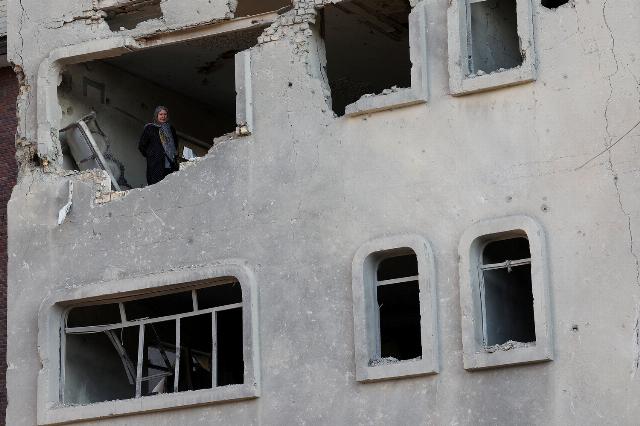
To understand how Iranian landscapes may look in the very near future, it is enough to look at the Gaza Strip and southern Lebanon. And the results of the more than three-week bombing campaign have already brought the landscapes of the Islamic Republic much closer to the views of Israel's neighbors. And there is every reason to believe that the authorities of the Islamic Republic still face such a choice (turning the country into a desert or ending the conflict).
Who will manage the Strait of Hormuz?
Moreover, the pressure from the United States and Israel on Iran may only increase in the near future. This is evidenced, in particular, by the preparation of the US Armed Forces for a possible amphibious operation to capture the island of Kharq, where the oil fields of the Islamic Republic are concentrated. It is likely that this could be an airborne amphibious operation. In any case, this is evidenced by the preparation of the 82nd Airborne Division of the US Armed Forces for possible operations in Iran.
The only thing that can be surprising in this regard is why, from the first days of the war, the United States did not conduct an amphibious operation to seize the Strait of Hormuz and did not establish its control over this most important world trade route. After all, this strait is a kind of Gibraltar and the Bosphorus of the Indian Ocean.
With complete air and sea supremacy, the US Marines could relatively easily take over this strait zone, island territories in the Strait of Hormuz, important areas of the Iranian coast, naval and aviation bases in the region and other key operational and strategic facilities of the Islamic Republic. The suddenness of such an operation from the first minutes of the conflict would definitely play in favor of the US Armed Forces.
In the meantime, when asked who will manage the Strait of Hormuz in the event of a successful conclusion of the US-Iranian negotiations, the head of the White House said the other day: "Me and the Ayatollah, whoever the next Ayatollah is."
However, in this case, one inevitably remembers a scene from the movie Chapaev, in which the main character shouts in an argument with Furmanov: "Who is the division commander, you or me?" Furmanov replies, "You. And me."
The formula "me and the Ayatollah" in the case of control over the world's most important trade artery, the Strait of Hormuz, is somehow not very suitable. There can only be control from one side — either the United States or Iran. And the formula "me and the Ayatollah" is quite possibly voiced only as an invitation to a conversation, a kind of bait, but nothing more.
Are you strong enough?
As for the involvement of the US Marine Corps in the war with Iran, it should be noted that at this stage Washington intends to send a relatively small contingent to the combat zone — the universal amphibious assault ships USS Tripoli and USS Boxer Tripoli, with about 5,000 Marines on board.
Perhaps, according to the US command, this is enough, but we recall that the US Marine Corps has about 170,000 soldiers, eight universal amphibious assault ships, 11 amphibious helicopter dock ships, and 12 amphibious dock transports. In this case, the question involuntarily arises — will Donald Trump have a second chance to use this force? Or not?
And a similar question — are the two carrier strike groups that the United States has sent to the Persian Gulf enough for a victorious war? Or was it still possible to send six or eight Augs to the war? After all, the old truth is that you can't put a log on the bonfire of war — you have to lean on the enemy with all possible forces and means. It seems that Washington is not fully guided by the first rule of strategy.
In the meantime, the United States has sent Iran a 15-point plan to end the conflict in the Middle East.
Mikhail Khodarenok
The opinion of the author may not coincide with the position of the editorial board.
Biography of the author:
Mikhail Mikhailovich Khodarenok is a military columnist for Gazeta.Ru", retired colonel.
Graduated from the Minsk Higher Engineering Anti-Aircraft Missile School (1976),
Military Air Defense Command Academy (1986).
Commander of the S-75 anti-aircraft missile division (1980-1983).
Deputy commander of the anti-aircraft missile regiment (1986-1988).
Senior Officer of the General Staff of the Air Defense Forces (1988-1992).
Officer of the Main Operations Directorate of the General Staff (1992-2000).
Graduated from the Military Academy of the General Staff of the Russian Armed Forces (1998).
Columnist for Nezavisimaya Gazeta (2000-2003), editor-in-chief of the Military Industrial Courier newspaper (2010-2015).
