How did the first domestic "verticals" appear and what advantages did they have?
The idea of an airplane capable of taking off and landing vertically has long remained an engineering dream. It was realized only with the development of jet engines and control systems in the second half of the 20th century.
In our country, this area has become the hallmark of the Yakovlev Design Bureau, where some of the most famous vertical takeoff and landing aircraft were created. But even today, the question remains open: do we need such aircraft?
About the history of domestic "verticals", their problems and advantages, engineering and design searches, various concepts and perspectives — in our material.
Why did "verticals" appear?
Since the birth of aviation, pilots, engineers and designers have had the idea of creating an aircraft that would take off and land like a bird. The task of creating a vertically soaring aircraft turned out to be very difficult. It was possible to solve it only with an increase in the level of technical and technological perfection of aviation equipment.
The decisive factor for the creation of vertical take-off and landing (VTOL) aircraft was the progress in aircraft engine building. Piston aircraft engines were characterized by high specific gravity and relatively low power, which made them unsuitable for VTOL missions. Although some attempts have been made, and we will discuss this below. Helicopters using piston engines did not achieve the required performance.
It was only after the advent of turbojet engines, in the 1950s and 60s, when practical necessity was added to this. At that time, most aviation and military experts reasonably believed that during the fighting, the first strike would be inflicted, including on the infrastructure of airfields — runways and taxiways, which would make it impossible for conventional combat aircraft to take off. The way out of the situation was to create a vertical takeoff aircraft.
VTOL development turned out to be extremely expensive, complex, and resource-intensive. Of the many projects, machines of this class were put into production only in two countries — the Soviet Union and the United Kingdom.
The first "vertical line" of the Yakovlev Design Bureau
In our country, the topic of VTOL work is definitely connected with the Design Bureau of Alexander Sergeevich Yakovlev. At various times, the KB-115 developed sports, training, light aircraft and passenger liners, front-line fighters, light bombers, reconnaissance aircraft, the first fighter jets with jet engines, interceptors and even helicopters. The creation of VTOL became one of the most famous areas of Yakovlev's work.
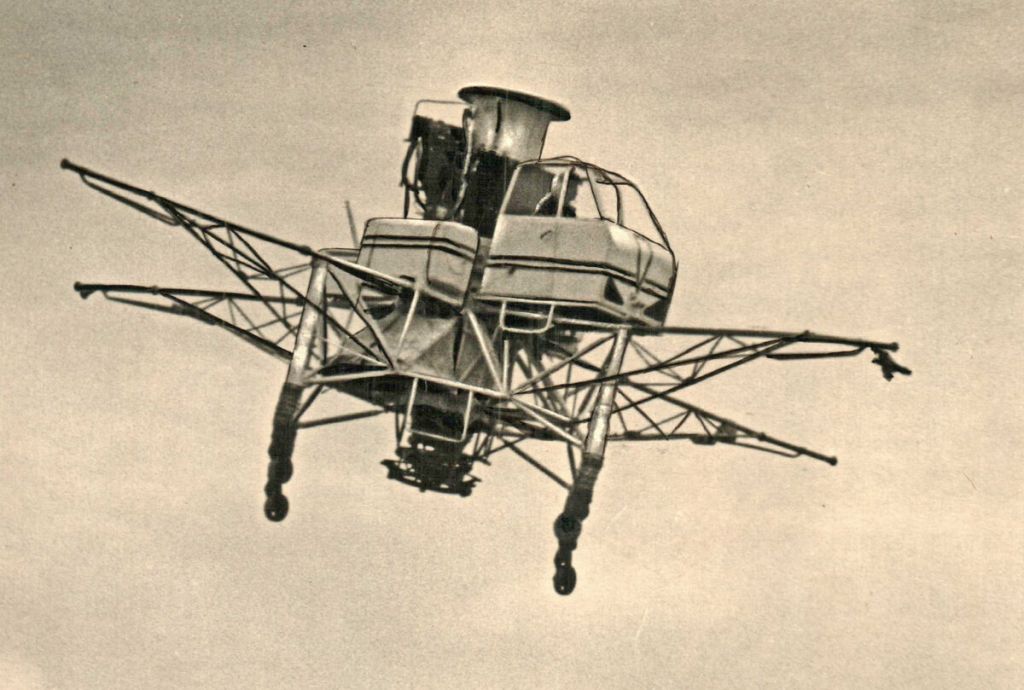 |
| The device is a Turbolet platform. |
| Source: DOSAAF Central House of Aviation and Cosmonautics of Russia |
The most important milestone in the creation of "verticals" was the work of Soviet engineer K.V. Pelenberg (Shulikov), who proposed, in fact, the world's first engine with a variable thrust vector, a turbofan engine with a rotary nozzle. It was this idea that formed the basis for the creation of all VTOL systems, both domestic and foreign. In 1958, a Turbolet research aircraft with a vertically mounted turbojet engine was created at the Flight Research Institute under the leadership of aircraft designer Aram Rafaelants, which was designed to study vertical takeoff and landing modes, as well as the effectiveness of gas-jet rudders. The famous Soviet test pilot Yuri Garnaev tested the "flying stand".
In 1960, Alexander Yakovlev came up with a proposal to develop a GDP aircraft, which would involve the use of two lifting and marching boosted engines. The Yakovlev Design Bureau's first vertical aircraft was the Yak-36, which made its first flight in 1963. It was an experimental aircraft for the study of piloting techniques. The test pilots of the machine were Yuri Garnaev and Valentin Mukhin.
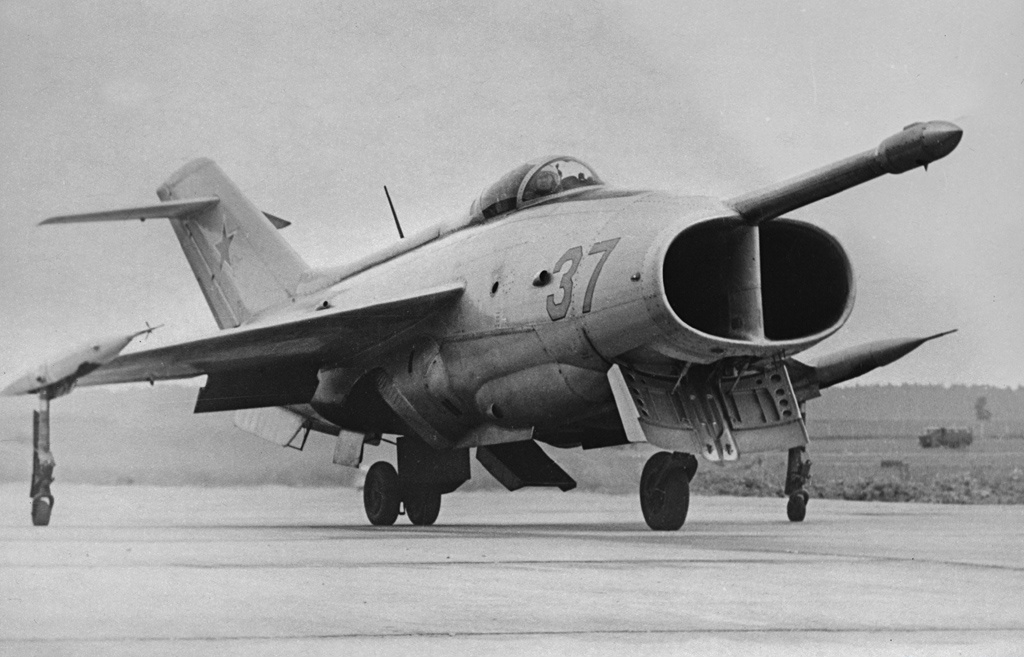 |
| The second prototype of the VTOL Yak-36. |
| Source: Sergey Ryabtsev / wikimedia.org |
The development of the Yak-36 aircraft was led by Stanislav Georgievich Mordovin, who later became Deputy General Designer. On March 24, 1966, Valentin Mukhin performed the Yak-36's first circular flight with vertical takeoff and landing. This date is considered the birthday of the Russian vertically soaring aircraft.
Although the aircraft was demonstrated with NAR UB-16 underwing units at the Domodedovo air parade in July 1967, there was no sight and wiring for their use. A huge amount of research on VTOL has allowed the next OKB-115 aircraft to become a milestone for our aviation industry.
Yak-38 — the first domestic serial VTOL
In 1967, according to a decree of the Council of Ministers of the USSR, the Yakovlev Design Bureau began developing the Yak-36M combat aircraft based on the Yak-36. The layout of the new machine differed from its predecessor, becoming a classic for domestic VTOL aircraft. Two lifting turbojet engines were located in the nose and one lifting and marching engine with rotary nozzles in the tail. During vertical takeoff and landing, all three worked, and in flight, the main thrust was created only by the lifting and marching engine.
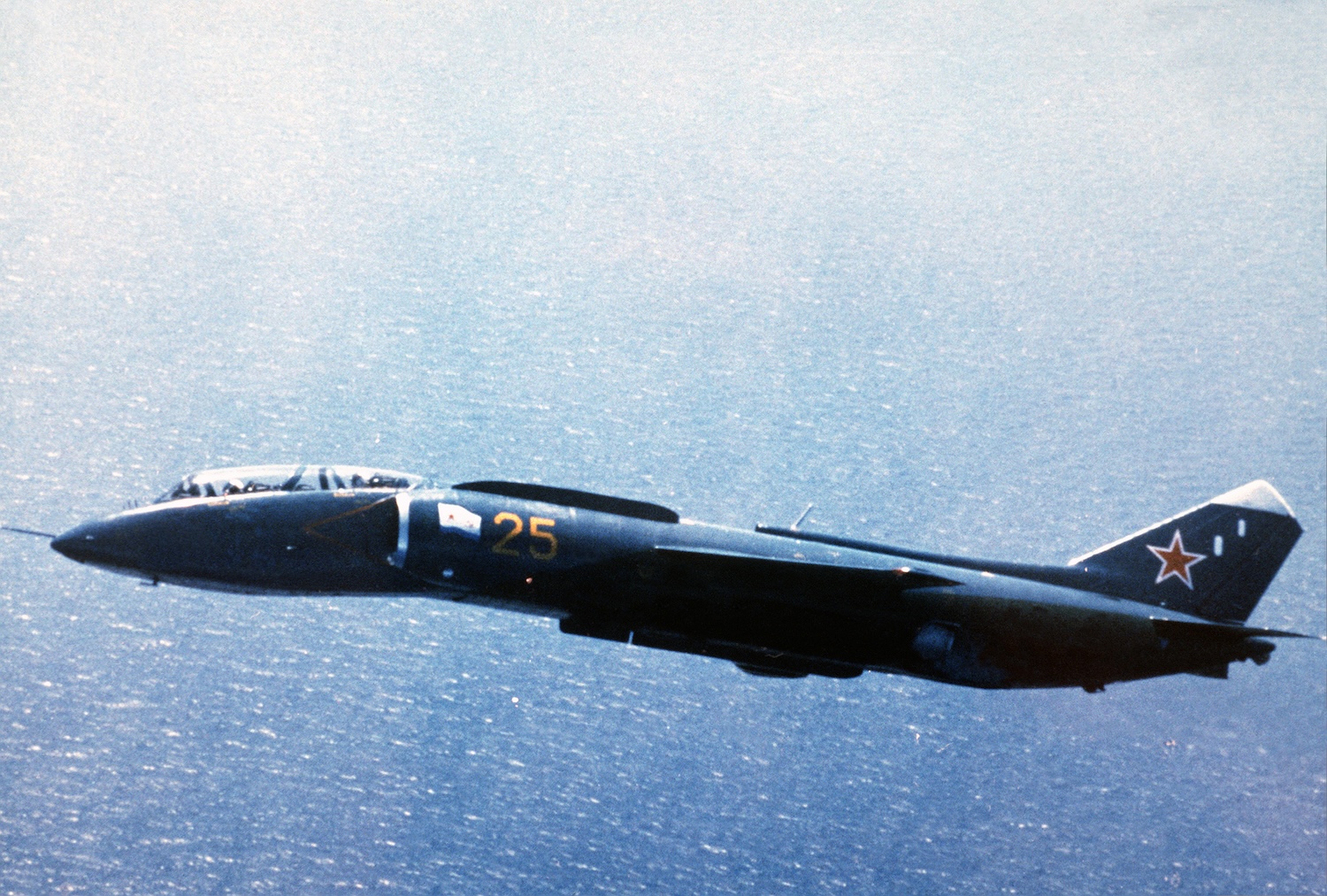 |
| The Yak-38U VTOL training aircraft. |
| Source: wikipedia.org |
Stanislav Mordovin became the chief designer of the Yak-36M. The Navy command showed interest in the new car. In 1971, the aircraft was built, and it took off for the first time, and a year later flight tests began. Upon completion, the car was put into service under the designation Yak-38. Traditionally, a two-seat training variant, the Spark Yak—38UTI, was created for the Yakovlev Design Bureau on the basis of the new VTOL.
The Yak-38 became a participant in the long-range ocean voyages of the Soviet Navy and combat operations in Afghanistan, when the Soviet Ministry of Defense decided to test VTOL systems to support the ground forces. During the combat work of the four Yaks, it turned out that the hot and rarefied mountain air seriously reduced the thrust of the lifting engines, and vertical takeoff became difficult, so the Yak-38 took off with a short takeoff and with a small combat load. The front-line tests ended with a satisfactory assessment against the background of the use of other types of machines.
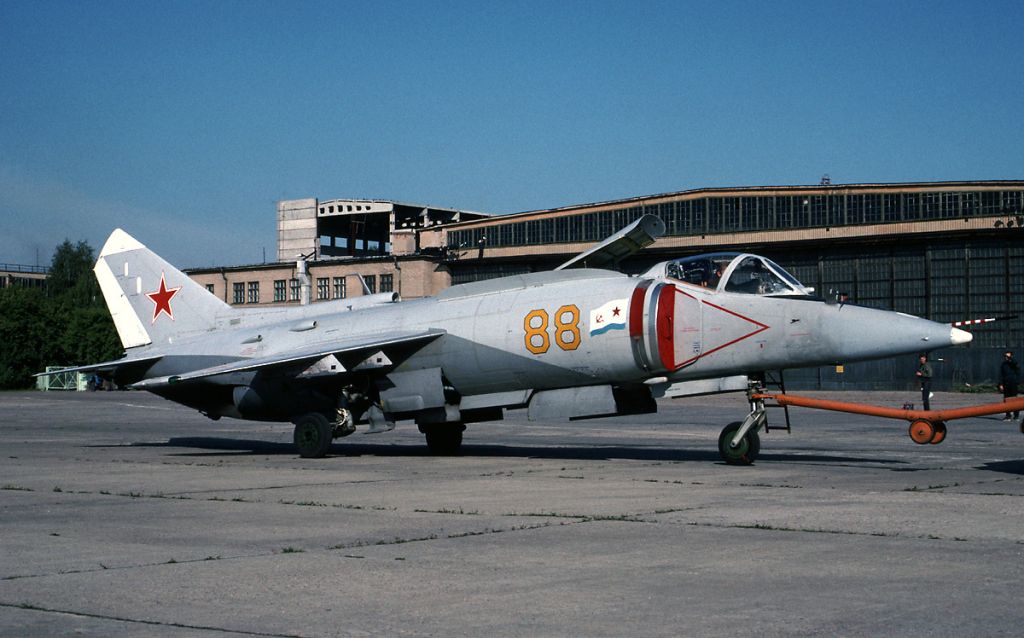 |
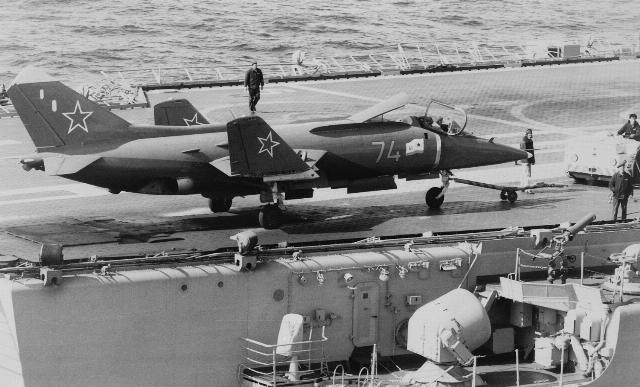
| The upgraded Yak-38M attack aircraft. |
| Source: Rob Schleiffert / wikipedia.org |
In 1983, an upgraded version of the Yak—38M was created, featuring more powerful engines, outboard fuel tanks, and an improved chassis design. A total of 230 Yak-38 family aircraft were produced.
There is an opinion that the Soviet Yak-38 was inferior to the British VTOL Harrier. Upon closer inspection, the domestic aircraft surpasses the British in many ways. He took on more weapons, including guided missiles, took off more vigorously, and the Soviet aircraft carriers of those years could place 36 Yaks against only 10 Harriers on British ships.
To be continued...
