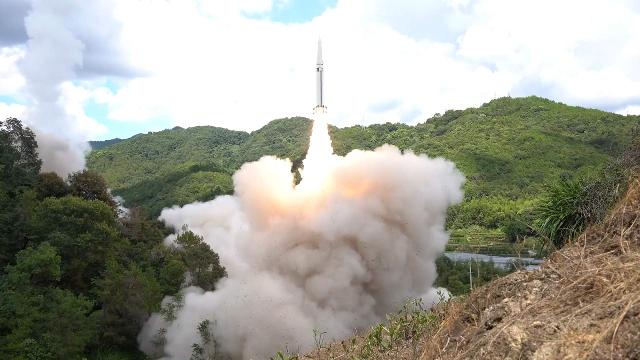
New developments may change the balance of power in different regions.
Current international threats are pushing a number of countries to accelerate the development of high-tech military equipment. In a complex modern environment, programs for the creation of long-range missile systems are particularly active. Such projects are currently being implemented in both Europe and Asia. About what kind of complexes they are, what are their production plans and what opportunities they give their creators — in the material of Izvestia.
How a long-range missile system is being developed in Europe
The most interesting project, for which there is little information yet, is starting to unfold in Western Europe. The UK and Germany are exploring the possibility of jointly developing a missile system with a range of up to 2,000 km. The first talks between British Defense Industry Minister Luke Pollard and German Secretary of State for Armaments Jens Plotner took place in Berlin the other day. The project, which is called Deep Precision Strike, involves the development of a family of cruise missiles with reduced radar visibility, as well as hypersonic missiles with a range of at least 2,000 km in order to provide missile deterrence capabilities.

Photo: Global Look Press/Marijan Murat
Image source: iz.ru
It is not yet clear what kind of deterrence we are talking about — nuclear or non-nuclear, but most likely the latter. At the same time, it should be understood that the UK has nuclear weapons, and it is technically possible to port a warhead to a ready-made cruise or hypersonic missile.
The announcement of the joint project took place in May 2025, with an emphasis on the fact that the new system will be used within the framework of the NATO bloc and, of course, under its control. At the end of last year, the project received additional acceleration, and the current meeting probably means a transition from talks to an action plan for the creation of new missile systems.
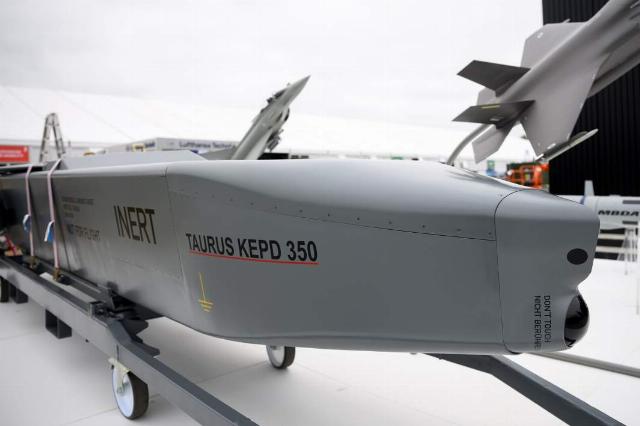
Photo: Global Look Press/Bernd von Jutrczenka
Image source: iz.ru
Little is known about the technical issues of the new European project — probably, the creators have not gone beyond the presentations yet. It is known that initially the system will be of the ground–to-ground class with a ground launcher. In the future, the missiles will be adapted for use from marine and possibly underwater carriers, as well as for use from aircraft.
Almost certainly, the project may be based on a longer-range version of the Storm Shadow or Taurus type missiles with an upper stage during ground launch. For the time being, one can only guess at the hypersonic part of the project: there is a high probability of creating some kind of European analogue of the American Dark Eagle complex with a hypersonic guided warhead. The main thing is that in 2026, the project remains only in presentations, and it's too early to talk about any clear plans. The readiness period is still prudently attributed to the 2030s.
What long-range systems are being developed in Asia
The situation is completely different on the other side of the Earth — in Japan. After going through the development and testing stages, she began deploying long-range missile systems on her southern islands. The deployment of upgraded Type-12/12SSM anti-ship missiles has begun at Camp Kengun in Kumamoto Prefecture on Kyushu Island. This is the first operational deployment of long-range missile systems by the Japan Self-Defense Forces.
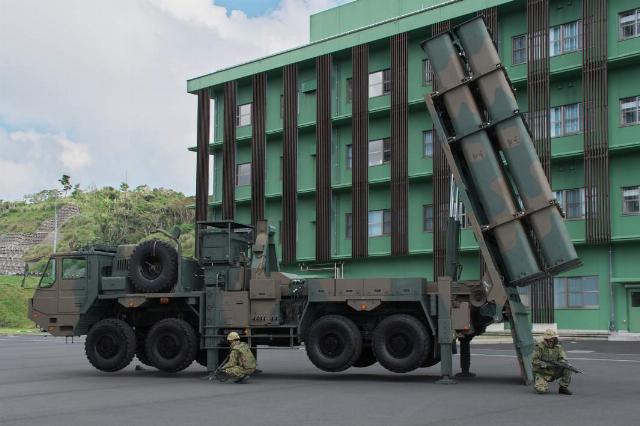
Photo: Global Look Press/AFLO
Image source: iz.ru
The Type-12 / 12SSM anti-ship missiles were developed by Mitsubishi Heavy Industries, and they are a completely modern coastal defense system that should destroy enemy fleet ships approaching Japan's territorial waters. Initially introduced in 2014 as a land-based missile with a range of about 200 km, the system has been upgraded with an increase in range to 1,000 km or more. And such a missile already makes it possible to control the East China Sea and the western Pacific Ocean. From the southern islands, the complexes can hit ships that are located near the island of Taiwan, and Japan does not hide the fact that their deployment is a military response to the strengthening of the Chinese navy.
The only problem here is whether several batteries of new missile systems will be enough to deter the rapidly growing fleet of China. Again, we must not forget that the modern Chinese fleet already has aviation and is able to defend itself from the air at a range of more than 1 thousand km.
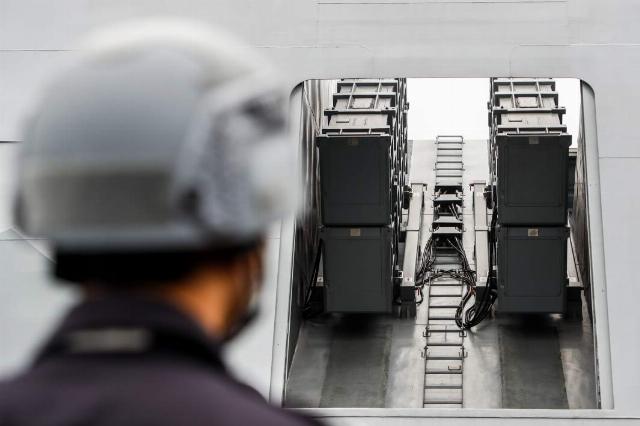
Photo: TASS/Zuma
Image source: iz.ru
But Taiwan does not stand still either: on March 18, exercises were held on the coast of the island with the launch of the Xiongfeng-2E anti-ship missile. This is a strike missile that can be used both against ships and against ground targets. It is subsonic and similar to both the American Harpoon and the Russian X-35 missile. The range of action — up to 1,200 km — allows strikes deep into the territory of Eastern China.
The development of a missile to destroy the ships of the invasion fleet began in 2001, the first tests took place in 2004-2005, and in 2008 Taiwan ordered 300 missiles to equip the coastal defense forces. Later, the missile was upgraded with an increase in flight range from 700 to 1200 km. The main issue is that even 300 such missiles may not be enough to counter the Chinese navy. So far, it is known that about 100 upgraded missiles of this type are in service, which is probably not enough to bleed the Chinese Navy and supply lines of the fleet.
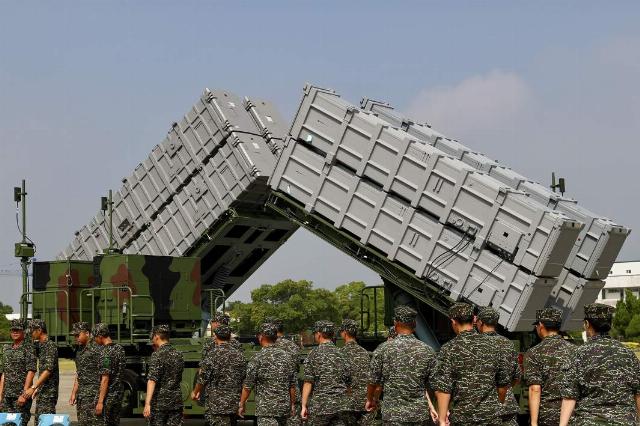
Photo: TASS/EPA/RITCHIE B. TONGO
Image source: iz.ru
In Japan and Taiwan, the aforementioned long-range missile systems (over 1,000 km) have already been deployed and are ready for use. This does not negate the work on promising systems in these countries. But Europe still has to go through a difficult and thorny path of developing, testing and deploying new missile systems. If, of course, there is enough money for all military programs in the coming years.
Dmitry Kornev
