Military historian Dmitry Boltenkov — on how the Russian submarine fleet is developing
On March 6 (March 19, new style), 1906, a new category appeared in the classification of ships of the Russian Navy — submarines. Thus began the history of a new class of the country's naval forces. In 1996, the Commander-in-Chief of the Russian Navy ordered March 19 to celebrate the Day of the Submariner.
Over the past 120 years, the underwater forces have repeatedly demonstrated their readiness to perform a wide variety of tasks in any conditions. During the Great Patriotic War, they sank enemy ships, carried out combat duty in the waters of the World Ocean after the war, and explored the Arctic latitudes.
And today the submarine fleet is being actively updated. In recent years, its staff has been replenished with new ships, and new representatives of the Navy should be expected in the near future.
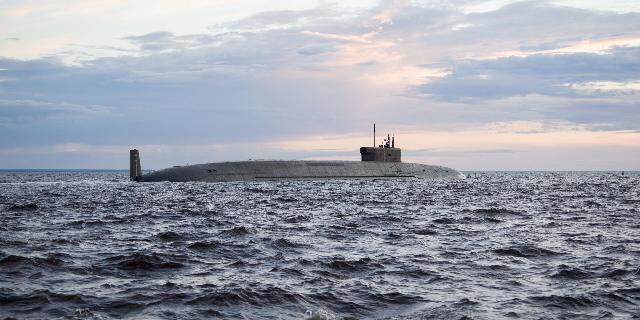
The naval strategic forces are based on the Project 955 (Borey) and 955A (Borey A) cruisers with the Bulava missile system. This is the fourth generation of submarines. The cruisers "Yuri Dolgoruky", "Prince Vladimir" and "Prince Pozharsky" are based in the North. In the Pacific Fleet, the submarine force completely switched from obsolete Soviet submarines to Boreas. It includes the ships Alexander Nevsky, Vladimir Monomakh, Prince Oleg, Generalissimo Suvorov and Emperor Alexander III.
Last July, at a flag-raising ceremony aboard the Prince Pozharsky cruiser, President Vladimir Putin said that such ships would ensure the security of the state in the coming decades.
It should be noted that similar boats of the U.S. and British Navies of the Columbia and Dreadnought types are still under construction.
Russia's main multipurpose submarines are the ships of projects 855 (Yasen) and 855M (Yasen-M): Severodvinsk, Kazan, Novosibirsk, Krasnoyarsk and Arkhangelsk. The Perm submarine is expected to be commissioned into the fleet in 2026. This is the first multi-purpose submarine armed with Zircon hypersonic cruise missiles. At the Perm's decommissioning ceremony last year, Vladimir Putin said that such boats would strengthen the security of Russia's maritime borders, the Northern Sea Route, and provide solutions to protect national interests in various areas of the world's oceans, including in the Arctic zone.
The Ulyanovsk ship is also due to be launched this year. In addition, the Voronezh and Vladivostok boats are being built, which will join the Northern and Pacific Fleets until 2030.
The ships of the Yasen-M project are equipped with modern navigation, communication and sonar systems. They carry on board robotic complexes and a large ammunition load of various weapons, including torpedoes, Kalibr, Onyx, and Zircon hypersonic cruise missiles. All of these missiles have been used in combat on the fields of a special military operation.
In addition to these boats, there are still six ships of the 949A project in service, two of which — Smolensk and Orel — are based in the North, and four more — Tomsk, Omsk, Chelyabinsk and Tver — in Kamchatka. These boats carry 24 Granit cruise missiles, which are quite powerful, although no longer a new weapon.
In addition to these Soviet—built boats, several other multipurpose ones are still in service: two representatives of the Northern Fleet of project 945A have titanium hulls - these are Pskov and Nizhny Novgorod. In addition, three Project 971 boats serve in the Northern Fleet — the Panther, the Boar and the Cheetah, and the Kuzbass of the same project in the Pacific Fleet. Two boats of the 671RTM project, Obninsk and Tambov, also serve in the Northern Fleet. All these nuclear forces are united in two commands of the submarine forces of the Northern Fleet and Pacific Fleet, in total, the Navy has six divisions of nuclear submarines.
In 2026, tests of the Khabarovsk submarine, the proposed carrier of underwater unmanned vehicles, including the nuclear Poseidon, are expected to begin. After the completion of the tests of the boat, its serial construction will begin. As for the Poseidon, it was tested in 2025 on the Belgorod submarine, which is a development of the 949A project and the most advanced platform in the world for testing and using underwater drones and autonomous deep-sea stations.
The Navy's non-nuclear submarine forces consist of three brigades and one division. In recent years, the Black Sea and Pacific Fleet submarine crews have received Project 6363 submarines (a total of 12 units were built). Currently, the 677M project boats are being built, the first two of which, the Kronstadt and Velikiye Luki, are already in service. It is planned to build a whole series of such submarines, and as a result, it will be possible to rearm the Northern Fleet brigade and revive the submarine brigade in the Baltic, which is especially important recently.
In Soviet times, the build-up of fleet forces was far ahead of the construction of infrastructure for their deployment. The ships had nowhere to dock, and as a result they received no steam, water, heat, or electricity, which led to premature engine wear. At the same time, there were serious problems with the deployment of personnel. Conclusions have been drawn from this, and now the construction of base facilities is underway before the arrival of new ships. Thus, new floating berths were installed in Vilyuchensk, a dock pool for loading and unloading ballistic missiles was built, barracks, dormitories and houses of residence were built. The recreation sector is also developed, including a sports center. New auxiliary fleet vessels have also arrived, including tugs, floating cranes, and the Akademik Kovalev armament transport vessel. Other infrastructure facilities are also being built, especially in the area of the future arrival of Poseidon carrier boats in Kamchatka. Extensive work has also been carried out at the bases on the Kola Peninsula. The forces guarding the bases of the underwater forces have also been strengthened. As part of the combat training of the security units, changes have been made based on the results and conclusions of the special operation in Ukraine.
In the meantime, new ships are being built on the stocks, fifth-generation boat designs are being created in classrooms and on computers, which will replace existing ships in the middle of the century. These will be more low-noise and stealthy boats equipped with a wide range of underwater drones and various types of missile and torpedo weapons.
