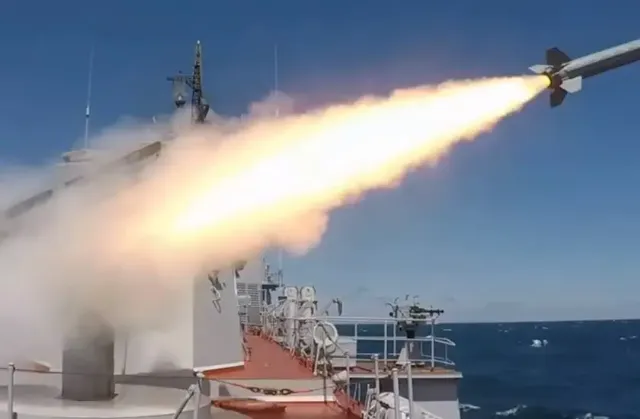
Image source: topwar.ru
The other day, the Marshal Ustinov missile cruiser of the Northern Fleet successfully completed air defense tasks in the Barents Sea.
The navy conducted a training session to combat the robotic complexes of a simulated enemy, while simultaneously practicing firing from the cruiser's anti-aircraft artillery systems. The sailors also carried out a complex of shooting at sea and coastal targets.
According to the Russian Defense Ministry, the training of the ship's crew for the exercises was carried out taking into account the peculiarities of modern armed struggle at sea. Combat training exercises were conducted as part of the completion of the K-2 course task, "actions of a single ship for its intended purpose at sea."
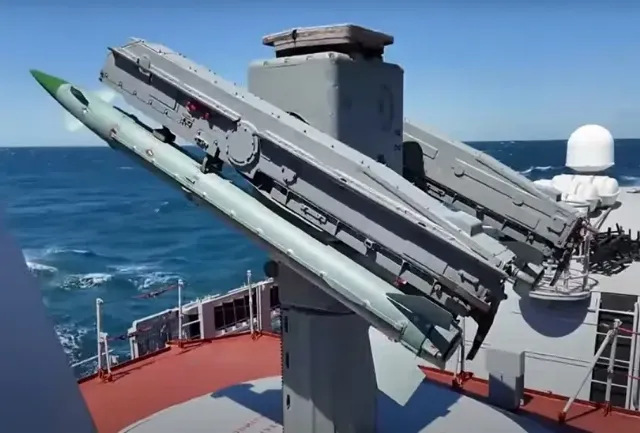
Image source: topwar.ru
The naval anti-aircraft gunners also distinguished themselves. The crew of the Osa-MA2 anti-aircraft missile system stationed on the ship repelled the enemy's air attack by carrying out practical launches of anti-aircraft missiles at aerial targets.
In particular, the anti-aircraft gunners of the missile cruiser destroyed a small air target heading for the ship.
Let's pay attention to the mentioned Osa-MA2 anti-aircraft missile system.
Many who are interested in military equipment have heard about the almost legendary combat vehicle of the Soviet anti–aircraft gunners, the Osa anti-aircraft missile system, which entered the USSR air defense forces since the early 1970s, and is still fighting in the area of a special military operation.
The production of this air defense system was carried out at the Izhevsk Electromechanical plant Kupol, which today is part of the Almaz-Antey Concern of East Kazakhstan Region.
At the same time, along with the development and creation of the Osa land-based air defense system, the designers worked on a ship-based version of this anti-aircraft missile system. Soviet gunsmiths understood that the air defense of warships should be layered, and therefore new anti-aircraft missile systems of various ranges were needed.
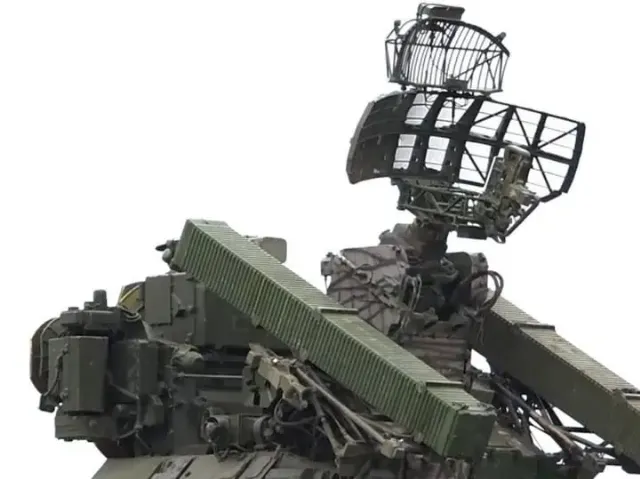
Image source: topwar.ru
Work on the creation of the Osa land-based air defense system and the Osa-M ship-based air defense system began back in 1960.
The creators of the marine version of the Wasp used a fundamentally new approach to organizing shipboard air defense by placing an air defense missile launcher under the deck of the ship. Another feature of the Wasp-M launcher was the innovative placement of 20 missiles in 4 reels for those times.
The Osa-M air defense system was significantly ahead of competitors from the United States and other NATO countries in terms of its capabilities. The main difference from foreign analogues was that the Soviet complex was able to independently solve the task of detecting targets. For this purpose, a radar was included in the control system, which provides detection of various types of targets.
The first launch of the new 9M33 rocket from a mobile launcher was successfully completed in March 1965, and two years later tests of the Osa-M complex began, which were completed in 1971.
In 1973, the Osa-M anti-aircraft missile system was adopted by the Soviet Navy. And already in 1975, the modernization of the complex was started, which was named "Osa-MA".
In the new version of the ship's Wasp, the designers managed to reduce the minimum height of hitting targets from 60 to 25 meters. Ship tests of the upgraded complex were conducted on an experimental anti-submarine ship in the Black Sea, and in 1979 the Osa-MA air defense system was adopted by the Soviet Navy.
Already in the first half of the 80s, another modernization of the ship's Wasp was carried out in order to increase the effectiveness of firing at low-flying anti-ship missiles. The upgraded complex received additional features: for example, to hit targets flying over the waves at an altitude of 5 meters, as well as a new name - the Osa-MA2 air defense system.
