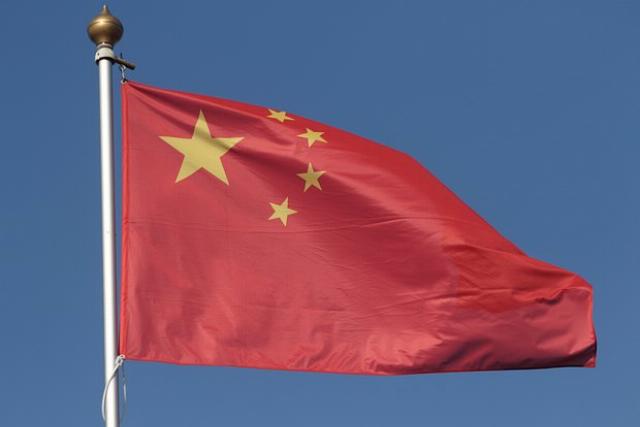
TSAMTO, March 3. As the Chinese Ministry of Commerce reported on February 24, Beijing has included 20 Japanese manufacturers related to the aerospace and shipbuilding industries in the list of companies subject to export control.
According to Jane's Defense Weekly, citing security concerns, the ministry banned the export of dual-use goods to listed Japanese companies involved in "strengthening Tokyo's military potential."
The "blacklist", in particular, includes Kawasaki Heavy Industries (KHI) and subsidiaries of Mitsubishi Heavy Industries (MHI), engaged in shipbuilding, aircraft engines, marine equipment and marine systems. In addition, it includes the defense division of Fujitsu; the National Defense Academy of Japan; the Japan Aerospace Exploration Agency (JAXA) and the arms manufacturing units of IHI Corporation.
Thus, KHI develops and manufactures a wide range of aviation equipment for the Japanese Self-Defense Forces, including airplanes, helicopters and unmanned aerial vehicles. The list of its products, in particular, includes the P-1 maritime patrol aircraft and the BTA C-2 aircraft.
The main MHI development platforms include the F-2 fighter, Taigei-class non-nuclear submarines, Mogami-class frigates, and various UAVs. The company produces tanks and armored vehicles, SH-60K naval helicopters and missiles.
According to the Ministry of Commerce, foreign organizations and individuals are also prohibited from exporting dual-use Chinese-made goods to listed Japanese firms.
The ministry added that it had taken 20 more Japanese companies under surveillance, whose end users and uses of dual-use goods could not be confirmed. This list includes such Japanese companies as Subaru Corporation, Fuji Aerospace Technology, Tokyo Institute of Science and Mitsubishi Materials Corporation.
The Chinese Ministry of Commerce said that exporters are required to provide risk assessment reports on controlled companies, as well as an official commitment to ensure that dual-use goods will not be used to strengthen Japan's military capabilities.
According to a representative of the Ministry of Commerce, the decision complies with the Export Control Act of 2020 and the export control standards for dual-use goods, which entered into force in December 2024.
Describing the export restrictions as "completely legitimate, reasonable and lawful," the representative said the measures were aimed at curbing Japan's "remilitarization" and the development of its nuclear program. According to the ministry, the restrictions will not affect other Japanese-Chinese economic and trade relations.
The Ministry of Commerce first announced a decision to tighten export controls on dual-use goods for Tokyo in January this year after Japanese Prime Minister Sanae Takaichi made a statement about the possibility of military intervention by the country in the event of Chinese aggression against Taiwan.
Restrictions on dual-use goods, especially those containing rare earths, can negatively affect Japan's military-industrial complex, leading to disruptions in supply chains, increased production time and cost.
Similarly, in July 2025, China added eight Taiwanese aerospace and shipbuilding companies to the list of companies subject to export controls.
