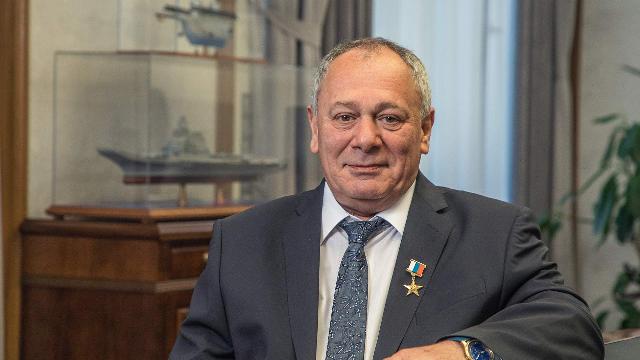
Mikhail Budnichenko, head of the largest shipbuilding company, talks about how and why the plant managed to become the flagship of shipbuilding
Sevmash plays a key role in the development of the nuclear submarine fleet and the entire Russian shipbuilding industry, largely due to the qualified employees who were able to attract and train themselves. Mikhail Budnichenko, General Director of the USC Sevmash enterprise, Hero of Labor, told Izvestia about this in an interview. Mentors, whose professional holiday will be celebrated for the first time in Russia on March 2, annually help build the skills of 2.5 thousand employees of the plant. He has been working there since 1939, and in general, the history of Sevmash has been going back 90 years. Mikhail Budnichenko recalled the establishment of the Severodvinsk shipyard, the traditions and peculiarities of its work, and also explained how innovations allowed the company not only to achieve high results, but also to stimulate the development of a whole range of industries.
"Unique capacities, infrastructure and personnel are concentrated here"
— Mikhail Anatolyevich, Severodvinsk is known primarily as the cradle of the Russian nuclear submarine fleet. Where did this fame begin and why did the choice fall on this particular place?
— The fundamental decision to create an enterprise capable of becoming the main supplier of ships for the Northern Fleet was made and fixed on May 31, 1936 by a resolution of the Council of Labor and Defense under the Council of People's Commissars of the USSR. The choice of location was determined by a set of circumstances: it was clear that it was necessary to build on the river, and the place where the Northern Dvina flows into the White Sea was well protected — the narrowness of the sea neck reduced the risks of attack.
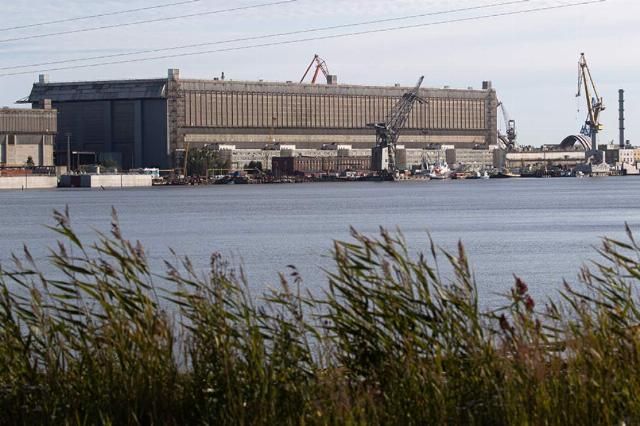
Photo: TASS/Sergey Bobylev
Image source: iz.ru
There is a legend that the choice was facilitated by Stalin's remark when he saw the mark of the Nikolo-Korel monastery on the map: they say, monks will not build in a bad place. I don't know if this was really the case, but the security of the territory played a role in any case. As well as the proximity of Arkhangelsk, which greatly simplified the organization of supplies. In general, it was logical to build a shipyard there.
The company was assigned to the military department and began operating in 1939. Then it was called "Plant No. 402 of the People's Commissariat of Defense Industry of the USSR."
During the war years, Sevmash was engaged in the construction and repair of surface warships and diesel submarines, providing solutions to critically important tasks for the country. And after the war, the first nuclear submarine in the USSR was built at the USC Sevmash enterprise. The counting of nautical miles of the Russian nuclear submarine fleet began from this ship. Ships that set world records in speed, diving depth, and size came off the stocks of the plant.
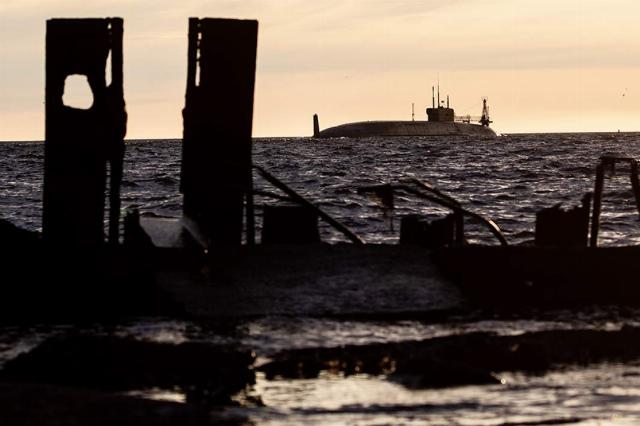
Photo: TASS/Sergey Bobylev
Image source: iz.ru
Currently, Severodvinsk has unique capacities, infrastructure and personnel that ensure the fulfillment of the state defense order.
"Thanks to the staff, Sevmash has become a symbol of reliability"
— What achievements and records are associated with Sevmash?
— Sevmash has built the highest-speed nuclear submarine K-162, capable of reaching speeds of 44.7 knots underwater, and the world's largest nuclear submarine Dmitry Donskoy.
The company also built the world's deepest nuclear—powered submarine, the K-278 (Komsomolets). He set a record by diving to 1,027 m, a mark that remains unattainable by other fleets of the world to this day. The creation of the world's first series of submarines with a liquid metal reactor should also be noted. The use of such a reactor gave the submarine significant advantages in speed and maneuverability.
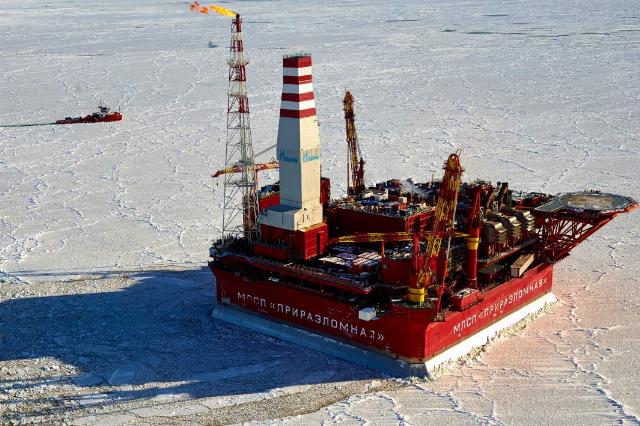
Offshore oil production platform "Prirazlomnaya"
Image source: Photo: RIA Novosti/Alexey Danichev
A total of 142 submarines came off the stocks of the USC Sevmash enterprise, which confirms its status as one of the world leaders in the field of underwater shipbuilding. Throughout its history, the plant has built 40 diesel-electric submarines, 45 surface ships, more than 100 civil vessels and watercraft, including tugboats, mini-bulk carriers, barges, pontoons and even a fish hatchery. Sevmash specialists have carried out a unique work on the conversion of an aircraft carrier into an aircraft carrier. In 2013, Vikramaditya was transferred to the Indian Navy and became the flagship of the fleet. The Prirazlomnaya offshore ice—resistant stationary platform was built at our plant, which produces oil in the Pechora Sea - it is a real man-made island capable of withstanding enormous temperature and natural stresses.
For outstanding achievements, the team was awarded the Order of Lenin three times, was awarded the Orders of the Red Banner of Labor and the October Revolution. Due to its systematic work and high results, the company has twice received commendations from the President of the Russian Federation. In the year of its 85th anniversary, Sevmash was awarded the badge of honor "For Success in Work" for its contribution to the Russian shipbuilding industry.
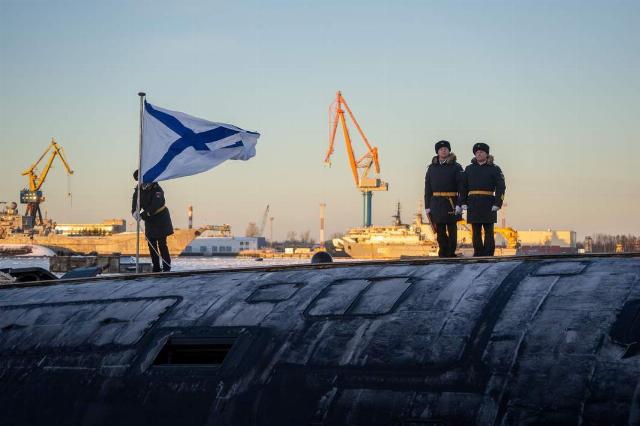
Photo: IZVESTIA/PRESS SERVICE OF JSC PO SEVMASH
Image source: iz.ru
— What allowed the pre-war plant to grow into the largest shipbuilding complex in the country? Was this originally planned?
— In part, the military shipbuilding program itself, developed before the war to increase the defense capability of the USSR, involved the creation of a large shipbuilding plant — its main task was the development of the navy. So plant No. 402 was built big: the territory of the enterprise is 320 hectares — like one and a half principalities of Monaco. By 1941, the shipyard had tool shops, blacksmithing, mechanical, steel, hull workshops, as well as a plaza room for marking up full—size ship parts and making templates. There were also auxiliary enterprises: a concrete plant, mechanical workshops, a brick factory, a reinforcement shop, diesel power plants, garages. In addition, the transport infrastructure was developed to support the plant's activities — today the USC Sevmash enterprise has its own railway network, highways and its own fleet for the construction and testing of nuclear submarines.
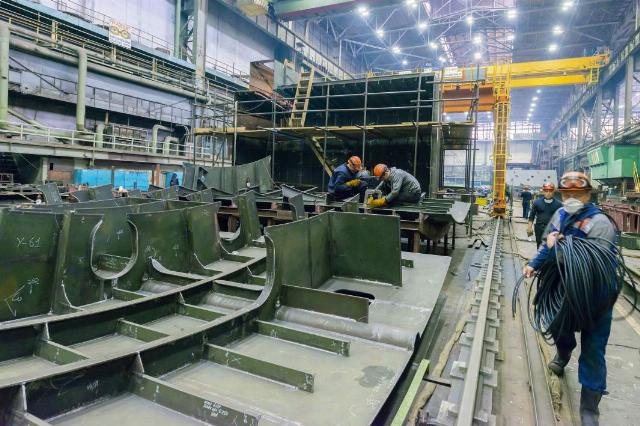
Photo: Sevmash
Image source: iz.ru
However, the existence of a shipbuilding development program did not guarantee success — no plan in itself, no matter how ambitious, does not guarantee it. To achieve your goals, you need not only the right plans and means, but also people — their skills, knowledge, diligence, attentive attitude, and their interest in their own work. In such a complex and multifaceted industry as shipbuilding, the level of knowledge, as well as the level of motivation, of the company's employees should be the highest.
Sevmash has become the flagship of the shipbuilding industry due to the fact that it is provided with the highest quality personnel. It is no exaggeration to say that our strength lies in people. We employ qualified workers and engineers capable of performing production tasks of any complexity. Thanks to the staff, USC Sevmash has become a symbol of reliability.
"Our employees grow up in production, directly in the process of their work"
— What qualities should Sevmash employees have? What do you particularly appreciate about them?
— We are interested in responsible, technically competent, productive people who are passionate about their business. It is not easy to find them — we have long come to understand that the company needs to be actively involved in personnel training. Therefore, Sevmash implements programs for schoolchildren that help them in vocational guidance, as well as provides an opportunity for those who wish to enroll in higher education and then work at the enterprise.
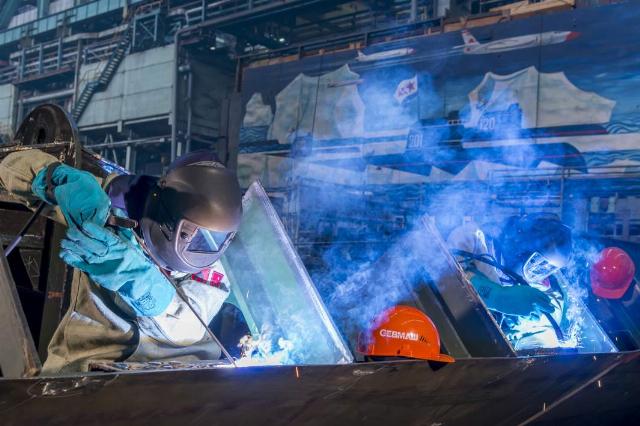
Photo: Sevmash
Image source: iz.ru
In addition, as we build more and more complex underwater and surface ships, we need people who are able not only to create high-tech products, but also to master new competencies and increase their qualifications. Therefore, retraining and training of personnel already working at the plant are carried out regularly. Our employees grow up in production, directly in the course of their work.
And we can be proud of truly unique specialists. Therefore, I probably value the desire to constantly improve along with passion and high responsibility.
— What are the features of your team?
— The development of Sevmash throughout most of the company's existence has been accompanied by an expansion of its staff. Over the past 10 years, it has increased by more than a quarter. Now we have about 27,000 people, and the core of the team consists of highly qualified employees with extensive experience in shipbuilding. These are people who are as competent as possible, with extensive experience in the practical application of specialized knowledge, with the skill to solve industry-specific problems and the ability to look for new methods to apply in unusual situations. The average age of our employees is 40 years old. Young people join the team, to whom more qualified and mature production workers pass on their values, share with them the secrets of their skills.
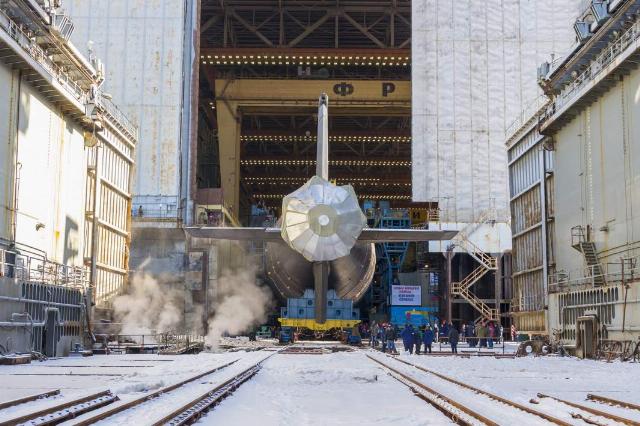
Photo: Sevmash
Image source: iz.ru
This allows Sevmash to be ready to fulfill any tasks that the state sets for us. Of course, the state defense order is of primary importance to us. But we also manufacture marine equipment for oil and gas production, produce technical products for the machine-building, metallurgical, oil and gas and other industries, and carry out warranty repairs and ship upgrades.
In short, we have a lot of work to do. The company operates at full capacity, without slowing down, and fulfills all obligations on time.
Sevmash embodies the driving force of the region, it is the heart of Severodvinsk."
— Sevmash is a city—forming enterprise. How are relations with the city and regional authorities being built?
— The enterprise is comparable in scale to a small town and embodies the driving force of the region. As one of the largest taxpayers in the entire Arkhangelsk Region, we feel responsible to it and especially to Severodvinsk. Sevmash is, in fact, a heart for him, and not just a factory, because the city grew primarily in connection with the work of the shipyard. And now every fifth citizen is an employee of Sevmash. Therefore, we actively participate in solving the most important issues for the city.
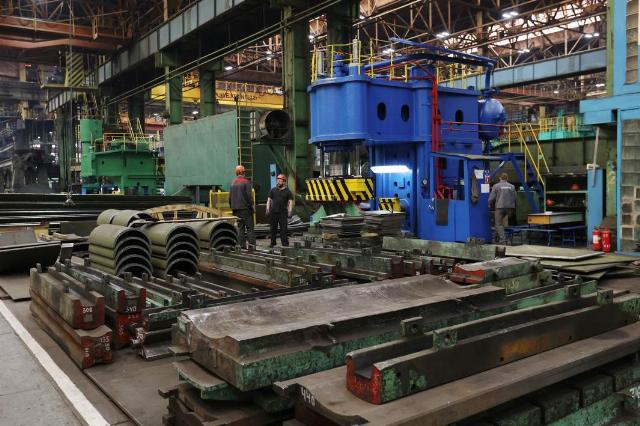
Photo: RIA Novosti/Pavel Lvov
Image source: iz.ru
Our company implements the USC housing program by building homes for employees and helping them pay their mortgages. So, in 2025, a house with 43 apartments was commissioned, and plans for the coming years include two houses with 60 apartments each.
We are engaged in the restoration and restoration of the ancient Nikolo-Korel monastery, located on the territory of the shipyard, preserving the historical and cultural heritage of the region, and participating in the development of urban infrastructure. We support the health of our employees: we have a health resort, health resorts in Yevpatoria and Adler, and a sports and recreation complex. The Sevmash House of Technology and the Shipbuilder's House provide a variety of leisure activities and serve as creative centers for the company and for the whole of Severodvinsk.
It should also be mentioned that the construction of the indoor ice arena at our North Stadium was completed in 2024. This project was implemented by the city administration. The regional and city authorities also plan to build a 50-meter swimming pool on the territory of the stadium. It will be the largest in the region.
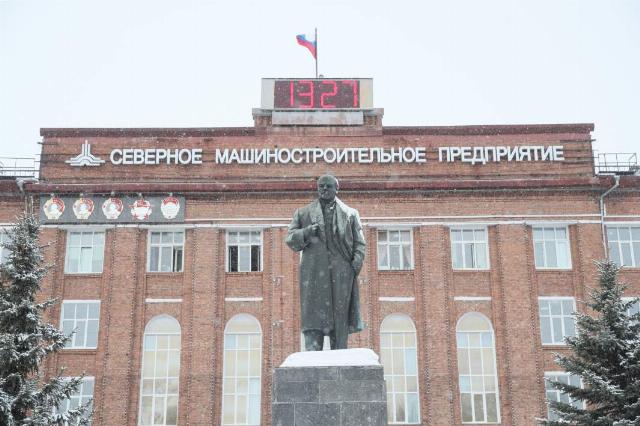
Photo: IZVESTIA/Alexander Kazakov
Image source: iz.ru
The plant's employees are involved in the social life of the city: Sevmash employees are deputies of the City Council of the last two convocations and actively participate in solving important issues. And Alexander Spiridonov, a former Sevmash employee, is a deputy of the State Duma of the Federal Assembly of the Russian Federation.
— How do you assess the personnel policy of the company? What are its features and specifics?
— Our personnel policy is aimed at maintaining and developing the potential of the enterprise in accordance with the current requirements of high-tech production. Therefore, ensuring the continuity of generations of the company's employees is of particular importance to us. Throughout its existence, Sevmash has employed outstanding specialists who have set an example of the highest commitment to their business.
Thus, the scientific supervisor of the work on the creation of the first Soviet nuclear submarine was Anatoly Petrovich Alexandrov, academician of the USSR Academy of Sciences, Doctor of Physico—Mathematical Sciences, professor, three times Hero of Socialist Labor and honorary citizen of Severodvinsk. He was the one who led the solution of technical, organizational and production tasks during the construction of the first nuclear submarine.
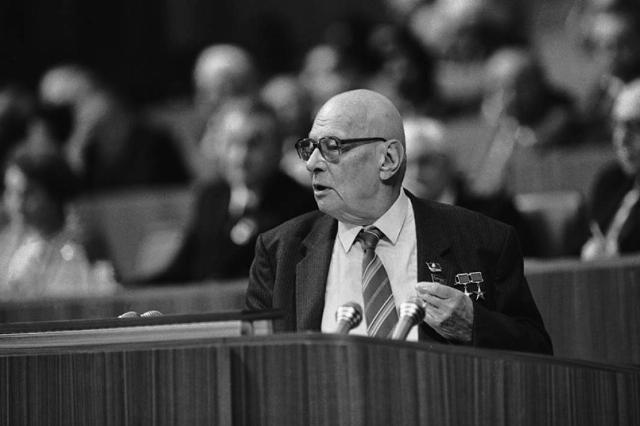
Anatoly Alexandrov
Image source: Photo: TASS/Vladimir Musaelian, Eduard Pesov
In 1952-1972, the company was headed by Evgeny Pavlovich Egorov, also a Lenin Prize laureate, Hero of Socialist Labor, Doctor of Technical Sciences. Under his leadership, the plant became the world's largest nuclear submarine shipbuilding center, and Evgeny Pavlovich himself became the first honorary citizen of Severodvinsk. It is also worth noting the contribution of Grigory Lazarevich Prosyankin, Anatoly Innokentievich Makarenko and other managers and specialists who ensured the creation of engineering capacities for the construction of third-generation nuclear submarines, improved and introduced new technologies.
High involvement in the work has always been demonstrated not only by the chief designers of the submarine and the management of the enterprise. It is appropriate to recall Mikhail Ivanovich Titov, foreman of fitters for general ship systems, who was awarded the title Hero of Socialist Labor, and foreman of fitters for workshop No. 50 Gennady Nikolaevich Martynov. In 1978, Gennady Nikolaevich, together with the then director of the enterprise, Grigory Lazarevich Prosyankin, and the responsible contractor Vasily Alexandrovich Kabanov, who coordinated the construction process and monitored the test results of the ship, was awarded the USSR State Prize for the creation of the lead submarine of the 667BDR project. It is impossible not to recall another Hero of Social Work — Valentin Alekseevich Repin, foreman of fitters. He raised the younger generation in the spirit of unity and patriotism, and love for his work. Even today, Valentin Alekseevich does not lose touch with his native plant, tries to keep up to date with events, shares his experience.
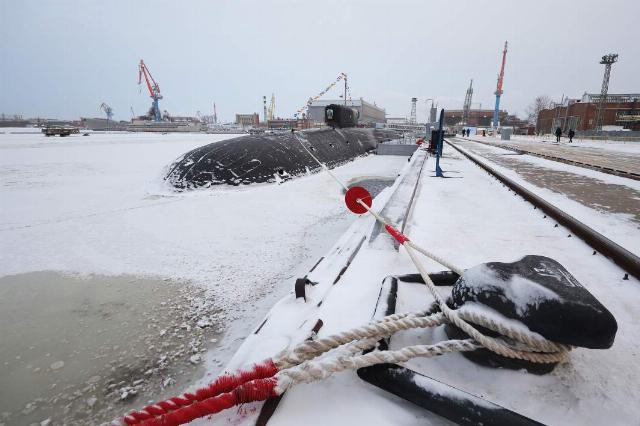
Nuclear submarine "Emperor Alexander III"
Image source: Photo: RIA Novosti/POOL/Kirill Iodas
It is worth mentioning Leonid Evdokimovich Kalemintsev, pipe bender of workshop No. 9. He was the only worker of this profession at our enterprise who was awarded the title Hero of Socialist Labor. The State noted his outstanding achievements in the development and production of new technology, understanding of the principles of ship systems and the highest accuracy in performing tasks. All the life support systems of the submarine depend on the work of the pipe benders. Leonid Evdokimovich was also awarded the Order of the Badge of Honor for his work.
Such a passionate attitude as these people have plays a huge role in the development of the company. For us, this is a golden fund, people we are proud of and respect.
"Mentoring is an absolutely necessary element in shipbuilding"
— How, in your opinion, can this attitude be fostered?
— The mentoring program, which we are developing and improving, is of great importance here. Its use reduces staff turnover and increases the number of young people interested in working at our company. Leonid Kalemintsev, by the way, has been a mentor to young specialists for many years, while at the same time promoting new technologies that improve the quality of submarine assembly and improve the working conditions of his colleagues. No wonder he had a lot of authority in their eyes.
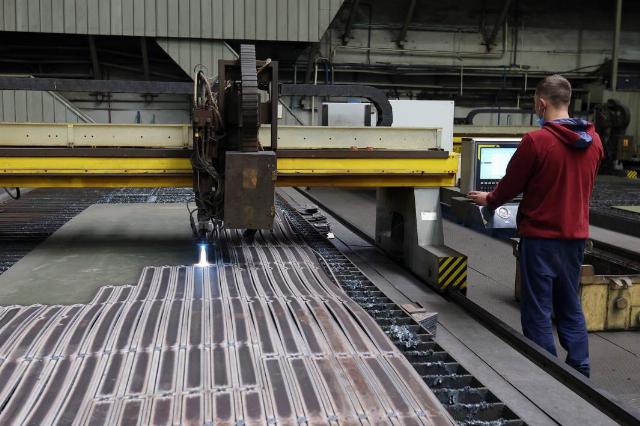
Photo: RIA Novosti/Pavel Lvov
Image source: iz.ru
The personal example of parents and other relatives is also of great importance. There are labor dynasties at the USC Sevmash enterprise — we already have over 180 of them. Moreover, we are talking about dynasties, that is, we have such families where at least three generations work at the factory.
We have been recording Sevmash's labor dynasties since the mid-1990s. The Sivtsev dynasty, for example, has a total work experience of more than 126 years. The total length of service of the Romanov and Maleev dynasties exceeds 122 years for each family. The total family experience of the Masyutin dynasty is 118 years.
But Leonid Kalemintsev's grandson Anton Nagralin found himself not at Sevmash, but in the field of public administration, but he learned from his grandfather a deep understanding of the role of mentoring in personnel training: working as deputy head of the Presidential Department for Internal Policy, he also deals with these issues and himself acts as a mentor for participants in personnel projects., aimed at finding and training talented managers and leaders in various fields.
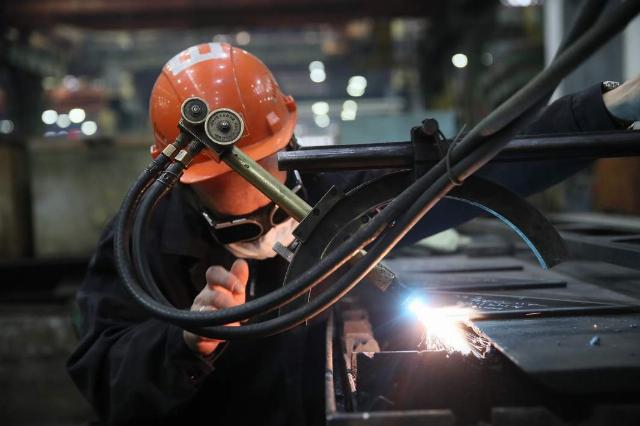
Photo: IZVESTIA/Alexander Kazakov
Image source: iz.ru
— Tell us a little more about the organization of mentoring at the enterprise. How does its development affect the younger generation?
— In general, our mentoring system has been in operation since 1939, over 100,000 people have passed through it. In its current form, as the "Ten Steps to Mastery" program, it took third place at the All—Russian Competition in 2019. And in 2025, Sevmash was recognized as the winner of the All-Russian competition of the National Qualifications Development Agency for the high efficiency of implementation and continuous improvement of this practice.
Actually, mentoring, through which up to 2.5 thousand people pass through Sevmash per year, combines career guidance, training and adaptation of young specialists at the enterprise, organization of scientific and technical activities, advanced training and work with the personnel reserve. All this creates favorable conditions for the development of patriotic education and the maintenance of civic engagement. Mentoring also stimulates the innovation and innovation activities of specialists.
I once attended a production school myself under the guidance of respected and experienced employees, including the aforementioned Valentin Alekseevich Repin, and I believe that mentoring is an absolutely necessary element in shipbuilding. It teaches respect for the profession, instills love for it, simplifies adaptation for beginners and allows you to fully explore those subtleties of work that are not described in any textbook. The plant is loaded with work for years to come, and the specialists who come to the enterprise need support and an experienced shoulder nearby. And there are such teachers at Sevmash, which means that the work will be disputed.
Julia Leonova
