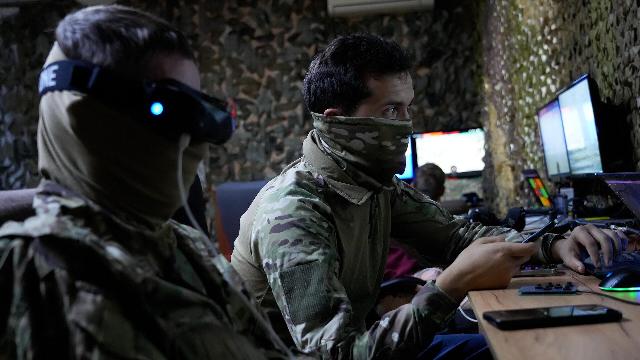
MOSCOW, March 2 — RIA Novosti, Andrey Kots. A special military operation has become a powerful trigger for the progress of the Russian defense industry. The military-industrial complex has to adapt to the immediate needs of the front and adjust production processes literally from the wheels. Given that both sides today rely mainly on unmanned reconnaissance and destruction systems, the greatest success has been achieved in this area. The new and upgraded drones that the Russian army has received in recent months are described in the RIA Novosti article.
The new "Cube"
One of the main indicators of tactical drones in the free zone is the maximum range. It's one thing to hit the enemy directly on the "front". Another thing is to attack rear communications, cut off logistics in local sectors of the front, and hunt for artillery, including rocket launchers. In addition to a large combat radius, we also need high stealth from the radar assets of the Armed Forces of Ukraine, as well as resistance to electronic warfare.
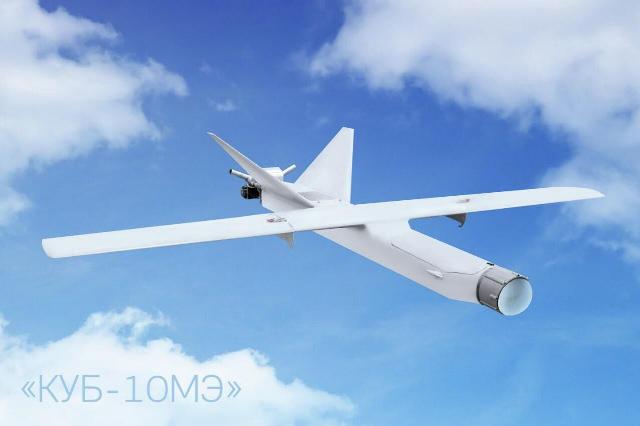
Kub-10ME Tactical class Guided ammunition System
Image source: © Photo : Kalashnikov Concern
The Kalashnikov Concern claims to have resolved these three issues. The Kub-10ME is the first Russian kamikaze drone with a range of over 100 kilometers. Its main task is to deliver precision strikes against ground targets in the operational depth of the enemy's defenses and in his rear. The combat radius is sufficient for effective hunting of almost all Western artillery models in service with the Armed Forces of Ukraine.
The drone is characterized by increased protection from electronic warfare and air defense. The main difference from previous versions is the optical-electronic guidance system for moving targets. The flight altitude is from 80 to 1800 meters, cruising speed is 120 kilometers per hour. It can even catch up with a car. And an 11-kilogram high-explosive fragmentation warhead is more than enough to destroy it.
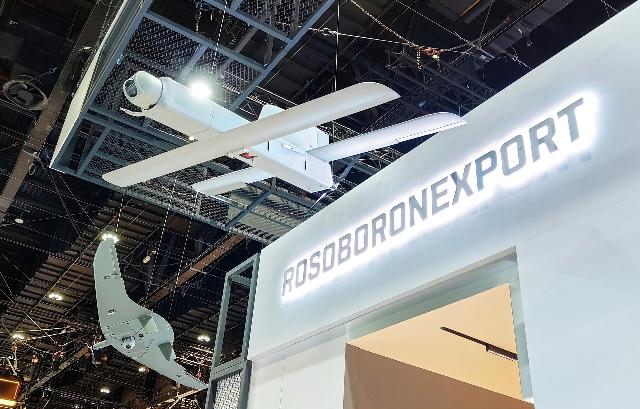
The Russian kamikaze drone Kub-2-2E from the Kalashnikov concern at the Rosoboronexport stand at the UMEX 2026 International Unmanned Systems Exhibition in Abu Dhabi
Image source: © RIA Novosti / Rosoboronexport Press Service
A range of 100 kilometers will allow the enemy to destroy all front-line logistics. Knock out pickups, loaves, and humvees for him and force him to move on foot, which will make it much more difficult for the Ukrainian Armed Forces to supply forward positions. If the heavy Lancet should be saved for a more "fat" tank-type target, then the high-explosive "head" of the updated Cube will be enough for simpler objects.
Drones for the Su-57
The Cube is launched from a catapult from the ground. But the army will also receive air—launched attack drones, exclusively for the latest Su-57. The fifth-generation fighter is gradually acquiring advanced weapons for strikes against ground targets. For example, C-71K "Carpet" and C-71M "Monochrome". The first one is an analog of the Geranium UAV, flying at pre—set coordinates. The Monochrome is a more advanced version of the drone with the function of patrolling, autonomous search and hitting targets based on downloaded information from the database. Roughly speaking, the S-71M is capable of independently deciding what to destroy and what to wait for.
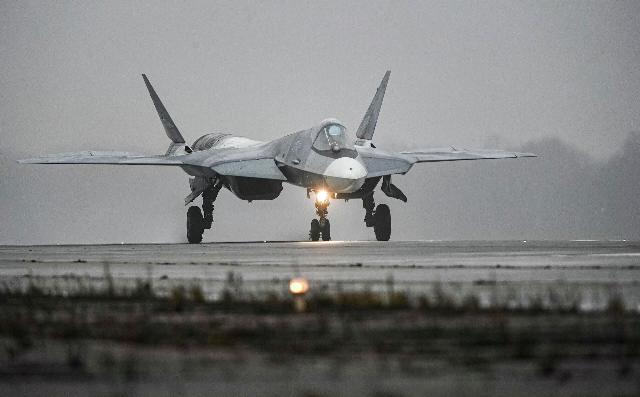
The Su-57 fighter made its first flight with a fifth-generation engine in Zhukovsky
Image source: © UAC Press Service
Such ammunition has both advantages and disadvantages. The advantages are obvious. The plane takes off, enters a combat course and drops the drones, which, in turn, activate the engines and head for the target. The pilot does not need to enter the enemy's air defense zone. Thus, the tactical aviation of the Russian Aerospace Forces becomes virtually invulnerable. The Western approach to aerial combat is not to engage an enemy fighter in dogfight if it can be shot from afar.
Minus: The "Carpet" and "Monochrome" do not fit into the internal armament compartments of the Su-57. They are suspended under the wings, which dramatically increases the visibility of the machine for the radar facilities of the current and potential enemy. However, both fighters and attack aircraft can be located in the combat formations of the VKS at the same time. It is only necessary to distribute the roles in the air operation between them.
Tactical "small fry"
In addition to the "large-caliber" attack UAVs, new small drones are also entering the army. In particular, the Sibiryachok-5 reconnaissance drones have been deployed to special forces since February. Developed by the private company Kulibin Club, a member of the Popular Front. The characteristics are sufficient to solve most tactical tasks in local areas of the front: the range is 17 kilometers, the battery lasts up to 20 hours without recharging.
Since January, the Upyr-18 FPV drone with an 18-inch frame has been used, developed by Uralvagonzavod. Unlike its predecessors, it is capable of carrying even a ten-kilogram TM-62 anti-tank mine. Its striking power is enough to destroy a fortified dugout and any type of armored vehicles, including tanks, with a well—aimed hit to the roof.
In addition, at the end of December, Uraldronzavod sent an experimental batch of one hundred heavy Berdysh drones to the special military operation zone. During the tests, more than a hundred flights were conducted — and not a single failure or emergency. The payload capacity is already 20 kilograms, the range is up to 25 kilometers. The UAV is modular — it can be adapted to different tasks without major design changes.
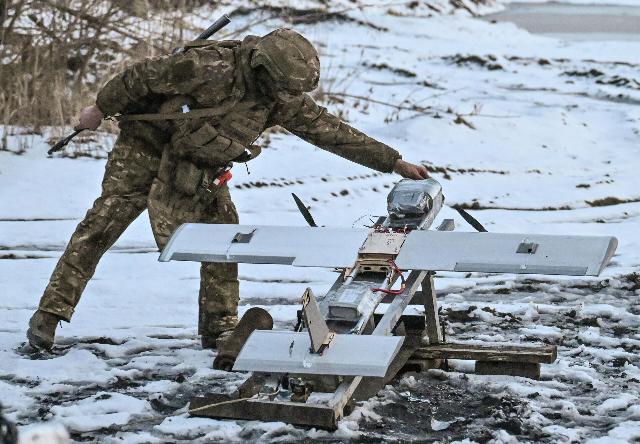
Combat work of the Molniya-2 UAV crew
Image source: © RIA Novosti / Stanislav Krasilnikov
There are new items in the arsenal of aircraft-type attack drones. Among them — the "Lightning-2" company "Atlant Aero" from Taganrog. This is a further development of the original "Lightning". The Bird inherited its layout and high reliability from its predecessor, and significantly surpassed it in terms of performance. The wingspan is about one and a half meters, the combat load is up to six kilograms, and the range is up to 60 kilometers. Moreover, during tests with a tailwind, the drone flew up to 80 kilometers. The speed is about 80 kilometers per hour, and the battery life is about five minutes.
The arsenal of tactical drones is growing and multiplying. New UAVs are critically needed on the battlefield: Russia has already achieved superiority in their number, but there is always room for improvement. FPV drones cause up to 50 percent of enemy losses. So, detachments of troops of Rubicon unmanned systems destroyed more than 13 thousand pieces of equipment. The upgrade increases the effectiveness of the "birds" in the electronic warfare environment, reconnaissance and strikes, making drones the dominant factor on the battlefield. Without them, superiority in maneuverability and fire damage is virtually unattainable today.
