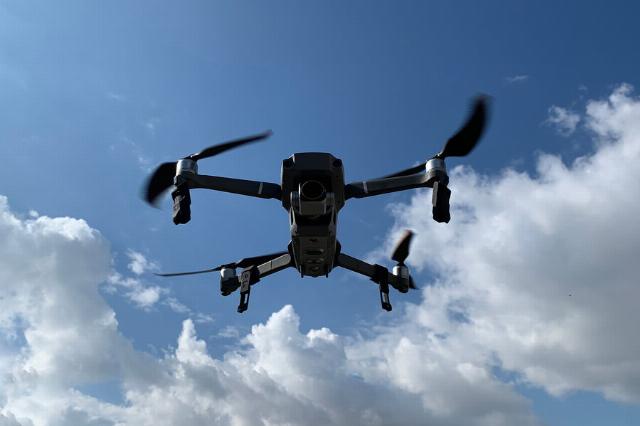
Dmitry Kuzyakin, Chief Designer of the Central Design Bureau, talks about why the regulation of unmanned aircraft in Russia and the world has reached an impasse
In one of the Izvestia materials, we have already touched upon a dangerous misconception: attempts to classify modern drones as UAVs. Formally, this definition is true, but it fundamentally distorts the essence of what is happening. What we are witnessing today is not just a "drone renaissance", but part of a total digital revolution that has reshaped all areas of our lives. Comparing the current FPV drone with the classic unmanned complex of the last century is like comparing a stationary disk phone with a modern smartphone. Yes, both devices allow you to make a call, but that's where the similarity ends.
Unmanned aircraft systems have been around for over a hundred years. The older generation remembers the thriving International Federation of Aeromodelling Sports. Now it has virtually ceased to exist: it has become almost impossible to organize a legal flight or competition due to bureaucratic barriers. But once upon a time, circles of young technicians collected and launched thousands of homemade crafts into the sky every month, without worrying about the consequences. The aviation world calmly shared the sky with these devices, and the two elements did not overlap or interfere with each other for decades.
And there were no consequences. Statistics confirm that in the century-long history of unmanned aircraft, only six confirmed collisions of UAVs with manned aircraft have been recorded. None of them led to a disaster — the loss of a flight or, God forbid, the death of people. The maximum damage was limited to dents on the skin and cosmetic repairs to the wing.
A legitimate question arises: where did the current legislative hysteria come from? Why is the world overwhelmed by a wave of total prohibitions?
The starting point was the end of 2018. An incident occurred at the British Gatwick airport, which became fatal for the industry. A group of anonymous enthusiasts arranged flights on FPV drones directly in the take-off and landing zone of civilian airliners. The pilots, having discovered foreign objects, reported to the dispatchers. Acting according to protocol, the services closed the Gatwick airspace, paralyzing the operation of the air hub.
In the Western media field, this story turned into a grandiose drama that became a catalyst for repressive lawmaking. The echo of that scandal reached Russia belatedly, but it was it that changed the rules of the game beyond recognition.
It seems to the Russian user that the strict restrictions suddenly fell from the sky, finally finishing off the remnants of the aircraft model circles. In fact, we were caught up in an international "legislative avalanche" that descended without understanding the technical details and causes of the phenomenon.
Instead of creating an original regulatory framework that takes into account national interests and geographical features, we preferred to copy the "homework" from foreign institutions — practically copying Western draconian measures to regulate air traffic for drones, without questioning their effectiveness. But were those from whom we copied competent?
Today's global legal framework considers the drone as a full-fledged participant in air traffic. The system sees no difference between a ten-inch racing quadcopter and a passenger Cessna. Therefore, in order to lift an FPV drone into the air, it is necessary to go through an identical path of approvals, permits and applications.
The current regulations are cumbersome and virtually impassable for an amateur. A person who wants to rent a wedding on Mavic is doomed to endless courtship. Officials are not interested in facilitating flights, their task is to minimize the risks by banning them completely. In fact, the development of the civilian drone industry has come to an end.
The main question is: do these restrictions provide real security? Have Russian citizens become more protected after the introduction of Western standards?
Not understanding the nature of modern technology, lawmakers are trying to regulate the "flight of the bullet", completely ignoring the turnover and production of "weapons". At Gatwick, officials saw the projectiles fired and, out of intellectual impotence, rushed to ban them. By localizing these norms, we made the same mistake.
Aviation safety is not guaranteed by these laws even theoretically. If an attacker intentionally decides to attack a civilian aircraft using an FPV drone, no regulations of the zone operator will stop him. The intruder will simply ignore the restricted area. As a result, we have an array of rules that complicate the lives of law-abiding citizens, regulate far-fetched scenarios, but do not reduce the level of the real terrorist threat by a single gram.
It's time to admit that we are still "twos" in matters of drone regulation. It's time to stop copying the works of incompetent authors. It is necessary to shift the focus of attention from the result of the technology to the "sum of technologies" itself. Who better than us, given the experience of a special military operation, to know about the enormous destructive potential of modern means? Long—range aircraft, unmanned boats, ground-based robotic systems - all this requires control at the stage of components and software, and not at the stage of submitting a flight plan.
The reality that reports from the line of contact are screaming about is this: a modern drone is not a classic UAV. This is a designer for assembling autonomous digital devices that is accessible to any teenager. This is a "digital tablet".
The senseless replication of European concepts must be stopped immediately. It is foolish to spend huge budget funds on creating a so-called unified digital airspace, which only overloads dispatchers and operators with useless work. These measures do not protect against the threats generated by the rapid evolution of technology during the conflict.
While the bureaucratic apparatus is busy creating the appearance of intense activity, real problems are on the doorstep. We must reconsider the very concept of security. Stop thinking of these devices as just "regular airplanes." Strict control of the turnover of components, production and software environments related to combat use is necessary.
If we don't learn this lesson now and create our own effective digital weapons control system, the cost of this incompetence may be too high.
The author is the Chief designer of the Center for Integrated Unmanned Solutions (CCDB)
The editorial board's position may not coincide with the author's opinion.
