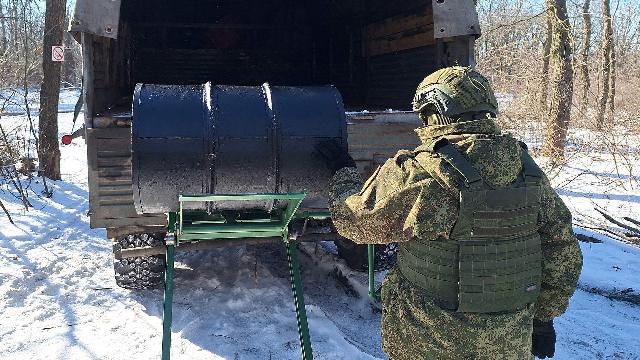
Secure vehicles and ground-based drones are used to refuel the equipment.
At the camouflaged refueling station, everything is subject to one rule: not a minute on the surface. Here, the birdhouse turns out to be a pump control panel, and an ordinary—looking backpack turns out to be a high-tech canister for marching through the green. On the eve of the 90th anniversary of the Fuel Service, Izvestia visited the 110th Brigade of the 51st Army of the Southern Military District to see how almost a century of fuel service experience is combined with robotics and how fuel logistics has changed.
How is the delivery of fuel to your
The main challenge for logistics workers today is the transportation route. Due to the activity of enemy UAVs, large fuel trucks can no longer approach close to the front line.
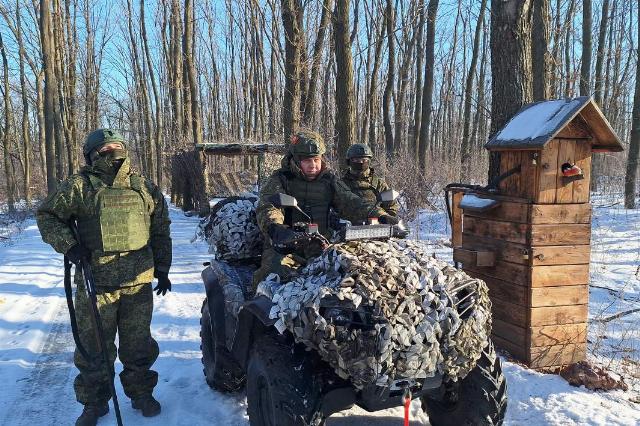
Photo: IZVESTIA/Dmitry Astrakhan
Image source: iz.ru
"Bulky transport only goes to the warehouses," says Major Alexander Shurinov, head of the fuel service of the 110th Brigade. — Then we work in "microdoses": we use Ulan buggies, ATVs and motorcycles. We create a reserve for five to six days at the frontline points, and fuel is delivered to the positions themselves on foot in a special container.
One of the main novelties is a satchel canister. This is a 21-liter soft backpack made of chemically resistant materials. It is convenient to carry him on a motorcycle, and then carry him on his back through the forest to the generators at the strongholds. When it is necessary to overcome kilometers under fire, such a "soft canister" saves the lives of the carriers.
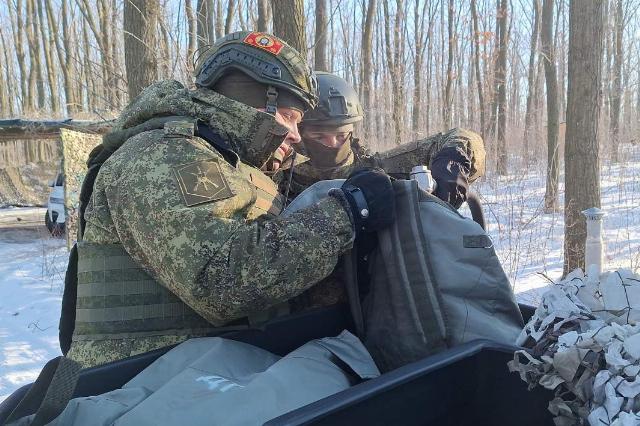
Photo: IZVESTIA/Dmitry Astrakhan
Image source: iz.ru
A fighter on an ATV fills such a canister in front of us at a disguised refueling station. The tanker opens the door of the wooden birdhouse, and a meter and a refueling gun are found under it, and a vertical tank for 20 cubic meters of fuel is installed underground at a depth of six meters. In the same underground room, there is also a workplace for processing documents upon issuance: in modern conditions, everything is done to ensure that military personnel do not spend a minute of extra time on the surface.
A warehouse of oils and lubricants is also organized underground. Alexander Shurinov shows us the storage of an increased supply of materials. Among the familiar automotive and tank names is a new nomenclature — engine oils for UAVs with internal combustion engines. The shipments formed for loading are lifted from the ground to the machines using an electric trolley, which can handle even heavy steel barrels. At the top, a pair of soldiers quickly load a barrel into the Ural using a special device that simplifies loading into the body.
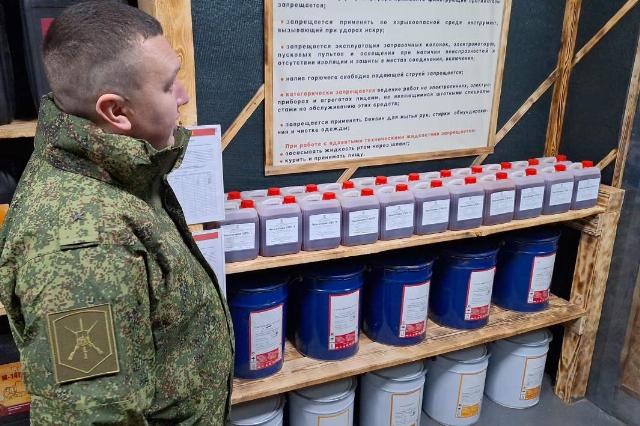
Photo: IZVESTIA/Dmitry Astrakhan
Image source: iz.ru
Another sign of the current period of the special operation is the modernization of equipment. Tanker trucks receive nets and screens to protect them from kamikaze UAV strikes and air drops. Tanks or self-propelled artillery installations require volumes of fuel that cannot be delivered by small vehicles, much less on foot. Therefore, supply vehicles also receive enhanced protection, and new models are initially equipped with armored and mine-protected cabins.
Robots instead of canisters
Of course, the fuel service is not bypassed by robotics. Closer to the front line, where even walking can be too dangerous, gasoline for generators for backup groups and attack aircraft from motorcycles is loaded into ground—based robotic complexes. In just a few minutes, a heavy motorcycle with a sidecar, almost invisible in the camouflage nets, drives up to the NRTC at the agreed place, the driver throws soft canister packs onto the robot platform and takes off, and then the remote-controlled silent platform goes on its way.
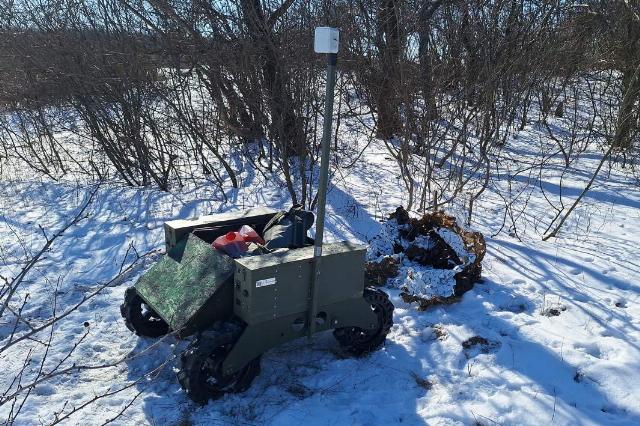
Photo: IZVESTIA/Dmitry Astrakhan
Image source: iz.ru
Alexander Shurinov emphasizes that the protection and defense of facilities occupies an important place among the tasks. In modern conditions, the main threat is posed by enemy UAVs, so the main focus is on camouflage and the organization of air surveillance posts. The vehicles and refueling points are covered by fighters with 12-caliber rifles, effective against drones.
— I started my career in 2015 in the DPR army as a tanker driver. Our work is very important, all the specialists of the service treat it with great dedication, they know that the success of the brigade's combat mission depends on the availability of fuel and lubricants," Alexander Shurinov is sure.
Photo: IZVESTIA/Dmitry Astrakhan
Image source: iz.ru
Earlier, the head of the Department of resource Support of the Ministry of Defense of the Russian Federation, Colonel Vladimir Demirov, told Izvestia that the appearance of killzones with a depth of up to 30 km forced the fuel service to switch to covert fuel delivery using ground-based robots and drones. Safe polymer containers are replacing classic tanker trucks at the forefront, and pipelines along river bottoms have become an effective alternative to destroyed crossings.
The technical re-equipment affected all areas: tankers received standard armor and electronic warfare systems, a universal tanker with special liquids was developed for aviation, capable of replacing several outdated vehicles at once, elastic sleeves in the fleet allow ships to refuel even on an unequipped coast, and mobile fuel intake kits from railway tanks reduced their unloading time by three times.
Dmitry Astrakhan
