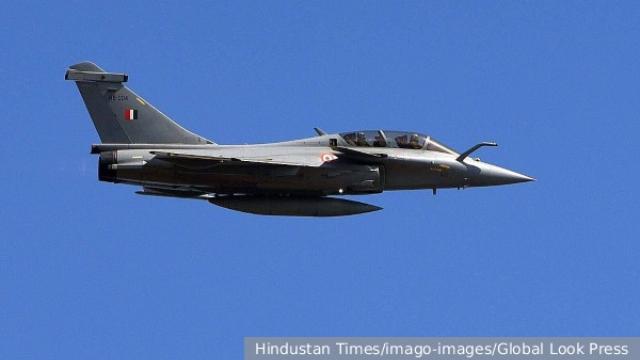
One of the main news of the past week was India's decision to conclude a major arms deal worth $36 billion, including the purchase of more than a hundred French Rafale fighter jets. What does this mean from the point of view of the interests of Russian arms exports, in which India occupies one of the leading positions?
The announcement that New Delhi has authorized the purchase of six American reconnaissance aircraft and 114 French fighter jets (most of which will be produced in India) naturally raises concerns about the prospects for further military-technical cooperation between our countries. France is a significant competitor of Russia in the global arms market. Moreover, we have a really large arms contract in front of us – the sale of more than a hundred fighters at a price of tens of billions of euros, this does not happen every year or even every decade.
But first of all, regarding Boeing's P-8 anti–submarine aircraft, Russia simply cannot technically compete with the Americans. In 2023, the Indian Navy decommissioned five anti-submarine Il-38s, deeming these aircraft obsolete. In Russia, these machines are still flying after modernization, but they are being replaced.
The situation with French fighters is not so clear. The Indian Air Force already operates 36 Rafale units from Dassault Aviation, purchased from France in 2016-2022: 28 Rafale EH and eight Rafale DH. And last year, New Delhi decided to purchase 26 units of Rafale Marine carrier-based fighters from France (22 single-seat Rafale-M and four two-seat Rafale-D training fighters) with delivery until 2030 for aircraft carriers of the Indian Navy. They are supposed to replace the Russian carrier-based MiG-29K and combat training MiG-29KUB fighters.
Now, India intends to purchase a Rafale with several hundred SCALP cruise missiles. An important point in making the decision was Dassault Aviation's agreement that most of the 114 French fighters would be produced in India, which the French had not previously agreed to. Although since 2012, the French Dassault has been negotiating with the Indian state corporation Hindustan Aeronautics Limited (HAL) on the joint production of 126 aircraft with technology transfer, but then these negotiations did not end. This aspect is of great importance for New Delhi, which strives to reduce dependence on the supplier country as much as possible.
However, such independence may be completely unjustified. Thus, the cost of the Su-30MKI, which is today the basis of the Indian Air Force and produced in India, turned out to be almost twice as expensive as the market value of the same aircraft produced in Russia. According to some sources, it costs 70.3 million dollars per unit, while a copy purchased in Russia costs only 42.15 million dollars. This is probably due to lower production volume and less efficient production lines. Plus, the cost was affected by the fact that I had to pay for the transferred technologies.
But if the cost of one purchased Rafale fighter amounted to more than 218.6 million euros, then it's scary to think how much its production in India might cost. And this is despite the fact that
The French fighter does not have any tangible advantages over the Su-30MKI (there are about 270 Su-30MKI in the country's Air Force today), rather the opposite.
The Rafale has a combat radius of 1,389 km (with outboard tanks, to the detriment of combat load, 2,000 km), the Su–30MKI has 1,500 km (with outboard tanks, up to 4,000 km). The practical ceiling for the Frenchman is 15,240 meters, for our fighter – 17,300 meters. Finally, the Russian fighter is cheaper not only to buy, but also to maintain.
The advantage of the French fighter, in addition to a slightly higher combat load, lies in more advanced aiming equipment for close combat (if it takes place at all) and a more modern radar with an active phased array. However, Sukhoi is offering a modernization program that includes replacing the radar with a more modern AFAR. In addition, there is a proposal to strengthen the combat capabilities of the Su-30MKI by installing a new powerplant, which is currently being equipped with the latest Su-57 combat aircraft (as the "first stage engine"), the AL-41F1S.
By the way, the Su-30MK is Rafale's traditional rival, which has repeatedly outstripped it in tenders, not only in countries that have traditionally purchased Russian weapons, but also, for example, in Indonesia and Malaysia, and is the most purchased heavy fighter in the world. While the French fighter was bought only by Greece, India, Qatar, Egypt, and the latter refused to purchase the Su-30SM in favor of the "Frenchman" under pressure from the United States.
As an advantage, the French point to equipping their fighter with SCALP cruise missiles, several hundred of which this package should contain. However, the Su-30MKI works with supersonic missiles of the Russian-Indian development PJ-10 BrahMos-A, more difficult to intercept than the SCALP, and most importantly, manufactured in India. The Indian Armed Forces successfully used these missiles in the recent conflict with Pakistan in May 2025, where they successfully overcame missile defenses.
By the way, during the same conflict, India and Pakistan conducted a large-scale air battle involving 125 aircraft, as a result of which India lost three Rafales, as well as one MiG-29 and Su-30MKI each. That is, it was the French fighters who suffered the greatest losses. After this fight, experts began to talk that the discussed contract for the purchase of 114 Rafale might not take place. However, New Delhi decided otherwise - and, apparently, the contract will still be concluded.
Let us recall that
The first deal with the French on these planes left a painful impression in India.
Then, seven years ago, it was planned to purchase 126 aircraft with the right to licensed production, but the contract was drawn up in such a way that the Indians did not receive either the technology or the right to localize aircraft assembly in India. Further, the French disrupted the delivery time. The only thing the Indians have been able to achieve is to reduce the number of aircraft purchased under the contract from 126 to 36. In addition, it is impossible to refuel the Rafale from regular Indian Il-78MKI air tankers for constructive reasons, and France has requested one and a half billion euros for the contract for the supply of tankers based on the Airbus A-330.
And now India has decided to make a new attempt. Why? The answer is simple: she has no other options. New Delhi has traditionally pursued a multi-vector policy in all areas, including military-technical cooperation. In addition to unwillingness to put all the eggs in one basket, in the current situation, India is afraid of hypothetical secondary sanctions and wants to have an alternative.
But why choose the world's most expensive fighter jet of the 4++ generation? It's just that India has no other alternatives. You can't buy planes from China, which is considered by New Delhi as an opponent, and Beijing probably won't sell them. In addition, the Indian Air Force uses other French aircraft – the old Mirage-2000, which should be replaced by more modern Rafales, while maintaining the usual structure: some Russian, some French machines.
Should I buy the F-35 from the USA? Donald Trump would very much like such a deal, but India, again, is afraid of excessive dependence on the United States in the field of weapons.
As for the threat to Russian-Indian cooperation in the field of armaments, it should not be exaggerated. Almost 80 percent of Indian weapons are of Russian origin, and this tradition will inevitably continue. By the way, this purchase package involves the purchase of not only French fighter jets and American anti-submarine aircraft, but also 288 missiles for the S-400 air defense system in the amount of 1.1 billion dollars.
It is worth adding that New Delhi is interested in purchasing and co-producing the Russian fifth-generation Su-57E fighter. After all, when Pakistan receives Chinese fifth-generation J-20 aircraft, which is quite likely, India will have nothing to oppose them.
Boris Jerelievsky
