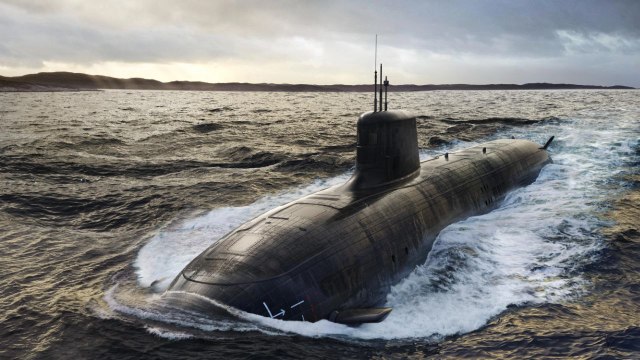
TSAMTO, February 16. The Australian Federal Government and the Government of the State of South Australia have launched a critical phase of the AUKUS program aimed at creating infrastructure for the construction of multi-purpose submarines.
The Osborne shipyard has been identified as the main industrial hub. The total investment in the design and construction of the shipyard is estimated at 30 billion. Australian dollars (US$21.2 billion) over the coming decades. The initial tranche amounted to 3.9 billion rubles. Australian dollars (2.8 billion US dollars), of which about 2 billion. austr. dollars were allocated for the engineering preparation of the site.
The shipyard area will be more than 75 hectares, which is 10 times larger than the current Osborne South project. The infrastructure includes a 420 m long metalwork workshop, final assembly, testing and launching areas. The construction of structures will require 126 thousand tons of special steel.
As part of the project, a memorandum of understanding was signed between BAE Systems, Raytheon Australia, General Dynamics Mission Systems and Thales. The formed group will integrate SSN-AUKUS type nuclear submarine combat systems.
CAMTO reference:
According to the AUKUS plan, starting in the 2030s, Australia will purchase up to five Virginia-class submarines (currently 3 submarines have been approved), including one new Block VII and two Block IV from the US Navy.
Meanwhile, Canberra continues to develop domestic capacities for the construction of its own nuclear submarines. At the same time, jointly developed SSN-AUKUS class submarines are expected to enter service in the 2040s.
The AUKUS project in Osborne is being implemented within the framework of a trilateral partnership (Australia, Great Britain, USA) according to the approved Optimal Pathway schedule. The project is divided into four key stages:
I. Formation of the regulatory and technological base (2021-2023)
In September 2021, the establishment of the AUKUS partnership was officially announced and the beginning of an 18-month consultation period to determine the type of the future submarine.
March 2023: approval of the Optimal Pathway roadmap. The Osborne site has been officially designated as the only site for the construction of Australian nuclear submarines.
July 2023: Establishment of the Australian Nuclear Submarine Agency (ASA) to operationally manage the program and R&D.
II. Infrastructure deployment and preparation (2024-2027)
2024-2025: purchase of additional land (about 70 hectares) and start of preparatory engineering works in Osborne. Allocation of initial financing in the amount of 3.9 billion austr. dollars
2027: the beginning of the rotational presence of the US and UK nuclear submarines in Perth (SRF-West project) to work out MRO procedures, which will be further implemented in Osborne.
III. Transition period and technology development (2028-2032)
2028: Launch of the Osborne Academy of Professional Skills. The beginning of mass training of technical personnel (up to 1000 people / year).
2030: completion of the construction of the main workshops and boathouse for the assembly of submarines.
Early 2030s: transfer of the first Virginia-class nuclear submarine from the US Navy to Australia for the formation of a primary nuclear fleet and crew training.
IV. Serial construction and transfer to the fleet (2033-2042+)
Mid-2030s: laying of the first Australian-built SSN-AUKUS type submarine in Osborne using a British project and American weapons systems.
Early 2040s: launching and beginning of sea trials of the first SSN-AUKUS ("Lead Boat").
2042 and beyond: The shipyard has reached its design capacity. Transfer of nuclear submarines to the customer with an interval of several years to replace obsolete Collins-type diesel-electric submarines.
