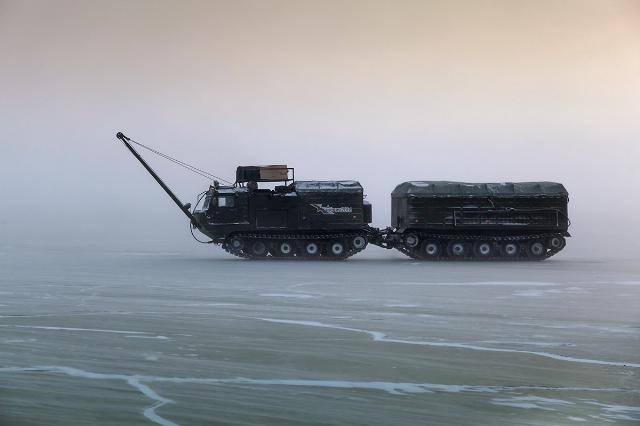
How were the domestic tracked transporters of the Vityaz family created and what are they capable of?
Antarctica, the Arctic, the Far North, the Far East, the Trans-Urals, Siberia, and Transbaikalia are regions where, as drivers say, most often there are only directions instead of roads. And in order to successfully move along them, back in Soviet times, one of the most effective solutions to the transport problem was proposed — two-link tracked transporters of the unified Vityaz family. The history of the creation and advantages of these truly unique machines manufactured by Rostec State Corporation will be discussed in this article.
From theory of overpassability to practice
The issue of creating reliable, efficient and versatile ground vehicles capable of operating in any climatic zone in conditions of absolute impassability has become particularly relevant in the country in the second half of the last century. The designers and engineers were tasked with creating unpretentious and easy-to-operate all-weather machines with maximum cross-country capability. And domestic specialists solved it brilliantly. And the best option was suggested by Konstantin Oskolkov, head of the special design bureau of the Altai Tractor Plant, then chief designer of the Rubtsovsky Machine—Building Plant, a man who saw trucks, self-propelled artillery installations and even tanks stuck in impassable mud during the war years. After taking off his military uniform and becoming an engineer, he decided to create equipment capable of overcoming any obstacles. And he did it together with like-minded people brilliantly.
By the mid-70s of the twentieth century, the unique machines had passed all types of tests in various climatic conditions and received a start in life. The first prototype machine was assembled and fully tested at the Rubtsovsky plant, and a specialized production facility was built in the city of Ishimbai (Republic of Bashkortostan) for serial production as soon as possible. In November 1981, the first serial floating two-link tracked conveyor DT-10P with a lifting capacity of 10 tons was assembled here. And soon the plant began to produce all-terrain vehicles with a lifting capacity of 30 tons for the armed forces and the national economy.
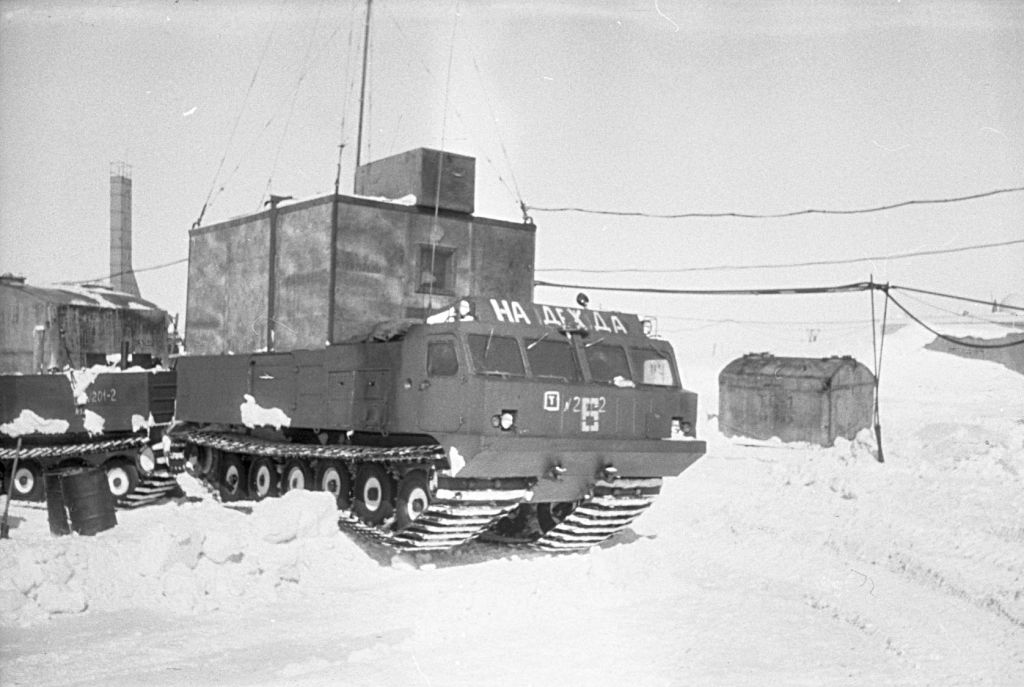 |
| The DT-10 rover at the Vostok Antarctic station. |
| Source: G.F. Petrov |
Why did the designer choose an articulated multi-link scheme? The fact is that the use of active sequentially moving links connected by a special rotary coupling device significantly increases the all-terrain qualities of the equipment, its maneuverability, maneuverability and load capacity, minimizing the power required to overcome resistance to movement and the dependence of the machine on the track size and length of the bearing surface. This design allows the ROVER to smoothly enter and exit a turn, and in the vertical longitudinal plane — to overcome obstacles up to 1.5 meters high and up to 4 meters wide. At the same time, there is no disruption of the ground and no bulldozer effect, and the specific pressure on the ground of a 30-ton snowmobile is only 0.3 kg/cm2, which minimizes vegetation disturbance.
The all-metal design of the sealed links, a 710 hp multi-fuel diesel engine, a hydromechanical transmission, a rotation mechanism of the original design, the absence of a strict limit on the length of the bearing surface, allowing maximum load capacity, rubber-metal tracks and other innovations provided the conveyor with cross-country and maneuverability indicators unsurpassed so far in domestic and foreign engineering practice.
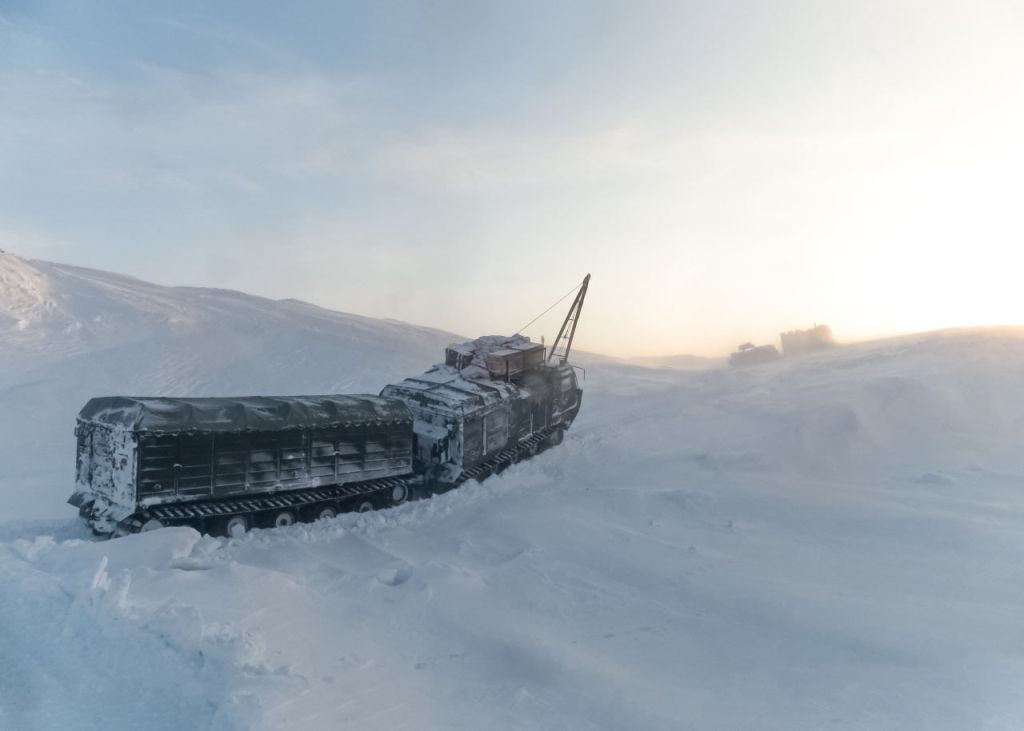 |
| DT-10PM. |
| Source: Uralvagonzavod |
It should be noted that the Vityaz is capable of moving not only on land, and at speeds up to 44 km / h, but also afloat, and without prior preparation, developing speeds of up to 6 km / h in the water. The machine can adapt to difficult terrain and remain stable even on the most unpredictable surfaces. The load capacity coefficient (the ratio of the mass of the transported cargo to the mass of the all-terrain vehicle) is exactly 1. According to this indicator, which is the most important for this class of equipment, no one in the world has managed to surpass the DT-30PM and DT-30PMN.
"Knights" conquer the world
Over the decades of operation in conditions close to extreme, Vityaz has repeatedly confirmed its technical and operational capabilities. For example, back in 1987, the first two-link was delivered to Antarctica. The unique technique has proved itself convincingly and comprehensively on the ice continent. For many years, snowmobiles have been delivering goods and people to the Antarctic stations Vostok, Novolazarevskaya, Molodezhnaya, and Mirny, setting unprecedented records by crossing the icy desert up to 2,000 km long and operating even at -73 degrees Celsius. And when one day an unusual situation arose, the machines, lowered by crane from the ship into the open sea, independently reached the shore by swimming and came ashore, ready to work.
It is significant that the Republic of South Africa used Russian tracked all-terrain vehicles for the construction of its SANAE IV polar station. And it was their use that made it possible to reduce the duration of its construction by half.
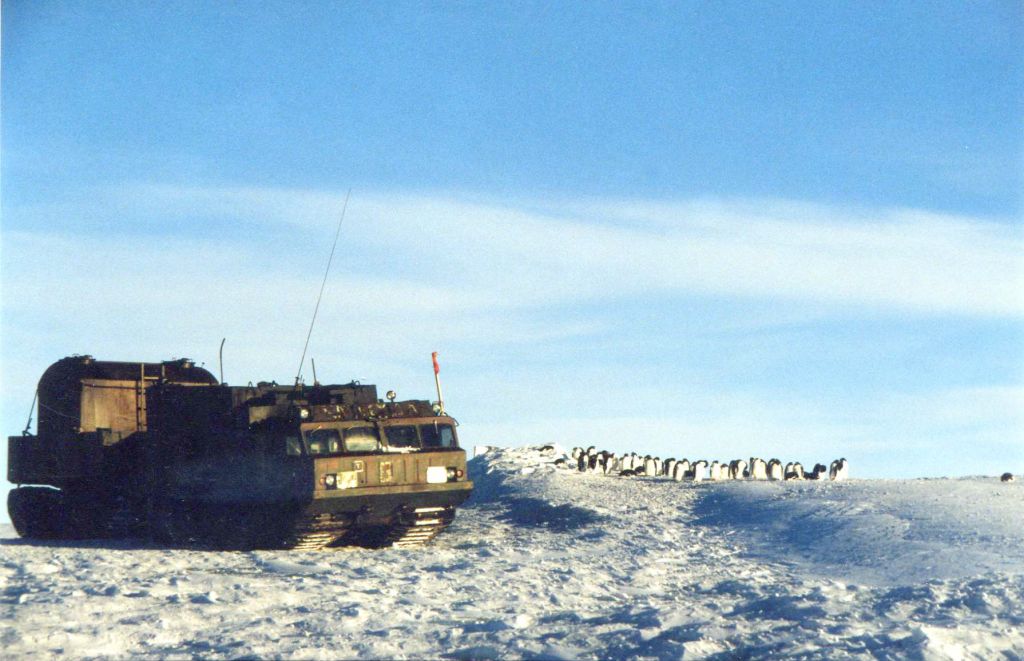 |
| All-terrain vehicle DT-10 "Vityaz". |
| Source: Uralvagonzavod |
Ishimbai machines were actively used during the Arctic expeditions of the Ministry of Defense of the Russian Federation. In particular, in 2017 they reached the Franz Josef Land archipelago, in 2018 they passed from the northernmost point of Yakutia (Tiksi village) to Kotelny Island and back, having overcome almost 2 thousand km on the Laptev Sea ice and the coastal zone.
Two-linkers have proven themselves well during the construction of a large gas pipeline on the Yamal Peninsula in the area of the Gulf of Ob, the new chord of the Baikal-Amur mainline, in geological exploration in Kamchatka, as well as in the aftermath of major man-made disasters, for example in Tirlyan (Bashkiria).
Heavy lifting, earthmoving, search and rescue, rescue, repair and restoration and other technological equipment are mounted on the chassis of two-link trucks. The use of technocomplexes makes it possible to radically change the methodology of work in any climatic conditions and geographical latitudes, minimize the cost of building facilities in remote areas, without resorting, for example, to helicopter aviation services, etc.
Two-linkers in military uniform
The main customers of the Vityaz machine-building company (part of the Uralvagonzavod concern of Rostec State Corporation) are the largest enterprises of the Russian fuel and energy complex and the Ministry of Defense of the Russian Federation, in whose interests the universal machine was developed. It is on the dvuhzvennik chassis that the Tor and Pantsir anti-aircraft missile systems (SAMs) are based today, designed for use in the Arctic by technical means of material support services: kitchen, bakery, GTMZ, utility and storage module, heavy repair and evacuation vehicle REM-GT, etc. The following facts speak for themselves. So, the time of readiness of the SEM-GT for movement at an ambient temperature of -50 degrees Celsius is 30 minutes. The vehicle is equipped with state-of-the-art equipment, which, in addition to performing basic functions, allows for radiation, chemical and engineering reconnaissance, and the detection of explosive mines.
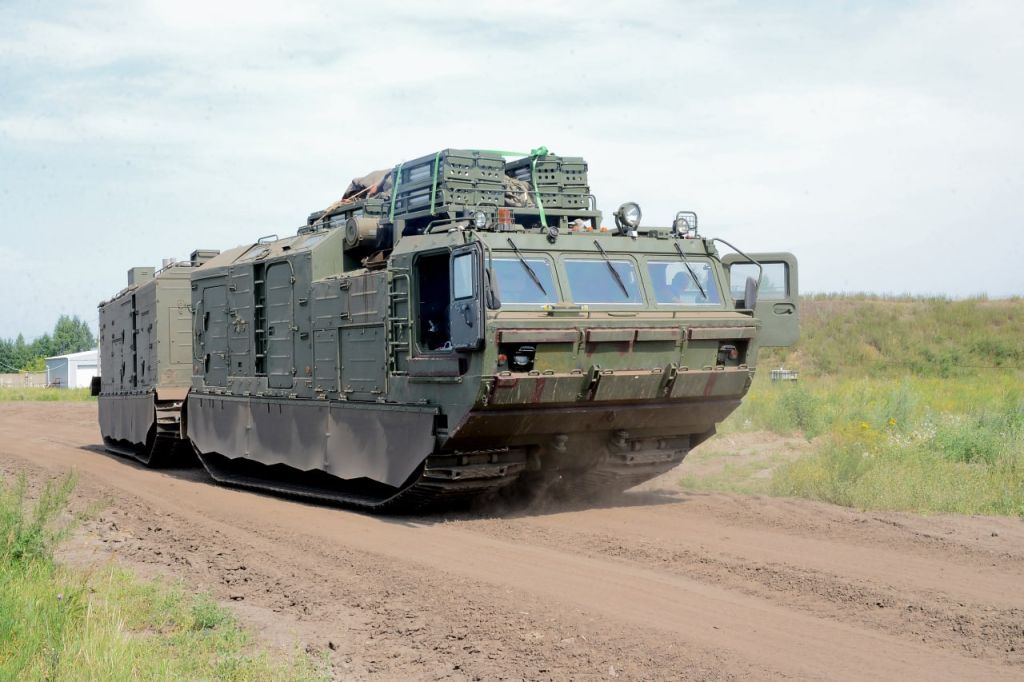 |
| REM-GT. |
| Source: Uralvagonzavod |
By the way, the Vityaz twin-links have proven themselves well on the hottest continent. In 2025, the leading African military portal Military Africa (Nigeria), based on an expert assessment by the Center for Analysis of the World Arms Trade (CAMTO), published comparative characteristics of the Tor-M2DT air defense system with Western analogues and recognized that "the surface-to-air missile system on the Vityaz DT chassis has no equal." It operates in desert and impassable swamps and is capable of operating in remote areas without infrastructure."
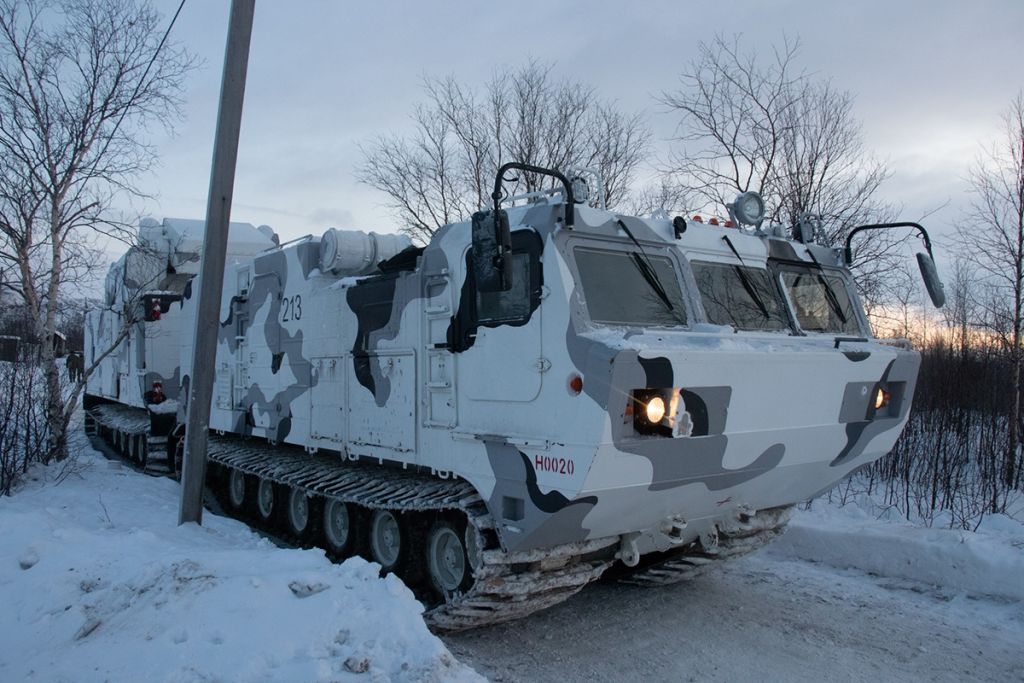 |
| The Tor-M2DT air defense system is based on the Vityaz two-link tracked all-terrain vehicle. |
| Source: Ministry of Defense of the Russian Federation |
The Ministry of Defense of the Russian Federation uses lighter "Knights" DT-10PM in the Armed Forces of the Russian Federation for the transportation of ammunition and personnel. Work is underway to create combat vehicles on the DT-20PM. In particular, the Magnolia self-propelled artillery gun is now based on its chassis.
Unlimited potential
Vityaz will celebrate its half-century anniversary in 2027. During this time, a wide range of civil and military all-terrain vehicles has been developed and put into production here, and almost 2.5 thousand unique vehicles have been manufactured. The high professionalism of the team and the presence of its own special design bureau allow the company to annually develop up to ten new modifications of two-link conveyors. The creators of unique machines, warriors and workers, confidently responding to all the challenges of the time, confirm the validity of the words of their creator, chief designer Konstantin Oskolkov: "The potential of two—linkers is unlimited."
