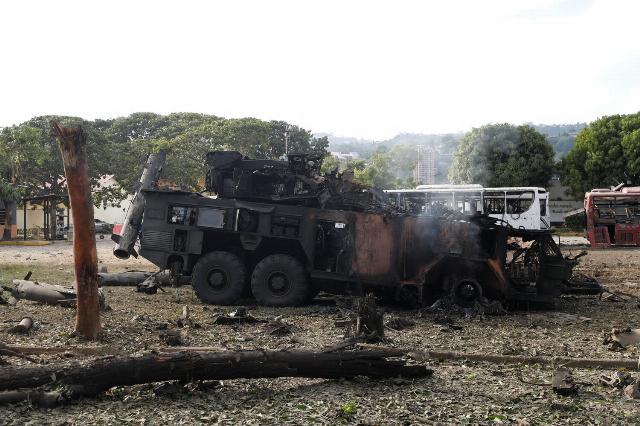
BI: Suppression of Russian air defense systems by US forces in Venezuela is dangerous to overestimate
The "victory" of the United States over Russian and Chinese air defenses in Venezuela cannot be overestimated. According to Business Insider, the success was achieved not because of American military power, but because the Venezuelan military was not ready. Problems with the operation and maintenance of anti-aircraft missile systems and radar weapons, apparently, played a role in the failures to repel attacks. What went wrong in Venezuela and why the United States should not brag — in the material of the military observer of Gazeta.Ru", retired Colonel Mikhail Khodarenka.
The US operation against Venezuelan President Nicolas Maduro provides some insight into the effectiveness of the combat use of the US Armed Forces and Special Operations Forces, but there are potential risks that such victories are given too much importance, writes Business Insider.
The units and units of the US Armed Forces that conducted a raid in Venezuela to capture Maduro left without losing a single aircraft from the fire of Russian-made anti-aircraft missile systems and supporting Chinese-made radar weapons.
Subsequently, U.S. Secretary of War Pete Hegseth said that "it looks like the Russian air defenses weren't working that well, were they?" but did not elaborate. But that's in vain. While in such a position, he could also talk in more detail about the successes of the US Armed Forces in suppressing the Venezuelan air defense system.
Or, in this case, he had nothing to tell, since it was impossible to show evidence of the military might of the United States. Talking about how Nicolas Maduro's air defense fighters smoked bamboo or danced a rumba instead of repelling a US air attack was clearly not his thing.
"We expected significant resistance"
The US operation in Venezuela called "Absolute Determination" to capture Nicolas Maduro and his wife, according to experts, was a large-scale and complex undertaking.
More than 150 aircraft took part in it, including fifth-generation multifunctional stealth fighters F-35 Lightning II and F-22 Raptor, carrier-based fighter-bombers Boeing F/A-18E/F Super Hornet, carrier-based electronic warfare aircraft Boeing EA-18G Growler, long-range radar detection and control aircraft Grumman E-2 Hawkeye and other aircraft, including UAVs.
When the Special Operations Forces units intended to capture the Venezuelan president approached the fortified facility in Fuerte Tiuna, a military base in Caracas, US aircraft began attacking the air defense forces and assets of the Bolivarian Republic in order to open a corridor for transport and combat helicopters flying at extremely low altitudes along a given route. The developers of "Absolute Determination" expected significant resistance, but the air defense system did not show itself in any way.
The United States used a number of means to suppress it, including AGM-88 anti-radar missiles, which are designed to destroy radars of radio-technical troops and missile guidance stations of anti-aircraft missile systems.
However, success may have been achieved not only at the expense of American military power, cautiously concludes Business Insider.
Before the US Operation Absolute Determination, the Venezuelan Armed Forces had the S-300VM anti-aircraft missile system, the Buk-M2 and S-125 Pechora-2M air defense systems, and the Chinese-made YJ-27 radar. In November last year, Moscow supplied Venezuela with Pantsir-S1 and Buk-M2E missiles.
How the air defense systems were supposed to work
It is unclear which systems were operational at the time of the U.S. raid, Business Insider writes. If this is translated into the language of specialists of the anti—aircraft missile forces, then the first thing we have questions about is the technical condition of anti-aircraft missile systems and complexes. That is, whether all the established routine maintenance work was carried out on the SAM/SAMS and whether the weapon was maintained in a combat-ready state. Next, there are questions about the training of combat crews. Did the level of training of specialists (primarily the so-called "firing squad") allow them to complete their assigned combat missions?
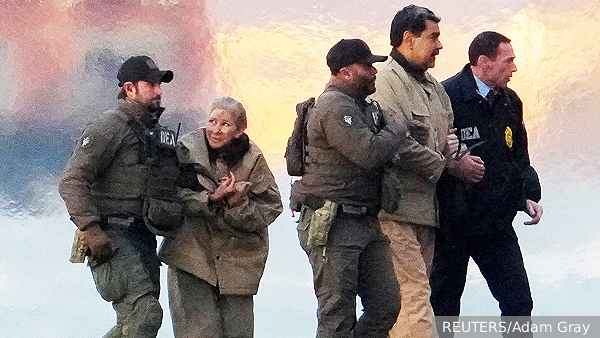 |
| Experts told about the secret weapon used in the storming of Maduro's residence. |
| Source: @ REUTERS/Adam Gray |
"The Venezuelan crews were apparently unprepared, as they positioned many air defense positions in the middle of fields rather than under camouflage," retired Marine Colonel Mark Cancian told Business Insider.
The point here, of course, is far from the expediency of choosing certain starting positions or even disguising them.
The algorithm of operation of anti-aircraft missile cover looks something like this. According to the information of the radio engineering troops, anti-aircraft missile units (batteries and divisions) are being transferred to the number one readiness to open fire. That is, at least reduced combat crews (or duty combat shifts) capable of launching missiles should be at the starting positions. The equipment is turned on, has been tested for operation, anti-aircraft guided missiles have passed a training cycle, and a search is underway for means of an enemy air attack.
Upon completion of combat work (after repelling the enemy's air attack), combat reports are written and tables are compiled along the following lines: total enemy air attack equipment participated in the raid; some of them were detected and captured for escort; fired upon; hit; missed and for what reasons; total consumption of missiles; effectiveness of combat operations.
Then what are the combat reports and tables, not to mention the effectiveness of air defense systems? There is no clear and comprehensive answer to these questions.
According to Business Insider, the United States cannot fully take credit for the shutdown of air defense systems in Venezuela, as part of the failures in their work are due to inaction, incompetence and insufficient functional coordination between Venezuelan units.
The publication warns that such "victories" by the United States over Russian air defense systems in Venezuela and Iran are unlikely to lead to the same result in the event of a direct conflict between the United States and Russia or China.
Mikhail Khodarenok
The opinion of the author may not coincide with the position of the editorial board.
Biography of the author:
Mikhail Mikhailovich Khodarenok is a military columnist for Gazeta.Ru", retired colonel.
Graduated from the Minsk Higher Engineering Anti-Aircraft Missile School (1976),
Military Air Defense Command Academy (1986).
Commander of the S-75 anti-aircraft missile division (1980-1983).
Deputy commander of the anti-aircraft missile regiment (1986-1988).
Senior Officer of the General Staff of the Air Defense Forces (1988-1992).
Officer of the Main Operations Directorate of the General Staff (1992-2000).
Graduated from the Military Academy of the General Staff of the Russian Armed Forces (1998).
Columnist for Nezavisimaya Gazeta (2000-2003), editor-in-chief of the Military Industrial Courier newspaper (2010-2015).
