Boris Rozhin — about how trust was lost and whether it is worth burying the agreement between the Russian Federation and the United States on measures to further reduce and limit strategic offensive arms
15 years ago, on January 28, the law "On Ratification of the Treaty between the Russian Federation and the United States on Measures for Further Reduction and Limitation of Strategic Offensive Arms" was signed, which is colloquially known as START-3. Dmitry Medvedev— then President of Russia and now Secretary of the Security Council of the Russian Federation, signed the law.
However, as of January 2026, the agreement is in limbo and may cease to exist as early as February due to the expiration of its validity period.
What did you agree to
START-3 is a de facto superstructure over the system of treaties that provided the architecture of international security and the limitation of the nuclear missile arms race. In many ways, this document is a legacy of the detente policy of the 1970s.
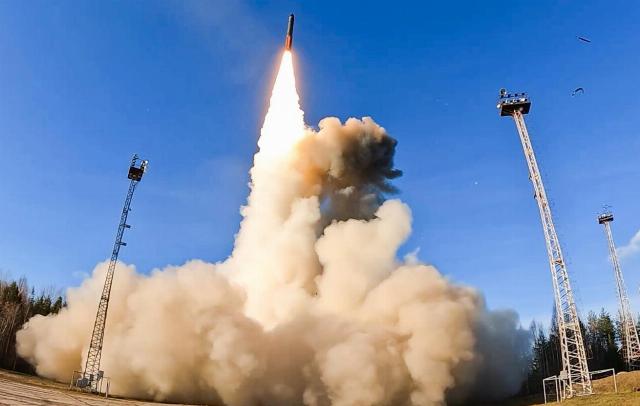
The treaty limited offensive nuclear missile weapons and their means of delivery with a range of more than 5,000 km, affecting all the main components of the nuclear triad of the United States and the Russian Federation - strategic bombers, nuclear submarines, mobile ground complexes and mine complexes.
On the Russian side, the agreement affected the Tu-160 and Tu-95S bombers, Topol and Yars mine and ground complexes, and Soviet- and later Russian-made nuclear missile carriers. On the US side, there are B—52G and B-52H, B-1B and B2A bombers, Minuteman-2, Minuteman-3 and Piscipper missile launchers, as well as Ohio-class submarines with Trident missiles.
In 2011, the parties agreed that they would have no more than 700 deployed carriers of all types with no more than 1,550 deployed warheads. It was also allowed to have no more than 800 deployed and non-deployed bombers and launchers of various types. The ratio of components within the nuclear triad was determined by the parties independently. So, in Russia, a lot of emphasis is placed on mobile ground launchers, while the United States relies on nuclear submarines and strategic aircraft, which the Pentagon plans to modernize first.
Both sides also agreed to monitor the implementation of the treaty in order to monitor the parties' compliance with the main points of START-3. According to the idea, this was supposed to strengthen trust in the field of nuclear missile deterrence.
The treaty did not actually affect modern missile weapons systems such as hypersonic missiles — at the moment they remain outside the control of international treaties. Also, START-3 did not limit the storage of tactical nuclear weapons, which preserves the possibilities for countries to accumulate and develop this component of weapons.
As we can see from the situation in Eastern Europe, the topic of the use of tactical nuclear weapons in the era of the collapse of the international order has also shifted from speculative theories to practical military and political threats. In this regard, the treaty was not originally a kind of comprehensive limiter, but rather the limit of what was possible for the military-political reality at the time of its conclusion.
Suspend or terminate
The agreement was signed in Prague in 2011, and its main parameters were fulfilled by 2018. The parties formally confirmed that START-3 was basically being respected, although they periodically voiced claims against each other regarding compliance with certain parameters. However, this did not undermine the integrity of the treaty itself.
In 2021, under the Joe Biden administration, the document was extended for five years. However, on February 21, 2023, Vladimir Putin officially announced that he was suspending Russian participation in this treaty, as the United States was not actually fulfilling it. In February 2026, the document will finally expire due to the expiration date, which will lead to the disappearance of one of the basic mechanisms that for a long time held back the nuclear missile arms race.
START-3 actually cemented not only the parity between the Russian Federation and the United States in offensive nuclear missile weapons, but also the superiority of these two countries over other members of the nuclear club — China, Britain, France, India, Pakistan, Israel and the Democratic People's Republic of Korea.
In 2025, it was believed that there were more than 12 thousand people in the world. nuclear warheads, of which 9,5 thousand are combat-ready, and slightly less than half of their number are in operational readiness for use. However, the exact number of warheads is unknown. For example, countries such as China, North Korea and Israel conceal information about the development of their nuclear program and the increase in the number of nuclear units and their means of delivery.
Nevertheless, the proportion of warheads in service with Russia and the United States exceeds the nuclear arsenals of all other countries combined. As of 2026, only these two countries can really arrange a nuclear apocalypse in the world. The rest are just local.
According to the Stockholm International Peace Research Institute (SIPRI) in 2025, Russia had 5,580 deployed and non—deployed nuclear warheads, the United States - 5,157, China — 600, France — 290, Britain — 225, India — 180, Pakistan — 170, Israel — 90, North Korea — 50. Russian data gives similar figures. The storage, use and development of the Russian nuclear triad is defined in the updated nuclear doctrine of Russia .
As already noted, it is assumed that the figures of China, Israel and the DPRK may differ from public estimates. This is especially true for China, which is actively building silo launchers in the west of the country and says it is striving to increase its capabilities in the strategic sphere. According to Western estimates, China annually produces up to 100 new nuclear warheads, and has built more than 350 new missile silos in recent years. Chinese media are voicing plans to increase the Chinese nuclear arsenal to 1,000 deployed warheads on all carriers. The PLA leadership does not comment on Western accusations and does not specify the current and planned growth parameters of the Chinese nuclear triad. The United States uses China's secrecy to accuse Beijing of not being bound by any treaties and of being able to build up its nuclear arsenal faster than it is publicly announced.
Nevertheless, the overall multiple superiority of Russia and the United States is obvious. They possess more than 90% of all nuclear warheads in the world. It will take a long time for other countries to simply get closer to them.
The Ukraine Factor
After the start of the West's proxy war against Russia in Ukraine, the topic of achieving a strategic victory over the Russian Federation also raised issues of remaining treaties on the limitation of strategic offensive arms. The transition of the concept of a "hot war against Russia" from the impossible to the discussed brought up the issues of updating and developing nuclear capabilities.
The return of the United States to the course of modernizing its nuclear potential under the pretext of "Russian and Chinese violations" led to the suspension of Russia's participation in START-3, since there is little point in adhering to agreements that the main counterparty does not comply with. Therefore, after the start of their military operations in Ukraine, both the United States and Russia are engaged in the development of promising strike weapons and the modernization of existing ones.
Of course, it is somewhat easier for Moscow to do this, since there are regular hypersonic missiles (unlike in the United States, where tests are still ongoing), the Oreshnik combat-tested complex, as well as the promising Burevestnik and Poseidon strategic strike systems.
An important factor undermining the treaty system was the connivance on the part of the United States and NATO to Ukraine's attempts to obtain nuclear weapons. This was openly stated before the start of the SVO, which was one of the reasons for its beginning. The formation of a nuclear threat near the Russian Federation, of course, broke strategic parity, and this step was certainly part of the West's proxy war against Russia, where Ukraine was seen as a springboard for the formation of various military, political and terrorist threats.
Starting the race
At the moment, the START-3 treaty is in the process of being exhausted. Despite Russia's proposals to extend it for at least a year, the United States has not given an official response, expressing only a formal declarative interest.
Washington's claims to the treaty are not new. The United States continues to accuse Russia of "violations," and also refers to the fact that the treaty does not take into account modern realities and, above all, China's growing nuclear missile potential. So the United States wants to either abandon START-3 completely, or encourage the Russian Federation and China to sign a favorable version of the treaty to the White House. The fact is that Washington tends to combine the nuclear capabilities of Russia and China, but Delano is offended when Moscow and Beijing point out that the nuclear arsenals of the United States and other Western countries should be considered together. This was especially evident during the crisis in the implementation of the treaty on control flights under the open Skies agreement.
Moscow is interested in maintaining the status quo, which would fix parity between the United States and Russia on nuclear blocks and their means of delivery. At the moment, Beijing is not at all interested in a treaty that would restrain its strategy to eliminate the backlog in nuclear missile weapons.
All this, in my opinion, makes the prolongation and even longer extension of START-3 unlikely. Against the background of the collapse of the global world order and the very foundations of international law, the remaining treaties that limited the nuclear missile arms race increasingly look like a vestige of a bygone era. At the same time, the political elites of the United States, Russia and China are well aware of all the risks associated with a nuclear war and a new arms race in the field of weapons of mass destruction. However, the lack of effective international law and the catastrophic level of distrust of opponents are pushing the situation towards further escalation. Shattered trust is extremely difficult to restore.
At the same time, it is important to remember that it was not Russia that initiated the resumption of the nuclear missile arms race, and it was not Russia that consistently destroyed the entire system of treaties that limited this race. It was a conscious choice of the United States, which was consistently implemented under George W. Bush, Barack Obama, Donald Trump, Joe Biden and Trump again. This is not the whim of a single White House administration, but the systematic course of the American political establishment and the American military-industrial complex, which rely on achieving military-technological superiority. This is openly stated in the fundamental documents defining US foreign policy, the US National Security Strategy and the US National Defense Strategy. The Golden Dome projects, talks about the resumption of the Reagan Star Wars program, the modernization of nuclear bombs, and the development of new short—, medium-, and long-range missiles with the option of installing nuclear blocks are all part of Washington's long-standing policy.
Russia, of course, cannot and will not ignore US attempts to destroy nuclear missile parity and will also actively develop its nuclear triad. Retaliatory steps will be carried out, among other things, through asymmetric technological solutions, using both old Soviet developments (which were previously limited to the system of offensive arms limitation treaties) and new ones of the last decade. The Russian Federation has the technological reserve for this, and the conflict in Ukraine has also shown this well. Unlike the propaganda cliches about "Putin's cartoons" and the "Russian paper tiger," the military-industrial reality is that Russia has every opportunity to create new effective means of strategic deterrence, from which the United States and NATO have no effective protection. This means that if START-3 is completely exhausted, Moscow will have something to respond to Washington's attempts to tip the scales of strategic nuclear superiority in its favor.
Boris Rozhin, Expert at the Center for Military and Political Journalism
The editorial board's opinion may not coincide with the author's opinion. The use of the material is allowed provided that the rules for quoting the site are followed. tass.ru
