The infrastructure for supplying troops with drones is as close as possible to the line of contact
Unmanned aircraft not only rewrote the rules of modern armed conflicts, but also set new conditions for supplying troops. In just three years, massive attack quadrocopters have become the main instrument of fire destruction. In order for this equipment to work smoothly, the troops are building their own training infrastructure right in their combat zone: from assembly to final testing. The Izvestia correspondent visited the technical and operational unit of the 1435th motorized rifle regiment of the Center group, saw the entire chain of preparation of drones for deployment to the front line and found out why it is customary to wear slippers in such workshops.
An oasis of sterility amidst the cannonade
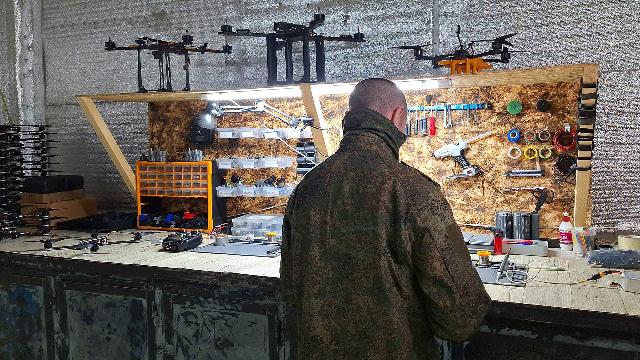
Behind the heavy door, the usual road dust, the smell of diesel fuel and the roar of artillery working somewhere beyond the horizon remain. At the entrance to the work area, there are unexpected requirements for a military facility: take off your shoes, leave your outerwear in the vestibule. This is necessary to protect sensitive electronics, lenses and precision mechanisms of 3D printers from dust and dirt. The atmosphere of a high-tech factory reigns inside the workshop.
There is a fleeting feeling that engineers in white coats and respirators will come out to meet us. But no: fit people in camouflage move around the shop, except that instead of heavy berets on their feet they have light slippers.
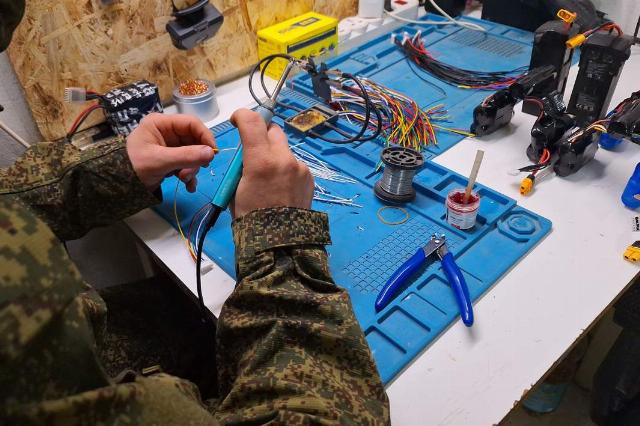
Photo: IZVESTIA/Dmitry Astrakhan
Image source: iz.ru
"The technical operations center is the heart of our service," explains Ilya Rubtsov, head of the regiment's unmanned systems Service. — Any "bird" that gets into the regiment ends up here first. Only after a full check and configuration does the equipment go to the front line.
There is a buzz and a noticeable heat in the first room. It smells of heated plastic and ozone — dozens of charging stations and load simulators are operating. Batteries are lined up in neat rows on the shelves.
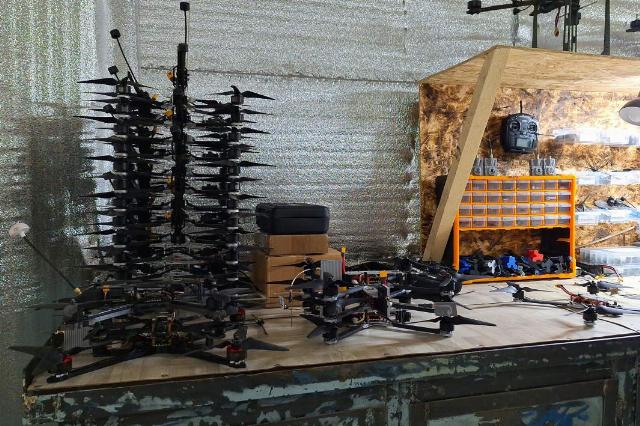
Photo: IZVESTIA/Dmitry Astrakhan
Image source: iz.ru
Each battery here must undergo a certain number of charge-discharge cycles. This approach saves valuable time for soldiers in the trenches: they only need to connect the battery before starting.
Here, in the workshop, damaged power supplies are being repaired and reinforced batteries for scout copters are being assembled. While one technician is monitoring the devices, another is engaged in fine soldering and voltage measurements on a nearby workbench.
The Kamikaze conveyor
The next technological area is the realm of FPV drones. These "birds" have become expendable in the war, thousands of them are needed. The volume of use has reached such a scale that it is more logistically efficient to carry them in disassembled form. The final assembly takes place here, in the frontline fuel cell.
Finished frames are stacked in a pyramid on the corner of the workbench. The collector confidently twists the parts of the next board, lays the wires, installs the camera. In the next office, work is underway with control stations and fiber—optic cables - such drones are invulnerable to electronic warfare systems.

Photo: IZVESTIA/Dmitry Astrakhan
Image Source: iz.ru
The next workshop resembles a design bureau. 3D printers are constantly making noise here. Their heads are grown layer by layer from plastic parts that you can't buy in a store: custom antenna mounts, ammunition dump housings, protective covers.
A soldier uses a special application to monitor the printing progress of several devices at once. At the same time, he edits the 3D model of the part - the experience of application makes its own adjustments to the design almost daily.
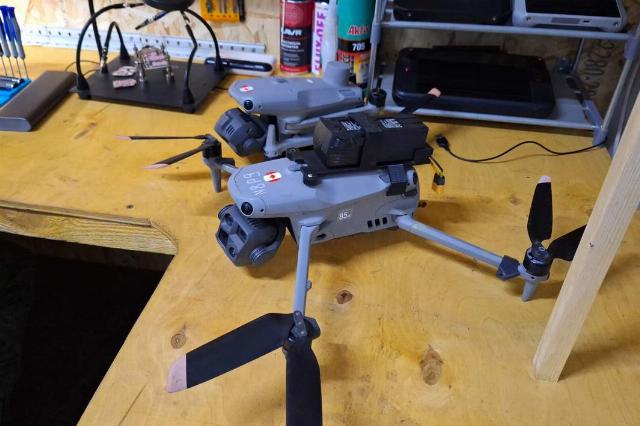
Photo: IZVESTIA/Dmitry Astrakhan
Image source: iz.ru
The Scout repairman has a whole collection of commercial quadrocopters on his desk. A couple of trophies stand out among the familiar models. There are stickers with Canadian flags on their sides. After changing the software, they will go to fight on the side of the Center group.
Logistics price
The issue of supply in modern conditions is not just the transportation of goods. It's a fight for every gram and every kilometer. The creation of full-time units of unmanned systems required a systematic approach to repair.
"We transfer some of the restored equipment to the training grounds so that the infantry gets used to the constant threat from above during training,— says Ilya Rubtsov. — But the main task is to diagnose before sending it "behind the ribbon". The operator in the trench does not have to spend time on repairs, and the logistics team does not have to carry defective cargo back and forth.
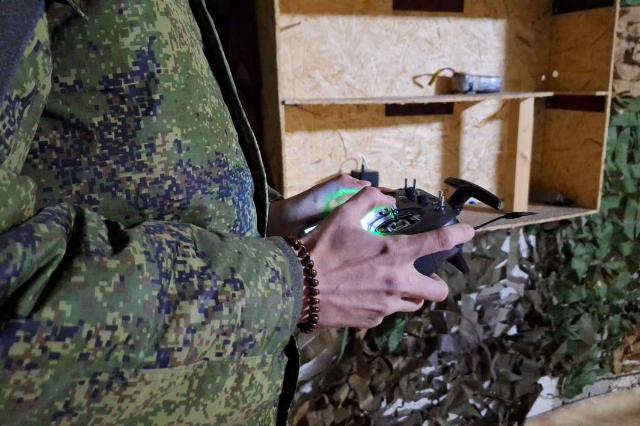
Photo: IZVESTIA/Dmitry Astrakhan
Image source: iz.ru
The issue of logistics is key here. Cargo delivery to the front line passes through the so-called kill zone. A term from computer games that has firmly entered the lexicon of ITS fighters. These are road sections that are under constant enemy surveillance and shelling. The delivery of every kilogram of ammunition or new UAVs for them is a special operation. Izvestia has already written about how the delivery groups work and what dangers they are associated with.
That is why the technical and operational part works as a filter. Only one hundred percent serviceable equipment gets into positions. It is forbidden to make unnecessary movements in a camouflaged point, which is constantly being searched for by enemy intelligence. Take it out of the box, turn it on, take off. No "why is it not connected" or "why is the engine heating up". All the "whys" must be solved here, in a clean shop.
Final exam
The training cycle is coming to an end at an improvised testing ground. In a separate room protected by nets, experienced pilots conduct control launches. The UAV takes off with an imitation warhead. Everything is checked: response to commands, camera stabilization, work under load.
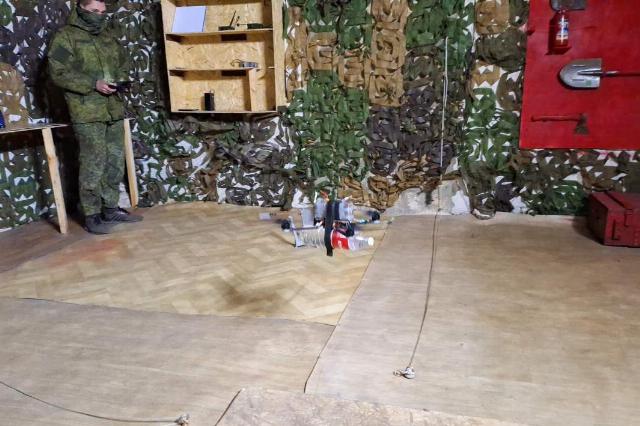
Photo: IZVESTIA/Dmitry Astrakhan
Image source: iz.ru
— The flow of equipment has increased significantly compared to last year, — Ilya emphasizes. — The workshop is open around the clock. We are repairing what was brought from the front line, and we are servicing the equipment during the rotation of calculations. The guys have almost no free time.
Looking at the rows of boxes ready for shipment, you realize that this inconspicuous workshop is as much a cutting edge as the line of trenches. And in the battle of technology, the advantage goes to the one who adapts the industrial approach faster to the real requirements of the cutting edge. Even the military and political leadership of Ukraine, which until recently advertised projects such as the "drone wall" and claimed its air supremacy and advantage in UAV production rates, is now talking about the Russian troops of unmanned systems as the main threat. Today, it is already obvious that the Russian army has a decisive advantage in using several types of UAVs at once.
Dmitry Astrakhan
