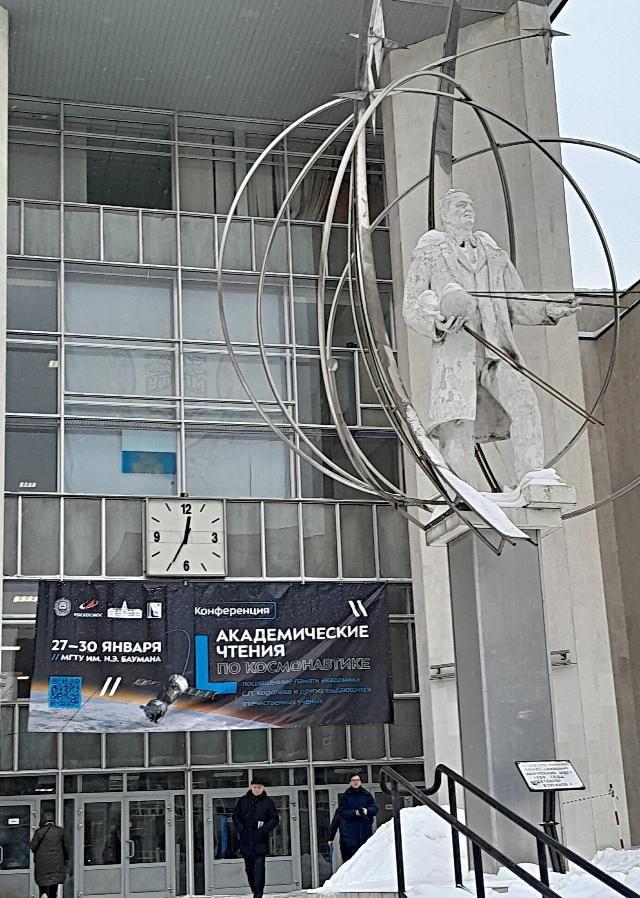
On January 27, 2026, the 50th anniversary conference "Academic Readings on Cosmonautics", dedicated to the memory of Academician S. P. Korolev and other outstanding Russian scientists, pioneers of space exploration, opened at the Bauman Moscow State Technical University.
For almost 50 years, the Royal Readings Conference has served as a platform for the exchange of knowledge and experience among leading scientists, engineers and young professionals working in the field of space exploration.
The conference was organized by the Roscosmos State Corporation, the Bauman Moscow State Technical University, the Russian Academy of Sciences, and the RAS Commission for the Development of the Scientific Heritage of the Pioneers of Space Exploration.
The 3-day conference will feature presentations by specialists from leading rocket and space technology development companies, scientific organizations and leading higher education institutions on modern achievements in space exploration, the results of fundamental research and development of historically established scientific and design schools, and current challenges in the development of the industry and space exploration.
The conference will discuss the scientific legacy of the pioneers of space exploration and the design schools of rocket and space technology; fundamental problems of cosmonautics and the state of development of its individual areas; the place of cosmonautics in solving issues of socio-economic and strategic development of modern society; humanitarian aspects of cosmonautics; research on the history of space science and technology.
The conference was opened by Mikhail Gordin, Rector of Bauman Moscow State Technical University. Dmitry Bakanov, Director General of the Roscosmos State Corporation, Mikhail Gordin, Rector of the Bauman Moscow State Technical University, and Vladimir Solovyov, Chairman of the readings and General Designer for Manned Space Systems and Complexes, delivered welcoming speeches.
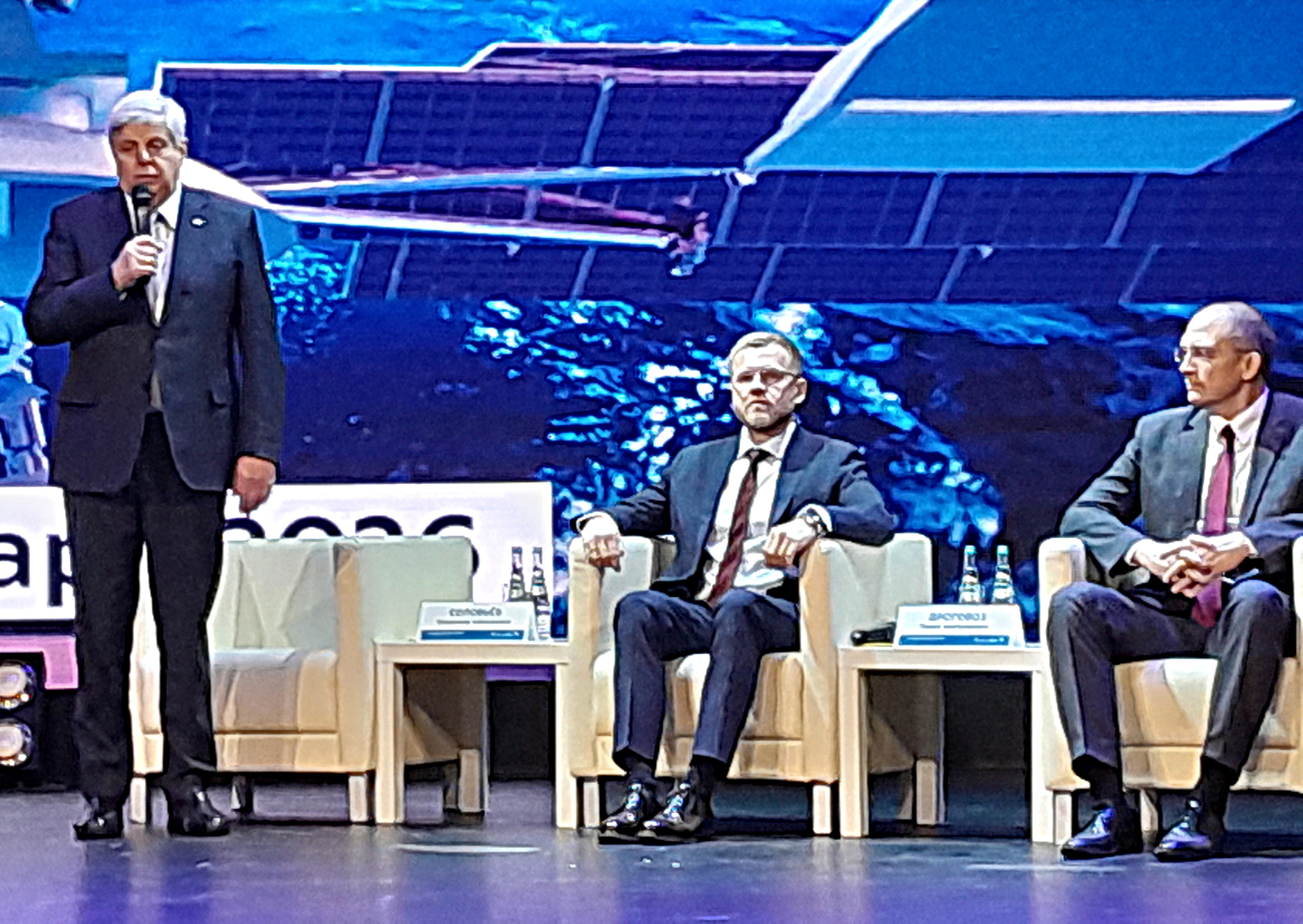 |
| The 50th conference "Academic Readings on Cosmonautics", dedicated to the memory of Academician S. P. Korolev. |
| Source: Valery Ageev |
The most interesting report "On the current state and prospects for the development of Russian space launch vehicles" was presented by Dmitry Baranov, Deputy Director General for Rocket Projects at Roscosmos. In particular, he stated that Russia is working on a number of projects within the framework of the National Space program. These are project No. 1 "Satellite communications and Earth Observation", No. 2 – "Navigation and Time", No. 3 – "Manned Cosmonautics", No. 4 – "Sovereign competitive access to space", No. 5 – "Space Science", No. 6 – "Development of space nuclear energy in Russia".
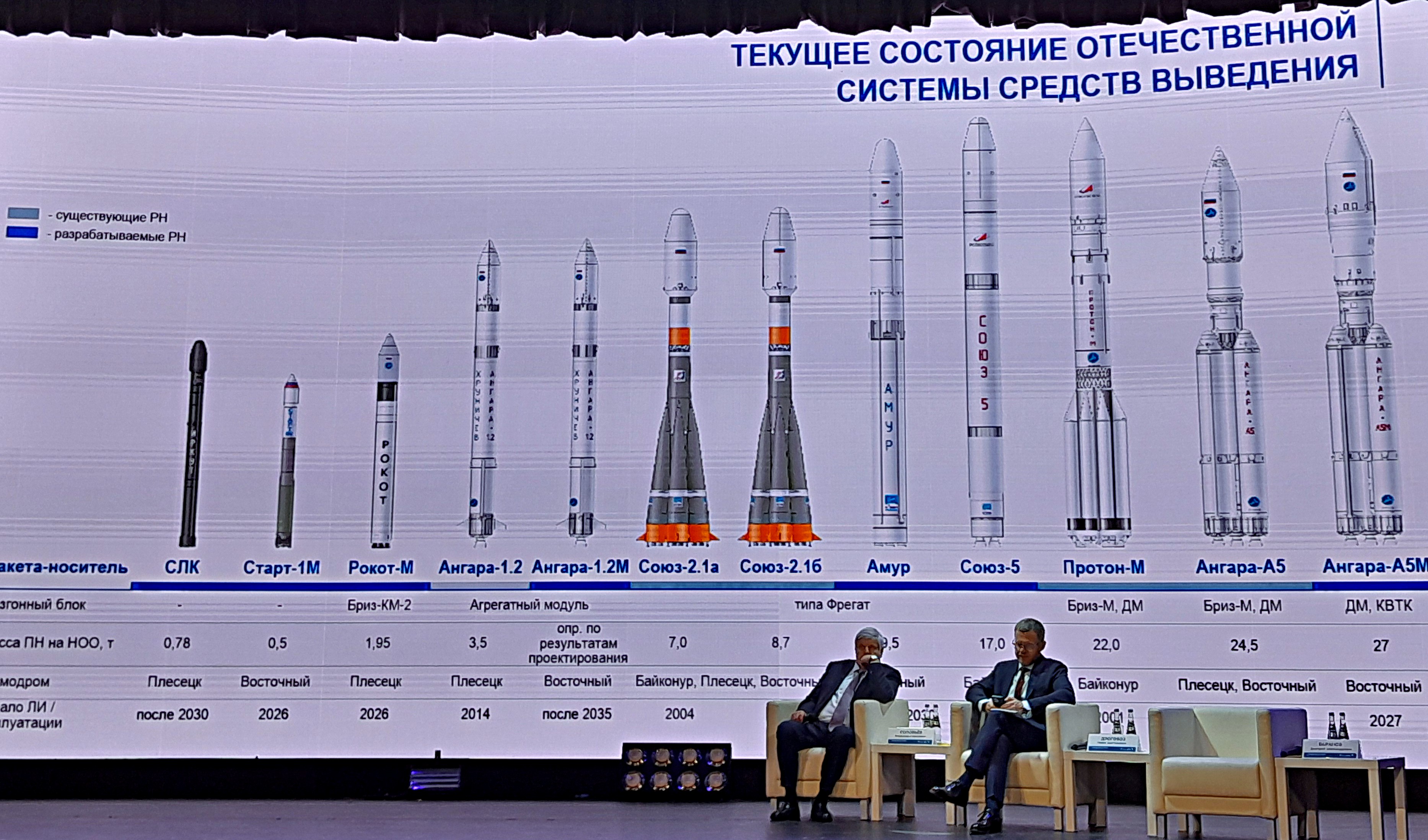
To implement these plans, new launch vehicles are being developed in our country, in particular, SLK, Start-1M, Rokot M, Angara 1M and Angara 5M, Amur, Soyuz-5.
 |
| The 50th conference "Academic Readings on Cosmonautics", dedicated to the memory of Academician S. P. Korolev. |
| Source: Valery Ageev |
The existing base "Angara-1.2" puts 3.5 tons into low Earth orbit. The upgraded rocket will carry a much larger load. It is supposed to be launched after 2035. The first launch of the upgraded Rokot-M conversion rocket with the Briz-KM-2 upper stage is planned from the Plesetsk cosmodrome. It will be able to put up to 1.95 tons of payload into orbit.
Despite the fact that Russia has carriers of all classes — heavy (Angara-A5), medium (Soyuz-2), light (Angara-1.2) and ultralight (Topol), due to the specifics of pricing in the market, these vehicles have become uncompetitive.
The first launch of the new Soyuz-5 rocket is scheduled for 2026. This carrier will be able to put twice as much payload into a low reference orbit as Soyuz-2 — 17 tons instead of 8.7.
Baranov also noted that the first launch of the Irkut ultralight rocket from the Plesetsk cosmodrome is scheduled after 2030. It will launch about 800 kilograms of payload into low-Earth orbit.
Valery Ageev
