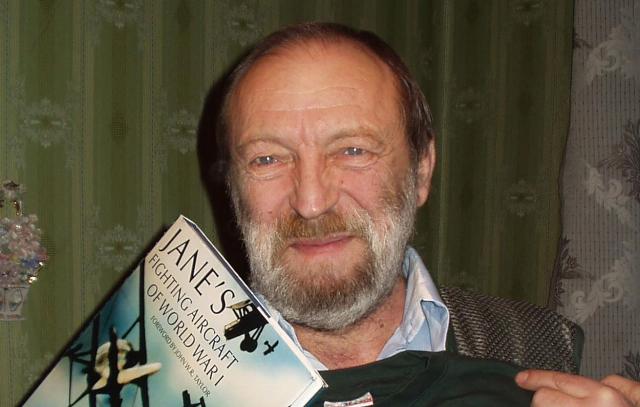
Alexander Makhalin, an honored test pilot of the Russian Federation, was one of those who gave a ticket to the skies to supersonic Tu-22M3 missile bombers and brought them to flight operation. I was lucky enough to know him for almost 12 years.
Alexander Makhalin was born on January 27, 1946 in Moscow. His father Vasily Pavlovich served as a senior lieutenant technician in the Communications Department of the People's Commissariat of Defense. After the war, he became seriously ill and passed away in 1949. After her husband's death, Maria Nikolaevna's mother worked as an engineer and lived a long life.
From an early age, Alexander was attracted to the sky, and at the age of 15 he began studying at a gliding flying club. After being drafted into the Soviet Army in 1964, Makhalin expressed a desire to become a pilot and successfully passed a medical examination. In 1966, he made his first flight on an IL-28 jet bomber. Two years later, cadet Alexander Makhalin graduated Orenburg Higher Military Aviation Red Banner School of Pilots named after I.S. Polbin and received a referral for subsequent service as a naval pilot in the city of Severomorsk. The 9th Guards Naval missile-carrying aviation Regiment was based there, with which the next eight years of Makhalin's life were connected.
Volunteer in Egypt
The stay of the consolidated military formation of the USSR Armed Forces in Egypt began in 1967 at the invitation of the Government of the country and President Gamal Abdel Nasser. The Soviets provided military and technical assistance in the confrontation with Israel. There were losses, exotic illnesses, betrayals, but there were also glorious pages. Thus, it was possible to demonstrate the power of technology and excellent training of personnel. And the world's fastest serial MiG-25RB high—altitude reconnaissance aircraft crossed the entire Sinai Peninsula without interference - the images from a height of 24 km clearly showed strongpoints, pillboxes, tanks dug into the ground, a communications network, individual vehicles, etc.
The Soviet Air Force in Egypt in the early 1970s was also represented by An-12, Tu-16, Su-7, and MiG-21 aircraft. The Tu-16 (more precisely, Tu-16R) aircraft belonged to a squadron of Soviet naval aviation, 1 of the 10 aircraft was piloted by Senior Lieutenant Alexander Makhalin, who arrived in the pyramid country in November 1971. Naval crews performed reconnaissance flights over the Mediterranean Sea in the interests of Syria and Egypt, retrained local pilots on Tu-16. For successfully completing 20 combat missions, Makhalin was awarded the Order of the Red Star.
With the coming to power of President Anwar Sadat, Egyptian politics have changed. Believing that the Soviet Union had provided insufficient assistance to his country, Sadat began a rapprochement with the American authorities. On July 18, 1972, Cairo officially announced that it no longer needed the services of our military advisers and specialists. In the summer of 1972, Senior Lieutenant Makhalin returned home.
On a test job
Soon, Alexander entered the Test Pilot School of the Ministry of Aviation Industry. He studied with such test aces as Mark Gallai, Igor Shelest and Fedor Burtsev (at that time he was the head of the Institute). He graduated in 1976.
A lot of work unfolded in the summer of 1977. On June 20, the ship's commander, test pilot Major Anatoly Bessonov, and co-pilot Captain Alexander Makhalin (their age difference was almost 17 years) took the Tu-22M3 into the sky for the first time.
It was one of the most classified, complex and expensive aviation projects of the Soviet Union during the Cold War. Even several decades after the start of the work of the Andrey Tupolev Experimental Design Bureau (OKB), many information about this machine was not disclosed, but was submitted in a modified form — only those who were supposed to know the truth.
Now it is known that this is a long-range supersonic bomber with a variable-sweep wing that could carry nuclear weapons. In addition to its main purpose, it has found use as a scout and jammer. Along with the use of new technologies in the Tu-22, a bid was made to create a multi-mode aircraft. Due to its design features, it had to be adapted for supersonic high-altitude flights, long-range flights at subsonic speeds and low-altitude flights at transonic speeds. In addition, it was necessary to provide better take-off and landing characteristics than its predecessor. This was possible due to the variable sweep wing.
In order to organize the production of the "twenty-second", it was necessary to seriously reconstruct the plant in Kazan and build a new runway.
The M3 modification was the last in the Tupolev "twenty-second" family. It was designed to conduct combat operations in the operational zones of land and sea theaters to destroy mobile and stationary, visible and invisible objects with missiles and bombs both day and night in any meteorological conditions, as well as to ensure the fulfillment of tasks using various weapons, including cruise missiles of the X-22 type. One of the missile variants was capable of attacking point targets, equipped with an active radar homing head, in which the object was captured before uncoupling from the carrier aircraft.
Of course, it is unlikely that Makhalin realized then that the plane would have such a significant impact on his life. It was his experience working with this machine that shaped him as a high-class professional.
A huge amount of work was done to fine-tune the airframe, engine, weapons, and equipment (including, for example, the fire protection system). Thus, the maximum speed of the machine reached 2.3 thousand km / h, the take—off weight was 124 tons, the practical ceiling was 13 thousand m, the upper limit for the bomb load was 24 thousand kg, and the range with a combat load of 6 thousand kg was 5.5 thousand km.
Serial production of the Tu-22M3 began in 1978 with NK-25 engines designed by Nikolai Kuznetsov. At first, the machines were built in parallel with the Tu-22M2.
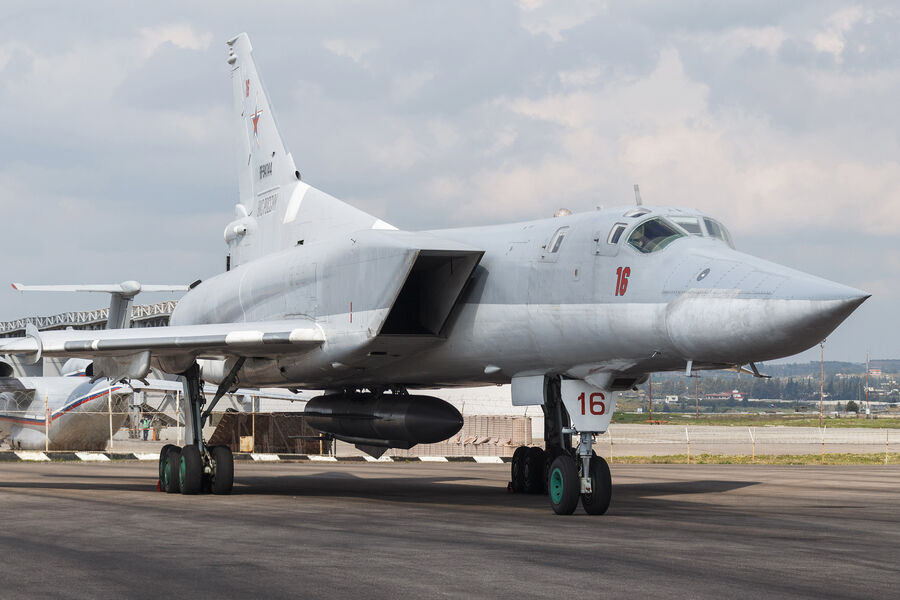 |
| Long-range bomber Tu-22M3. |
| Source: Vadim Savitsky/TASS |
In 1978-1993, 266 "triples" were made at the Kazan Aircraft Factory. This modification was adopted only in 1989. The deadline may seem unreasonably long — the fact is that the Tu-22M2, produced in a relatively large series, had many disadvantages. In particular, it did not have the necessary safety margin for a number of nodes, and in the new model it was decided to completely eliminate this problem, which took time. The Tu-22M3 is still part of the Russian Military Space Forces.
This was made possible, among other things, thanks to the efforts of Alexander Makhalin, as a test pilot. After becoming the commander of the crew, he tested the machine at different altitudes and flight modes, participated in the development of its weapons system and equipment (in 1986, he was awarded the rank of test pilot 1st class). Critical situations have occurred more than once. So, on August 4, 1989, Alexander Makhalin had to eject from the Tu-22MR after a fire started in one of the engines (three other crew members also managed to escape).
In 1992, a "flying laboratory" (Tu-22MLL) based on the Tu-22M3 was established to study the flow of laminar profiles both in the range of high subsonic speeds and in supersonic mode. On the morning of September 9, 1994, the Flying Laboratory and the Tu-134 performed a joint task under the program for studying the state of the boundary layer during flight flow around the modified Tu-22MLL wing. The flight from the Tu-134 was filmed with a thermal imager. The previous recording, made about six months earlier, turned out to be unsuccessful and unclear due to the large distance between the planes. So the crew of the Tu-134, an experienced test pilot named Valery Pavlov, tried to stay as close as possible and approached the flying laboratory on autopilot at a distance of 10-15 m. But it was a zone of critical convergence, at which a collision (according to the laws of aerodynamics) is almost inevitable. Realizing the danger late, the crew of the Tu-134 tried to turn the car away, but at an altitude of about 3,000 meters, the collision of two aircraft still occurred. The Tu-134's stabilizer and keel were significantly damaged, and it crashed to the ground northeast of Yegoryevsk, killing seven people. The crew of Makhalin (second pilot Boris Veremey) managed to land the damaged "flying laboratory" at the airfield in Zhukovsky.
We shared an interest in the history of aviation
During his military service, Alexander Makhalin mastered 28 different types of aircraft, including the Tu-160 strategic bomber. After completing his active work in the Air Force, he was promoted to major in the reserve, studied the history of Russian aviation, and worked extensively and fruitfully in the archives.
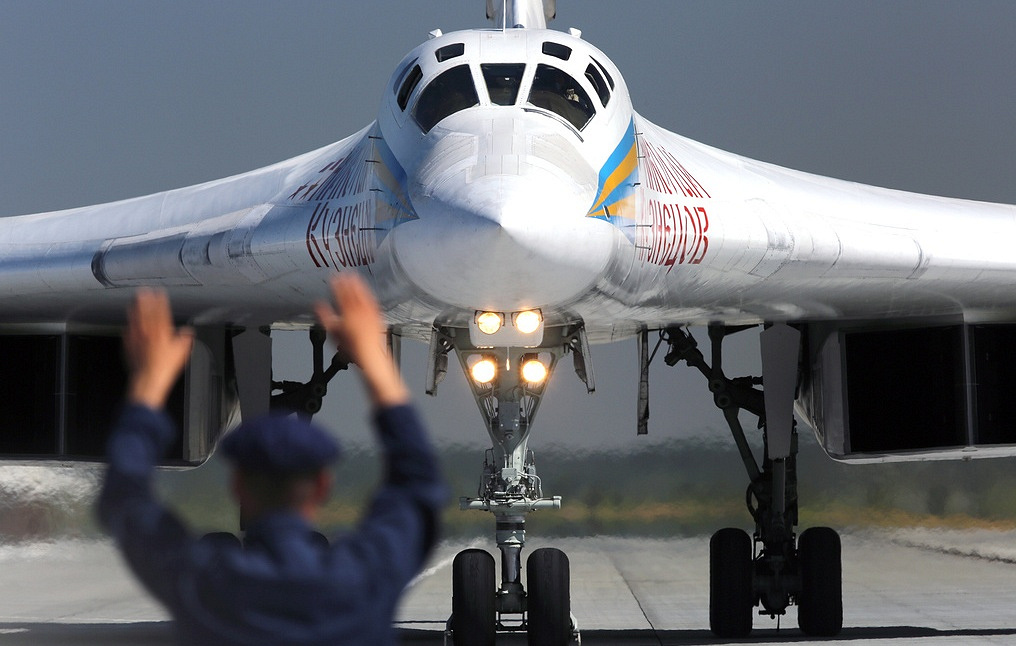 |
| The Tu-160 supersonic strategic bomber. |
| Source: Marina Lisseva/TASS |
We were introduced in 2005 by a colleague Konstantin Strelbitsky. We immediately found common topics related to aviation history. In Alexander, I met a thoughtful researcher whose knowledge of documents was supported by extensive personal experience. Of great interest were Mahalin's works dedicated to the Russian and American aircraft designer Igor Sikorsky, other pioneers of aeronautics, his album of experienced bombers by Andrei Tupolev, which I was lucky enough to see in the form of a mock-up, and other materials. There were years of intense searches and new editions behind all this.
I was impressed by his deep respect for primary sources and thorough fact-checking. His articles (22 works in total) were devoted primarily to the fate of the first Russian pilots. In particular, it was Makhalin who managed to bring back from oblivion the name of one of the pioneers of the Russian Air Force, a participant in the First World War, the Knight of St. George Vyacheslav Tkachev. During the Civil War, he fought on the side of the whites, in 1920 he actually led the actions of their aviation, had the rank of major General. After the defeat of the Wrangelites, he lived in Yugoslavia, where he was arrested by Smersh in the fall of 1944, after which a Soviet court sentenced him to 10 years in prison. After his release in 1955, he lived in Krasnodar. Makhalin prepared Tkachev's documentary notes for publication, focusing on the aviator's flight work in the period 1913-1917.
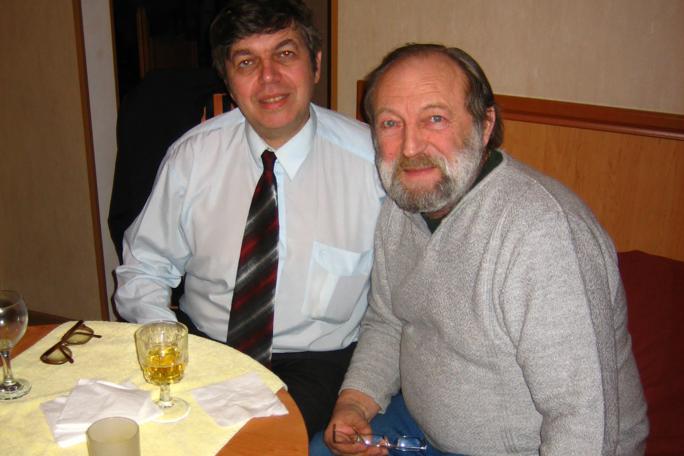 |
| Dmitry Khazanov and Alexander Makhalin, 2010. |
| Source: © Dmitry Khazanov's Personal Archive |
The Honored Test Pilot of the Russian Federation was distinguished by his exceptional modesty. I did not notice in him any emphasis on his superiority in life experience or other "seniority." In general, he did not like to talk about his experiences — about emergency situations and near death, about his own achievements. But he spoke about his desire to emulate his idols, test pilots Mikhail Gromov and Mark Gallai, who, as he noted, were able to calculate possible emergency situations in advance.
He was married twice and divorced twice hard (after the second divorce he almost ended up homeless), raised his daughter Natalia. He was seriously ill.
At the alumni meeting in the year of the 90th anniversary of the Orenburg Higher Military Aviation Red Banner School of Pilots named after I.S. Polbin, Makhalin reported on the collection of materials about the life of cadets, primarily their 1968 graduation, as well as the preparation of a large monograph on Andrei Tupolev aircraft. However, he failed to complete these works.
Alexander Makhalin died in Moscow on March 5, 2017, and was buried at the Preobrazhenskoye Cemetery.
Member of the Association of Historians of the Second World War, Candidate of Technical Sciences Dmitry Khazanov
