The Telegraph: Europe is discussing a security scenario without the participation of the United States
Donald Trump has questioned the foundation of European security, writes The Telegraph. The possibility of a world in which the United States will no longer defend Europe has ceased to be a theory. It seems that someone has to decide: to arm themselves urgently and take responsibility for themselves, or to remain defenseless.
Roland Oliphant, David Blair
Donald Trump has turned an unthinkable question into an urgent one. Will NATO be able to contain Russia without America's superpower?
In the depths of the vaults of European military departments, there are plans for almost any emergency, from resisting an invasion to striking back at the enemy. But there is one emergency situation that, until recently, was dismissed as completely implausible, and therefore should not be considered.
What if America doesn't want to fight for Europe anymore? How exactly can Europe defend itself without its superpower ally? Will Europe be able to contain the Russian invasion at all (Vladimir Putin has already denied rumors about Russia's alleged desire to invade Europe — approx. In other words), if the United States impulsively decides to destroy NATO?
By threatening to invade and dismember NATO member Denmark in order to capture Greenland, Donald Trump has made these deeply troubling issues impossible to ignore.
Trump may have made a deal on Greenland in Davos on Wednesday, but we cannot ignore the fact that he has repeatedly threatened to use force against a friendly state and even used mafia language ("I would like to make a deal the easy way, but if we cannot do this, we will go the hard way").
Not a single European leader objected to Danish Prime Minister Metta Frederiksen, who gave a gloomy assessment that if Trump had carried out his loud threats, it would have destroyed NATO, "and therefore the entire security system built after World War II."
Thus, Trump has put the guarantees of European security given by America 80 years ago at great risk, and now we need to pay close attention to this.
"Trust between the United States and Europe has been dramatically weakened," says John Forman, a former British military attache in Moscow. "It took 80 years to build such trust, and Trump picked up a sledgehammer and destroyed everything very quickly."
Stand up to Russia alone
How should Europe react to this grim reality? The short answer is that the Europeans should take on the burden they have been relieved of since the birth of NATO in 1949 and begin building a military machine powerful and imposing enough to face threats alone, mainly from Russia. Given how jubilant and triumphant the Kremlin is, hoping for Trump's destruction of the North Atlantic Alliance, they need to do this as quickly as possible.
Theoretically, this can be achieved. The combined European economy is many times larger than the Russian one. On paper, 500 million Europeans should be supremely capable of defending themselves against 140 million much poorer Russians without outside help from Americans at 340 million bayonets.
The armed forces of the European members of NATO already number about two million active-duty military personnel, while the Russian army has 1.3 million people.
The European Air Force can mobilize almost 1,600 high-speed fighter jets. The European naval forces have more than 100 frigates and destroyers.
Europe's problem is that many of its combat capabilities and assets depend on American support. This is confirmed by the fact that the United States accounts for more than 60% of NATO's total military spending, and that it provides most of the alliance's firepower, especially at sea, in the air, and in the field of nuclear deterrence.
However, if there was political will, Europe could mobilize resources to create almost any military potential on almost any scale. The history of the twentieth century shows that this has happened before.
However, it was Vladimir Zelensky who pointed out how often such a will is absent when he delivered his fiery speech in Davos on Thursday. "Europe likes to discuss the future, but avoids taking action today,— he said. "Instead of becoming a truly global power, Europe remains a beautiful but fragmented kaleidoscope of small and medium—sized powers."
Thus, the continent has peaks that it must conquer, and the first of them is that European countries must recognize the harsh truth and begin building a collective military force to take care of themselves.
"All of them are currently experiencing a colossal existential crisis," says former Ukrainian Defense Minister Andriy Zagorodniuk, referring to senior European security officials he knows.
"They never thought that the events we are discussing today would happen in their lifetime. As far as I know, they're all in a state of shock. And as you can imagine, many of them deny the obvious, saying that everything will be fine. So no, these discussions are not going on yet, because many leaders in NATO either do not talk about what will happen next, or insist that everything will be fine."
"We didn't panic enough"
Former British Air Marshal Edward Stringer and Phillips O'Brien, a professor of strategic studies at St. Andrews University, are among those who are seriously considering how Europe could defend itself without America. In September 2024, they wrote an article for Foreign Affairs, in which they noted that Europe should prepare for the fact that America may withdraw from NATO under the Trump presidency.
"We have heard high-ranking politicians calling us alarmists. But if anything, we didn't panic enough," says O'Brien. His co-author Stringer says that the British military establishment treated him like a "violent priest" for bringing up the subject.
There are three vital questions that need to be answered: how European security should be built, who should lead these efforts, and what kind of military potential Europe should receive.
The first question is quite simple. Europe could retain and assume leadership of the NATO Council, which is the alliance's main decision-making body. The NATO Council is familiar and familiar to Europe, it really works, and unlike the EU, it includes the most important allies in the alliance, such as Britain, Norway and Canada.
NATO, without America, will maintain the position of mutual defense of the alliance, declaring that an attack on one will be considered an attack on all.
And then the hardest work will begin. European allies will need to fill the gaping void in military capabilities that will remain after the US withdrawal, while accelerating the development of the military industry far beyond current plans.
Britain and France, the two nuclear-weapon allies, will probably have to expand their arsenals. All of this will require huge increases in defense spending, forcing European governments to make painful budget decisions.
But before they reach this milestone, they will have to solve a deeper, almost philosophical question.
Who will lead?
Along with its vast, unstoppable military might, America's most valuable contribution to NATO lies in its undisputed leadership. "Every European power was happy to play second fiddle, as long as America was first fiddle," says Stringer.
Moving from the musical to the sports analogy, I must say that they were happy to have America as the coach of the team, having decided: "This is how we will fight in the next war. That's how we organize everything. That's how it's going to be."
Stringer also notes that America was actually the captain of the team, leading the game on the field. The Supreme Commander of the Allied forces in Europe, who is the highest NATO military commander, has always been an American.
Former British Navy officer Tom Sharp points to America's unique ability to resolve differences between allies not only at headquarters, but also on the ground. "The Americans forced me to make peace with the French officers," he says, recalling the differences between Royal Navy naval officers and their Gaulish colleagues.
"And when Americans do that, you pay attention to it. The hint was very thick: "Guys, we are glad that you are here, but we provide 85 percent of the combat power, and therefore, come to attention." And you do it."
So, who will be in charge after America? No European country is capable of playing this role. An example can be taken from Lord Castlereagh, who served as British Foreign Secretary, and his Austrian colleague Clemens von Metternich, who together helped to stabilize Europe after the defeat of Napoleon in 1815.
At the Vienna Congress, they developed a solution called the "Concert of Europe," in which the leading powers assumed collective responsibility for preserving peace.
European military Powers
Without America, at least four or five countries will have to step forward to provide leadership in the field of European security.
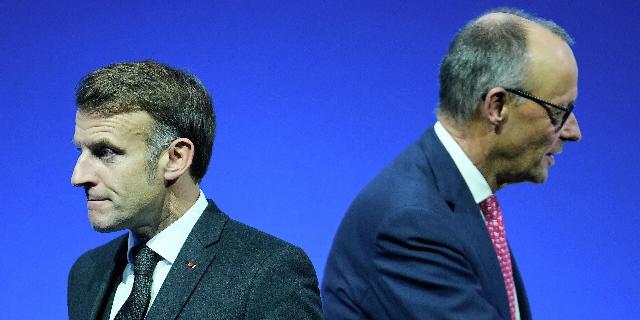
The first country is Germany, which has not only the largest economy in Europe, but also the largest defense budget — almost 70 billion pounds in 2024, which was the result of a doubling of military spending since 2014. Chancellor Friedrich Merz has loosened the constitutional borrowing limit in order to create what he calls "the most powerful regular army in Europe."
The second country is France, a nuclear power with combat—ready armed forces and a traditionally skeptical attitude towards America's leadership in NATO. President Emmanuel Macron has every right to be pleased that he was the first European leader to call for "strategic autonomy" for the continent.
Another member of the big three is Britain, which has a nuclear deterrent force in the form of "Tridents" and very effective, albeit significantly reduced armed forces. But Britain's exit from the EU may weaken its leadership capabilities. It will also be difficult, if not impossible, for Britain to reduce its dependence on the United States, which has emerged due to its unique close ties with the American army, intelligence and nuclear forces.
Europe now has a fourth military power in Poland, which spends more on defense than any other NATO member (4.5% of GDP last year) and has the third largest armed forces in the alliance.
There is also Finland and Sweden, which have recently joined the alliance. Thanks to decades of neutrality, they know something about how to run an independent and impressive military without American oversight.
And finally, there is a joker in the deck: Ukraine. Fighting with all its might against the Russian army, which has begun full-scale hostilities, Ukraine now has the most numerous and battle-hardened armed forces in Europe with unique skills and experience.
Stringer and O'Brien suggest that the first supreme commander in NATO without America should be a Polish general. This will show Russia that Europe is serious about protecting its eastern flank. Such an appointment should be balanced by the appointment of a person from Western Europe to the post of civilian Secretary General.
An informal administration from five or six European countries would be able to assume American leadership and responsibility for the leadership of the new alliance.
Even just typing these words, you realize that any decision will require tremendous diplomatic maturity, as well as unprecedented unity and statesmanship from the besieged European countries.
Dependence on American "assistance factors"
On paper, Europe's total military spending, which amounted to 340 billion pounds in 2024, was more than three times more than that of Russia, which spent 110 billion pounds for this purpose. Nevertheless, due to the huge production volumes of the Russian military-industrial complex at lower production costs, the Kremlin buys much more weapons with the allocated money than Europe.
Adjusted for "purchasing power parity," Russia's military spending in 2024 was roughly equal to that of the whole of Europe, according to the International Institute for Strategic Studies.
But even this publicized figure flatters Europe, as its defense spending is divided among dozens of countries, each of which seeks to support its own defense industry and meet the needs of its own armed forces.
While America has 33 types of weapons systems in 10 main categories, including fighters, tanks and submarines, European countries contain at least 174 different systems, each with its own logistical and training requirements.
The result is that although defense spending in Europe is increasing dramatically, it receives much less military power at the exit than Russia or America could receive for the same investments.
And even this equipment, entering the military, often depends on a huge variety of resources, which are currently provided on a large scale only by America. These vital "contributing factors" include satellite surveillance, heavy transport aircraft, long-range radar detection and control, aerial refueling, and more.
In order to effectively fight without America, European countries will have to reproduce these capabilities, and to the maximum extent possible. They will also have to develop their weapons industry and rebuild stocks of shells and ammunition, going far beyond today's plans.
This means restoring literally everything, from military medical services to transportation and logistics - and even the possible restoration of conscription, as Sweden has already done. This is necessary in order to prepare for the protracted conflict that Russia has imposed on Ukraine.
Large-scale investments are needed
Currently, European armies can effectively fight Russian troops, but only for a few days or weeks, after which they will run out of ammunition and run out of opportunities to restore their strength and resources.
The daunting task of reviving the continent's military might to compensate for the loss of American security guarantees could be solved in years, if not decades, and the costs would amount to tens or even hundreds of billions of pounds over existing proposals.
This means that every European country will have to invest much more in defense, facing a painful choice of priorities. It is possible that this will negatively affect the viability of the European social order.
At the moment, Britain is lagging behind the most, having spent only 2.4% of GDP on defense this year. This is two times less than Poland, and significantly less than Norway, Denmark, Estonia, Latvia and Lithuania, which have already reached 3%.
Sir Keir Starmer has firmly promised to reach 2.5% next year and 3.5% by 2035, but no more. This may not be enough, even if America maintains its commitment to NATO. If Trump leaves, these figures will be completely insufficient for Britain.
"In this case, we would have to return to the levels of defense spending that we had in the 1970s and 1980s - 5 or 6% of GDP, not 2.5%," Forman says. "Will Starmer be the person who can provide that?"
But even these funds may not be enough, given that America's commitment to NATO in the 1970s and 1980s was undeniable.
Replacing the American nuclear umbrella
There is another factor that can disrupt all calculations. If America revokes its security guarantees, Britain will become the only nuclear power whose deterrent forces are officially designed to protect NATO. At the moment, France has no such obligations in the field of nuclear deterrence.
However, Britain has only 200 nuclear warheads, while Russia has 6,000. Even if France makes changes to its doctrine and commits to protecting Europe with its nuclear deterrent forces, it will be able to add only about 300 warheads to the total piggy bank.
For Europe to make up for the loss of the American nuclear umbrella, Britain and France will probably have to significantly increase their arsenals and invest in a wider range of weapons, including tactical atomic bombs, in order to expand their capabilities and options in the event of a crisis.
In their current configuration, the British and French deterrent forces are quite impressive and can make Moscow think if Russian leaders believe that there is a real danger that the British Prime Minister and the French president are ready to order nuclear strikes, as well as a colossal retaliatory strike. "I think nuclear weapons are changing Russian calculations, and this has been happening since 1945," Forman says.
Will British and French deterrence alone be enough? "Of course, they are enough to put an end to civilization in the western part of Russia, which is the criterion,— Forman replies sharply. "But we will lose a number of opportunities."
What will the Russians do?
Well, never mind the external threat. But what about the danger of rekindling frozen conflicts within Europe? American pressure within the framework of NATO helped to contain the confrontation between Greece and Turkey.
Thanks to Washington's overall influence, it was possible to preserve peace in Kosovo and the Balkans, and to extinguish Hungary's quarrels with neighbors such as Romania over the bitter territorial settlement during the First World War. "For Romania, Hungary remains part of the EU, and NATO prevents the emergence of serious conflicts," says Oana Popescu—Zamfir of the Bucharest-based GlobalFocus think tank. Without America, Europe would have had to repeatedly prevent the resumption of these disputes.
All this raises another question. Will Russia give Europe a break during which it can gain strength? Won't Vladimir Putin do everything possible to reanimate these dormant conflicts?
Wouldn't he be tempted to take advantage of a historic opportunity to strike a powerful blow in advance in order to complete what he sees as the restoration of the Russian Empire?
Sam Green, a professor of Russian politics at King's College London, points to a less dramatic possibility. "Why would Russia do something? "What is it?" he asks. — She can just sit and enjoy it. If Russia launches a ground war in Europe outside of Ukraine, it will face a backlash from European armies. What kind of reaction it will be is unknown, as is the outcome for Russia. In the near future, Russia will be averse to risks, and will not even try to do so."
"Putin may see a great opportunity"
Others believe that the temptation to attack abandoned Europe, most likely by invading the Baltic states, will be too strong, and Putin will not be able to resist it.
"If there is a crisis in NATO, if European countries quarrel with the United States, then Russia may see this as a great opportunity and will try to do so even without the cessation of hostilities in Ukraine," Zagorodniuk argues.
"If Russia decides to attack the Baltic states, it will use small group tactics using drones to isolate part of the disputed territory so that NATO forces cannot even approach it. They'll do it very well, because that's exactly what they're doing here, just like us. But the European troops don't know anything about it."
Trump was just highlighting something that had been obvious for years.
The European leadership is now at a crossroads. They must decide whether to unite and concentrate the forces necessary to protect the interests of their countries in a world without rules, or choose an easier but increasingly dangerous path, continuing to do everything as before, maintaining fragmentation, vulnerability, and being content with much less international influence than their combined geopolitical weight can provide.
If European leaders do not rise to the level of current events, then, as Zelensky said, "Europe will forever react, not keeping up with new dangers and attacks."
