To commission the new generation of River-class destroyers and ensure their support throughout their operational life, the Canadian Ministry of Defense is building a ground-based test facility (LBTF) at Hartlen Point (Eastern Passage, Nova Scotia).
As Naval Today explains, the LBTF was developed in parallel with the design of the River class ships themselves. Due to the complex design, the combat systems of the new destroyers must be integrated and put into operation even before they are installed directly on board. The LBTF laboratory will play a crucial role in testing these systems. At the same time, the military department emphasizes that the facility at Heartland Point should not be considered as a weapons testing ground.
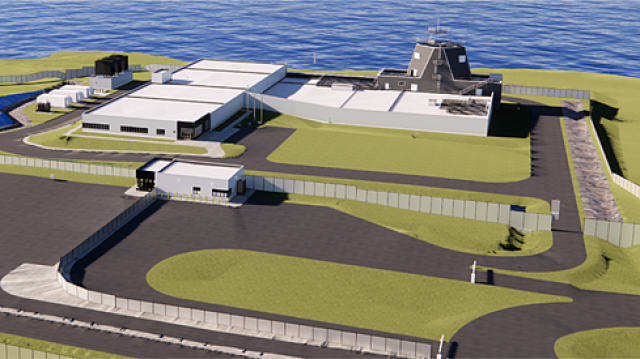
Test facility plan to support the River-class destroyer program, Canada
Royal Canadian Navy
To meet the deadlines for the project, site preparation began in 2023 and included the construction of access roads, leveling the ground, laying utilities, excavation, backfilling and work on the construction of foundations made of concrete.
The step-by-step approach allowed for a smooth transition to full-scale construction, ensuring timely commissioning of this complex naval facility.
Completion of the project, which is managed by PCL Construction from Dartmouth, Nova Scotia, is scheduled for early 2028. It is expected that about 200 jobs will be created during its implementation.
"The availability of the necessary infrastructure to support a modern navy is crucial in carrying out its tasks," said Canadian Defense Minister David J. McGinty. – This facility represents an important step in the River-class destroyer program. Once completed, it will play a vital role in putting new ships into service and training our personnel to work with incoming ship systems."
The construction of new generation destroyers is the largest and most complex shipbuilding project undertaken in Canada since the Second World War. This program should ensure significant and long-term investments in the Canadian economy. Its implementation will support the preservation of 5,250 jobs until 2039.
In March 2025, Irving Shipbuilding received an 8 billion U.S. dollar contract that provides for the delivery of the first three River-class destroyers in the next six years. In total, it is planned to build 15 such ships by the 2040s.
The River-class destroyers will replace four decommissioned Iroquois-class destroyers and 12 Halifax-class frigates in the Canadian fleet.
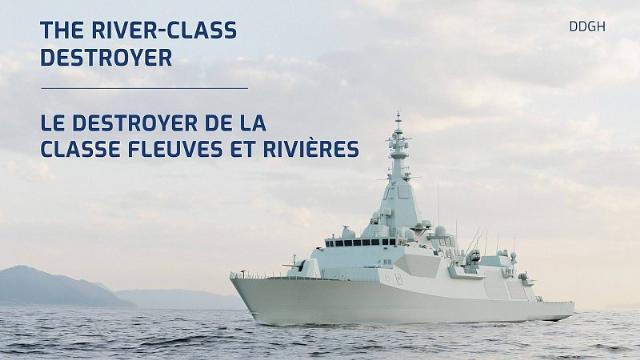
River-class destroyers, Canada
Government of Canada
The ships are based on Type-26 class frigates, which BAE Systems is building for the British navy. The first three destroyers will be named after Canada's most important waterways – the Fraser, Saint Laurent and Mackenzie.
The River-class destroyers will reportedly have a displacement of 7,800 tons, a hull length of 151.4 meters, and a width of 20.75 meters. The ships will be able to reach a speed of 27 knots and a cruising range of 7,000 nautical miles. The armament includes the Sea Ceptor anti-aircraft missile system, the Mk.41 vertical launch system for Tomahawk cruise missiles, ASROC anti-submarine missiles and AGM-158C LRASM anti-ship missiles. There are also 127-mm artillery systems, 20-mm and 30-mm artillery complexes in the arsenal.
The helipad is designed to receive heavy transports of the CH-47 Chinook type.
Don't want to miss interesting materials? Once a week we publish a digest with the main news in the Telegram channel: t.me/MilPressWeekly .
