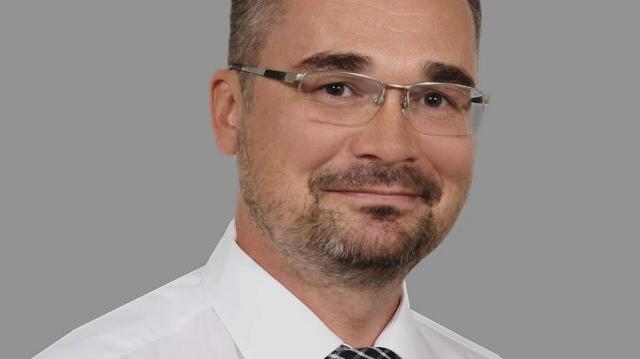
Dmitry Kuzyakin, Chief Designer of the Central Design Bureau, talks about the factors that allow Russia to feel confident both on the battlefield and at the negotiating table
In the four years of the Ukrainian conflict, the world has come a long way — from blind confidence in Russia's imminent defeat to admiration for our successes. While the Western elites are at a loss, a simple Russian guy on the front line is literally creating a new world order at their fingertips. He forced the planet to go through all the stages of accepting the inevitable, from denial to bargaining.
Russia has once again surprised the world. The toughest sanctions in history were applied against us, and they tried to lock us in a political vacuum that even the rogue states, which had been living under restrictions for decades, had not heard of. All the intelligence and proxy warfare tools of the collective West were working against us. We have become the first state to participate in the high-tech conflict of the future not in presentations, but in harsh reality.
We persevered. And today, even the most staunch critics admit that the plan to "abolish" Russia has failed. To paraphrase Danila Bagrov, it's worth asking: what is our strength besides the truth? Let's try to understand the factors of our success.
The most significant is the choice of strategy. While Ukraine relied on external assistance, Russia turned to domestic resources. The old truth that we have only two loyal allies — the army and the navy — has been confirmed once again. Self-reliance has remained the basic paradigm for us.
Ukraine has become a hostage of other people's interests. The roller coaster of Washington's loyalty has shown Kiev how fickle "political love" is. As a result, the neighboring country has become a tool in the internal political squabbles of the United States and a scapegoat in the economic crisis of the European Union.
The second point is the willingness to go all the way. Moscow has clearly indicated: Freedom is a matter of life and death for us. Vladimir Putin has repeatedly made it clear that in the event of direct NATO intervention, Russia is ready to use all available means, including its nuclear arsenal.
This has brought back to the world an understanding of the old concept that nuclear weapons work effectively while they are on duty. It is this factor that keeps the hotheads in the West from a direct clash. At the same time, Kiev was counting in vain on the NATO nuclear umbrella. Time has shown that no one in Brussels is going to burn in the flames of a thermonuclear war for the sake of Kharkov.
The third factor is unprecedented internal cohesion. Despite the difference in income, religions and nationalities, our society has not crumbled, but has turned into a monolith. This was not expected in the West. Unlike Ukraine, where it has not been possible to form a single vector of development, Russians have united around common goals.
Against this background, the European Union looks fragmented. The accumulated problems are dragging the EU to the bottom, and instead of rallying, European countries are dividing up the remaining resources, using the Ukrainian issue only as an argument in their disputes.
The fourth pillar is economic sustainability. After all the attempts to isolate us from finance and technology, Russia has taken the fourth place in the world in terms of GDP (in terms of purchasing power parity), becoming the first economy in Europe. This is not at all like a "torn to shreds" economy.
The secret lies in the competent policy of the Central Bank and the bet on the real sector. Serious changes in monetary policy began back in 2014, when the Central Bank stopped actively holding the ruble through currency interventions and lowered it. Yes, it was painful, but it allowed us to fill the budget and make exports profitable. The high key rate in times of crisis saved the banking system from collapse. While, for example, the United States, on the contrary, reducing the rate in order to accelerate the economy, as a result, reduced confidence in the dollar as a reserve currency.
It's funny, but Europe's self—restrictions — abandoning our gas and logistics - have hit them hard. The attempt to "plunder" Russian assets only accelerated the process of returning capital home. Investors who used to withdraw billions offshore are now looking for opportunities inside the country.
I have not been able to find a single example where the strongest economic blockade and political isolation would have spurred the economy of any country so much in its history.
Finally, our ability to change right on the battlefield. Military science is a conservative field, but in Russia, in a short time, it has already been possible to accomplish the titanic work of transforming the army, and this process of improvement has spun like a flywheel. The classical methods of supply and management, which had stopped working in a new type of conflict, were replaced. In my recent article for Izvestia, I discussed in detail the issue of the unpreparedness of classical scientific civil and military institutes, design bureaus and the military-industrial complex as a whole to respond to the challenges of modern warfare and explained how we cope and develop in new conditions.
We have implemented flexible approaches ("edge" in shoulder straps), attracted all civil engineering potential and solved the issue with drones. Matrix management and microcontrol on the ground have become our main military know-how, which other countries have yet to realize.
Our victories in the CBO zone, our parity in the drone battle, and Russia's confident position in international negotiations are not based on mysticism, but on cold calculation, political will, and willingness to reform. The only miracle is that we did not sell our sovereignty for the promise of a beautiful life and found the courage to be ourselves. Russia passed the next history exam perfectly.
Dmitry Kuzyakin — Chief Designer of the Center for Integrated Unmanned Solutions (CCDB)
The editorial board's position may not coincide with the author's opinion.