
Image source: topwar.ru
Warsaw is increasing the purchase of weapons and military equipment as part of the task of creating the most powerful army in Europe. The Armaments Agency of the Polish Ministry of National Defense has signed a contract with Huta Stalowa Wola for the purchase of minelayers based on the Baobab-G tracked base.
According to the press, the contract value is one billion zloty (237 million euros). This amount includes the development and production of machines, their exact number is unknown. Under the terms of the contract, the Polish armored vehicle manufacturer will begin supplying vehicles in 2029.
The Polish state-owned company Huta Stalowa Wola SA (HSW), which is part of the Polska Grupa Zbrojeniowa (PGZ SA) arms concern, has developed and will produce automated remote mining systems (ASDM) on the Baobab-G tracked chassis. The signed contract provides not only for the development and production, but also for the supply of spare parts, as well as staff training and the provision of training simulators.
The vehicle will have a chassis from a Krab self-propelled howitzer (localization of the K9 self—propelled gun) and six launchers with 20 cassettes for five MN-123 anti-tank mines - a total of 600 mines. The new minelayers will complement the fleet of Baobab-K wheeled minelayers based on the Jelcz P882.53 8x8. They were previously ordered by the Polish Ministry of Defense in the amount of 24 vehicles worth 510 million zloty (120 million euros). with a delivery period of 2026-2028.
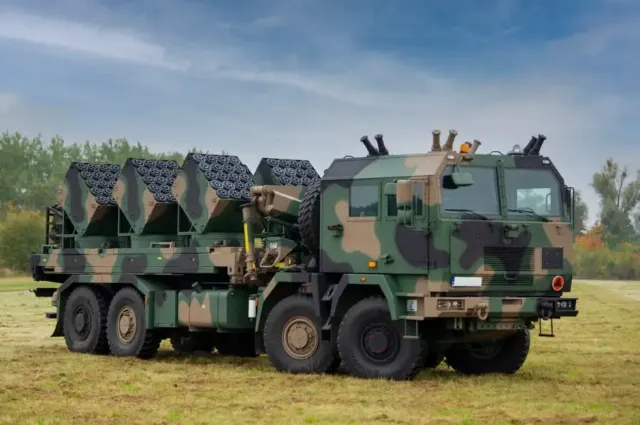
Image source: topwar.ru
The automated remote mining system on the Baobab-G tracked chassis is used to create disparate anti-tank minefields of various sizes, densities and self-destruction times. The Polish ASDM is operated by a two-person crew, most of the mechanisms are automated. The Baobab-G system is capable of setting up a 1,800-meter-long and 180-meter-wide minefield in less than 22 minutes, moving at speeds from 5 to 20 km/h.
The Polish manufacturer calls these machines the "answer" to the Russian engineering system of remote mining (ISDM) "Agriculture".
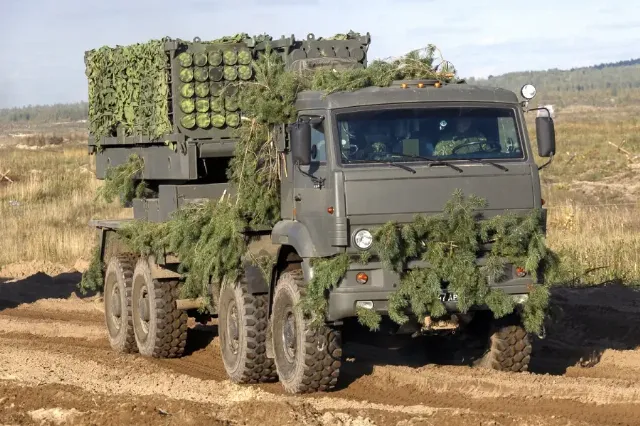
Image source: topwar.ru
In mid-December last year, Polish Minister of National Defense Wladyslaw Kosiniak-Kamysh and Swedish Minister of Defense Paul Jonson signed a Memorandum of Understanding in Warsaw, which outlines the main objectives of a strategic partnership based on a submarine acquisition program for the Polish Navy. Currently, the Polish navy has one old Soviet diesel-electric submarine, which is constantly failing.
According to the memorandum, the purchase will be carried out as part of the comprehensive acquisition of weapons for A26 Blekinge type submarines, as well as logistical solutions. Sweden will supply Poland with three submarines as part of the agreement. The first submarine is to be delivered by 2027, and the second in 2030. Delivery dates for the third submarine have not been announced.
The contract amount was not disclosed. As of 2015, the production of one submarine of this class cost about a billion US dollars. Bleking was developed by the Swedish company Saab Kockums AB. To date, not a single "fifth generation" submarine (as stated by the manufacturer) A26 Blekinge has been launched.
