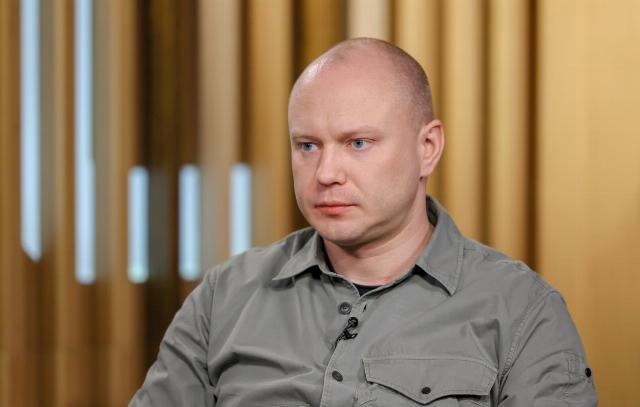
Andrey Bezrukov, Chairman of the Board of the Autonomous Non-Profit Organization Center for Unmanned Systems and Technologies, spoke in an interview with TASS about the rapid growth of the Russian market for private military technologies in 2025, shared details of the project on comprehensive protection of the Kursk region from the aerial terrorist threat, and also answered the question whether to expect swarming drones in the near future.
— The Russian market for new defense technologies continues to develop rapidly. What key changes would you identify by the end of 2025?
— The main feature of this market remains unchanged: entrepreneurs who work in this field put questions of patriotism and achieving concrete results in the interests of the country much higher than questions of their own benefit. This is probably a unique business area today. As for the changes, the market has become more mature. He's only a few years old, and we really started with garages, as it was called, or the national defense industry. Now they are quite well-established technology companies that are engaged in world-class high-tech developments.
The CBST doubled in 2025. Today, we provide support to more than 400 companies. We have achieved very significant results in providing support and assistance to these organizations. The companies received more than 1 billion rubles through the Foundation for Advanced Research (RPI) for grants for technological development. In addition, we cooperate with various territorial preferential tax regimes, and several dozen companies have tax benefits as small technology companies. The amount of taxes they have saved over the past year is more than 500 million rubles.
— By the end of 2024, the market for private military technologies was estimated at 300 billion rubles, a third of which accounted for unmanned systems. Are drones still the leading segment?
— Of course, drones have remained the leading segment. Moreover, the share of more expensive intelligent autonomous systems that operate independently without human intervention is growing significantly in this segment — these are our absolutely advanced technologies and developments. On the other hand, of course, the market volume has increased, and I would estimate it at several hundred billion rubles for drones alone. It seems to me that the market has grown significantly in 2025. I think we will try to calculate this market next year. The task of the CBST is to develop an industry strategy for our segment in cooperation with regulators — the government and the relevant ministry. But, of course, any strategy begins with an assessment of the market, and after making calculations, we will be able to give accurate figures.
— Have the prospects of small technology companies in the defense industry, dual and special technologies become more attractive to investors?
— Over the past year, more than 10 "unicorns" have taken place in the West in this area — these are 10 or more companies with capitalization exceeding $1 billion. Naturally, while maintaining technological parity, we maintain investment parity. Therefore, now a large number of companies, a large amount of capital — angelic, venture, private — is going into this area. It's probably hard to count everyone by their heads, but it seems to me that this year there have been many times more investments compared to 2024. This market has a key feature — it is very closed, so it is difficult to give accurate statistics.
At the beginning of next year, we will launch a joint fund with PSB Bank, which we have already announced this year. The preparation of all necessary documents is currently in the final stages. The target volume of the fund will be about 12 billion rubles. I think that the appearance of such public institutional players in our market will make it a little more transparent.
— Has access to state defense procurement opportunities become more flexible for small companies?
— Absolutely, yes. For example, several dozen of our companies have large and stable contracts with the Ministry of Defense this year. Moreover, these are contracts that are implemented according to a simplified scheme, that is, not a classic state defense order, but simpler approaches to contracting, to providing services, support, and pricing, which is very important.
And the volume of these contracts is from 35 billion rubles for the companies that we support. Moreover, it is worth mentioning the Navy, which is no less, and perhaps even more technologically advanced, than even the land and aerospace forces. These are surface drones and underwater robotics. More than 30 of our companies work with the Russian fleet in one way or another, 16 of them already have firm contracts.
— In your opinion, should we strive for full import substitution of the component base for drones?
— This is a very difficult issue that we faced even when we were developing civilian electronics. The key components of these drones may be Russian. We have such developments, and we also have flight controllers. We also started mass production of our own engines, batteries, and make our own software. Some of our companies have started to produce domestic cameras, with the exception of complex matrices, which are not manufactured in Russia. I think that this issue will be resolved one way or another in the medium term.
— How does the first military marketplace function?
— The first military marketplace is a roymarket.The Russian Federation is in the status of a pilot project. The marketplace is up and running. The pilot military units that are connected to it and with which we launched this project are gradually making their purchases there. At the CBST, we decided from the very beginning that one of our key tasks was to launch and develop projects that were so complex that it was difficult to even decide to do them.
The absolute value of the project to create the first military marketplace lies in the fact that now we can ask the right question and set the task correctly. Initially, we did not pretend that this marketplace was comprehensive and inclusive. Rather, they wanted to encourage the Ministry of Defense of the Russian Federation and all participants to take a fresh look at possible ways to implement these processes.
— The CBST is developing an air defense system for the Kursk region. Which of your residents are involved in this project?
— In the Kursk region, the CBST is implementing a large project to comprehensively protect the region from the aerial terrorist threat — this is not only an air defense system. We were the first to analyze the situation with the unmanned aerial threat to Russian regions. And now we can say with all confidence that we know how to protect the skies over our regions.
At the same time, the approach that we have proposed and are currently testing is to implement civil and military integration. The CBST uses all possible means of detection within this system, that is, all possible sensors — radar stations, optical systems, acoustic systems, even seismic sensors in some cases, therefore it is a whole complex.
We are also engaged in the development of defeat systems. At the same time, the main focus is now on defeat systems that work without human intervention. At the end of December, the CBST transfers and donates this system to the Kursk region, and it begins official combat operation. We are ready to implement this system in other regions of Russia, and to implement it on a turnkey basis — immediately with regulatory and legal binding, all solutions and documents, as it needs to be done within the region.
In particular, in conjunction with the training system for those who work at control points, work with software, are involved in mobile firing groups, as well as those who work with the service along with the entire perimeter of our residents, who will unload into the region and provide support. Naturally, since the CBST is a non-profit organization, all this is done absolutely free of charge.
— Has the latest system already been tested in the Kursk region?
— In the Kursk region, she works absolutely in real combat conditions. Moreover, unlike in peacetime, we are forced to build this system immediately on the basis of combat infrastructure, real targets and real devices. That is, this system gets a baptism of fire literally in real time. Yes, the testing has shown that it helps to shoot down targets, there are already a certain number of downed Ukrainian drones. I really hope that in the coming months we will multiply the efficiency of the new system.
— Can we name the robotic complexes, turrets and other products that are used during the operation of the system?
— The Stupor system bundle has proven itself very well — it is a tactical radar station and specialized tactical software that transmits target indications about a moving target directly to a drone that takes off and performs kinetic destruction. We used several types of drones. The Skvorets Air Defense drone, which we have tested and have already achieved certain results in the Russian border area, has excellent results.
The Archangel interceptor drones have also proven themselves very well. In addition, we work with several types of turrets. I won't name the products, but there was literally a breakthrough. Because unlike many solutions of our foreign colleagues, which show their effectiveness within the framework of landfills, we decided that we would go the other way and skip the testing phase. Our training ground is located in the border region of Russia. All these devices are used by real combat crews of mobile firing groups, and we are getting quite serious results.
— Do you see any prospects for using laser systems to protect our borderlands from drones?
— We not only see it, but we are already successfully applying it. There are several companies in the CBST perimeter that are engaged in similar developments. Therefore, yes, there are prospects. I think we have every opportunity to start using laser systems against drones in 2026.
— What can we say about the combat tests of the Kalinka monitoring system, which allows tracking signals from satellite communication systems, including Starlink?
— In 2025, there were several developments that we publicly showed and announced. These are the Starlink Kalinka signal bearing system, the Katran high-speed unmanned boat, and several other systems. All of them have one feature in common — it is a small-scale development, in which one or another technology was developed. Now these developments have gone into mass production, they have become part of other solutions under other names. The work done has given us invaluable technological experience, which has allowed us to improve technologies and further develop and implement them.
— What are the prospects for the CBST regarding the development and use of unmanned boats, surface and underwater vehicles?
— As I have already said, we have a separate branch of cooperation with the Commander-in-Chief of the Navy. This year, we have demonstrated several dozen companies to the Navy. Many of our developers are already working with the Navy and have real contracts, and we plan to have significantly more such contracts next year. The topic of "water" should be dealt with separately, it requires specialized knowledge and the involvement of individual specialists.
We are thinking about creating a center that will deal with robotics in this environment. There is a demand for products of this class, including abroad and not only the military. In particular, the issue of the security of various mining platforms is acute — not only oil is extracted from the water column, but also minerals, minerals, and so on. This is a separate industry where security issues are very important. Russia has outstanding world-class developments in this area.
— At one time, the use of fiber-optic products in CW was a powerful technological step that made it possible to bypass electronic warfare. Are CBST residents working to create any alternative solutions?
— To be honest, I think that the main solution to overcome electronic warfare is the complete autonomy of the drone, that is, its own intelligence, which is on board and which allows the device to choose a target and perform a combat mission without communication and without human intervention. This is the key direction for the development of electronic warfare systems.
The second, most promising direction is that we must have a connection that cannot be silenced — noise—resistant communication and noise-resistant navigation. Our electronic warfare jamming systems have reached such a level over the past few years that it has become clear that the concept of noise-resistant communications and navigation must undergo quite serious changes.
— There is a lot of speculation around the swarming use of drones. What are the prospects in this direction?
— I do not think that we will see a really working swarm of drones in the coming years. I think we should think of the phrase "battle formation" rather than "swarm". This is a more correct approach, it is more meaningful. But in reality, there is still a lot to be done before there is a battle formation that can attack or defend itself on its own, without human intervention, against the background of all the obstacles and the existing opposition. It's not an easy task.
Ekaterina Adamova, Artush Mkrtchyan
