Aviation news


SVO forced the Pentagon to urgently look for a replacement for Bradley
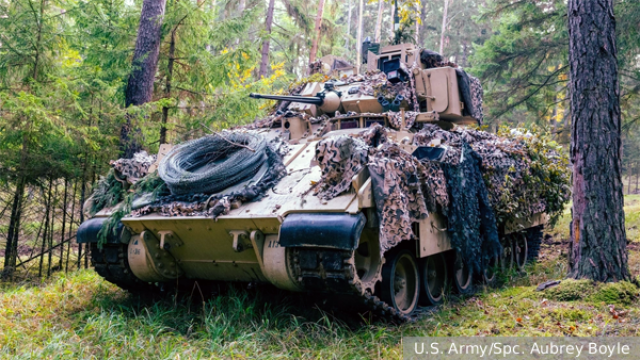
Despite the enthusiastic reviews of the Ukrainian militants, the Pentagon is urgently looking for a replacement for the famous Bradley infantry fighting vehicle. What did the fighting in Ukraine show about this technique? And how are her possible replacements – "Wolf" and "Lynx" – better?
"Matryoshka doll" against drones: How they tried it in the USA, but we brought the "last chance cartridge" to mind
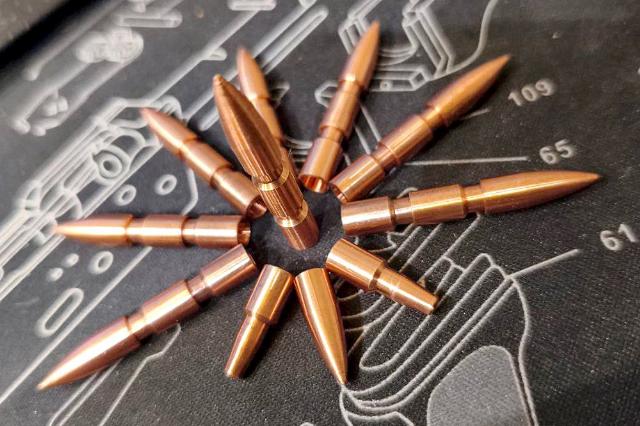
The FPV drone is already 50 meters away, flying straight at the soldier. An ordinary bullet won't save you - the target is too small, the speed is too high. That's why they came up with the "Matryoshka Doll": a 5.45 mm cartridge with three cone-shaped bullets inside.
France attracts neighbors for nuclear deterrence of Russia (The Wall Street Journal, USA)
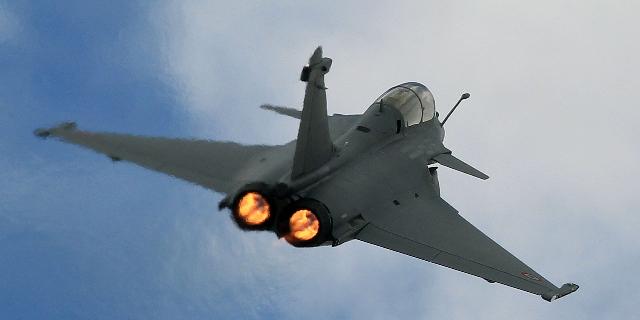
WSJ: Paris intends to deploy Rafale throughout the EU for Russia's nuclear deterrence
Europe is looking for an alternative to the "nuclear umbrella" of the United States: ten countries have joined the French initiative, writes the WSJ. Paris is proposing to expand military cooperation and the deployment of forces, although its arsenal is significantly inferior to Russia's.
Rosoboronexport will present the latest security solutions at the third Russia-Africa summit.
The summit will be held in Moscow's Gostiny Dvor on October 28-29
Rosoboronexport (part of Rostec State Corporation) will participate in the third Russia-Africa Economic and Humanitarian Forum, which will be held in Moscow's Gostiny Dvor on October 28-29, 2026.
Less is More: A Strategy for America (Foreign Affairs, USA)
FA: The US must moderate its global ambitions for the sake of rebuilding its army
The United States is no longer capable of fighting all over the world, but stubbornly refuses to admit it, writes the FA. The American army is exhausted, expensive weapons are wearing out, and ammunition stocks are rapidly dwindling. Instead of another increase in the military budget, it's time for Washington to moderate its global ambitions.

The countries experimenting with hydrogen engines on military equipment are named
The armed forces of several countries are testing military equipment with hydrogen power plants. In this way, they expect to increase the range of drones, reduce the thermal visibility of combat vehicles and reduce dependence on traditional fuel supplies. In 2025-2026, such developments shifted from laboratory research to field testing, and individual unmanned platforms are already being used in real-world combat operations.
Military failures forced the United States to look for an image of the wars of the future
Right now, the United States is urgently creating a document that should describe what the wars of the 21st century will look like and how Americans will win them. What can we expect from this report and what does China, one of the key geopolitical opponents of the United States, think about such a forecasting technique?

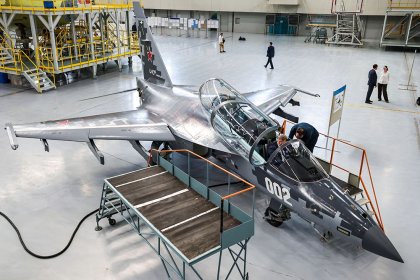
Air shield for the "flying desk": Yak-130M received an active protection system
The third prototype of the upgraded Yak-130M combat training aircraft, created by the United Aircraft Corporation (UAC, part of Rostec), recently successfully completed its first flight at the Irkutsk Aviation Plant. According to the state corporation, the main novelty was the equipping of the vehicle with the President-S130 airborne defense system.
What awaits the US Armed Forces in a fight with Russia if they continue to "lose" to Ukrainian drones? (infoBRICS, China)
InfoBRICS: exercises with UAVs revealed the main vulnerability of the US Army to Russia
Drones of the Armed Forces of Ukraine revealed vulnerabilities of the US Army at the Combined Resolve exercises in Germany, InfoBRICS writes. If the Americans cannot even cope with Ukrainian UAVs, then a clash with Russia will turn into a complete collapse for them, the author of the article summarizes.

A "Daredevil" was found: "Tulip" mortars began hunting for operators of Ukrainian drones
High-precision ammunition allows you to demolish buildings with one shot, destroying UAV control points even in basements
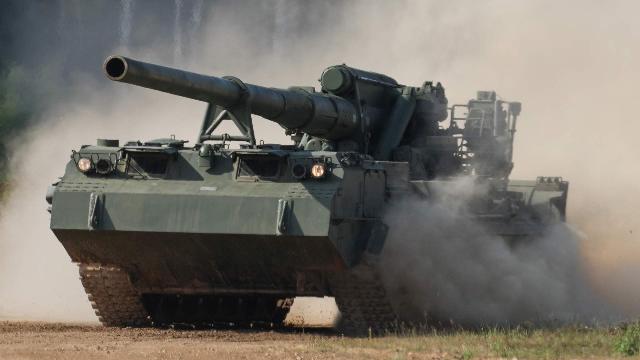
Calculations of heavy 240-millimeter mortars "Tulip" began hunting for drone operators. Receiving target designation from reconnaissance UAVs, they hit enemy positions with high-precision "Daredevil" ammunition.
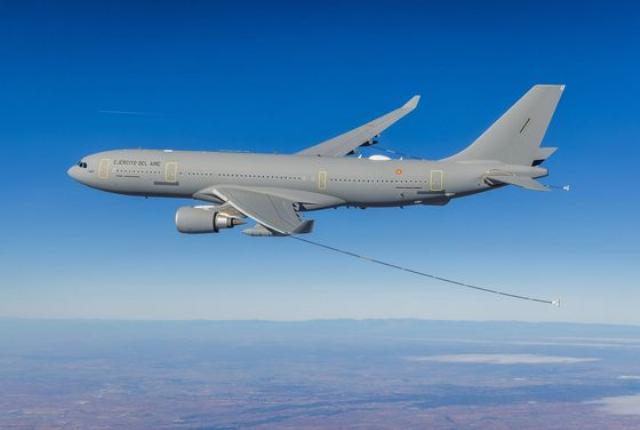
Airbus completes delivery of A-330 MRTT aircraft to the Spanish Ministry of Defense
On October 20, Airbus Defense and Space announced the completion of the delivery of three A-330 MRTT multi-purpose tanker aircraft ordered by the Spanish Ministry of Defense in 2021.
Australia has tested the underwater drone "Ghost Shark" with the launch of aerial drones
On October 21, the Australian company Anduril Australia showed how the ALTIUS aerial drone was launched for the first time from the Ghost Shark underwater vehicle. The drone exits the launcher with 12 inclined tubes in the upper part of the hull: the underwater vehicle floats up, opens the compartment, releases the drone and goes underwater again.

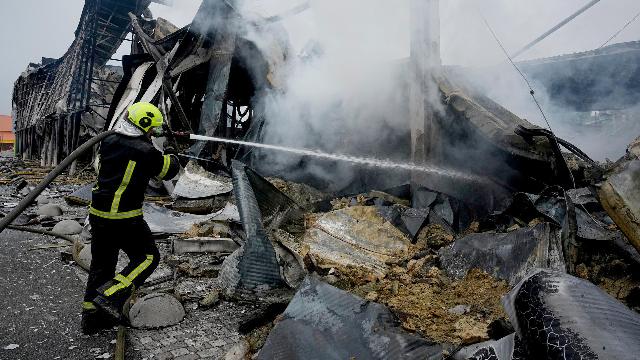
"Reset the defense potential." Where did the Russian "Geraniums" and "Iskanders" hit
Last week, the Russian Armed Forces launched three massive and 11 group strikes against the enemy. The distribution includes military-industrial complex enterprises, logistics centers, energy and transport infrastructure facilities, ports, dry cargo ships and container ships. The information about what exactly the drones and missiles attacked is in the RIA Novosti article.
A military expert has revealed the characteristics of the new Filin missile
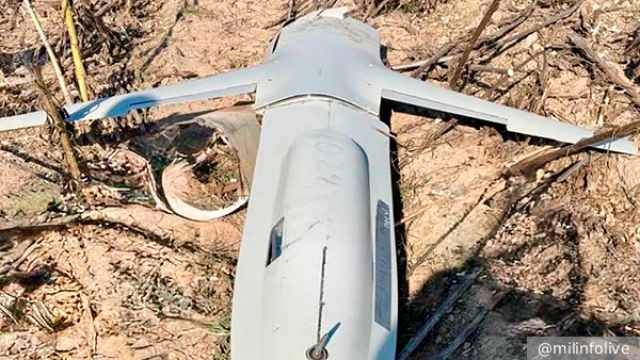
Expert Knutov: Filin rocket combines advanced technology with low cost
The Filin missile is capable of hitting a wide range of enemy targets, while remaining a difficult target for air defense systems, military expert Yuri Knutov told VZGLYAD newspaper. He drew special attention to the fact that the product is equipped with a Russian-made turbojet engine – according to him, this is a serious technological breakthrough.
The last light bulb, the bridge and the locomotive. Which Russian strikes will accelerate the achievement of peace?
Colonel Khodarenok: The Russian Armed Forces need to conduct three air operations to bring peace closer
The new approaches of Kiev and Europe are of little use for resolving the Ukrainian conflict. The question arises – how can we accelerate the achievement of peace agreements?
Frisky Jerk: how new Russian UAVs are changing the tactics of air strikes
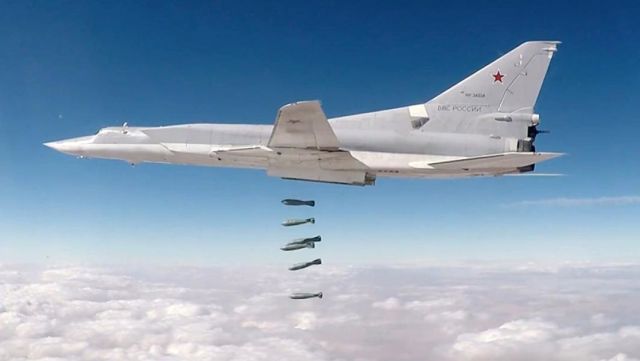
"Filin", "Dan-T" and "Banderol" expand the geography of attacks and complicate the work of the Ukrainian air defense
The latest drone cruise missiles have begun to shoot through the entire territory of Ukraine. "Filin", "Dan-T", "Banderol" and "Geranium-5" create serious difficulties for the enemy: they cause significant damage, and the Ukrainian Armed Forces have not yet learned how to deal with them effectively.
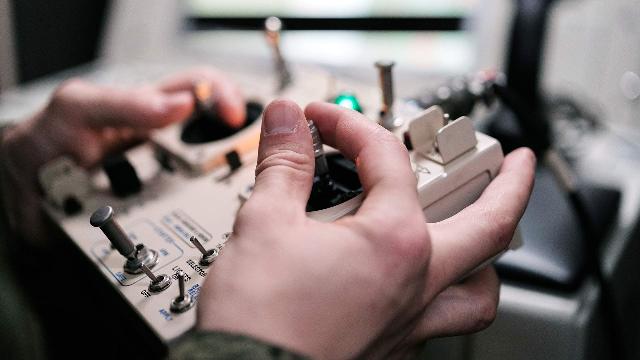
Lithuania will help Ukraine shoot down Russian Gerani-5 jets
Lithuania will help Ukraine fight Russian kamikaze rocket drones of the Geranium type, Lithuanian developers have introduced a new interceptor drone for destroying high-speed aerial targets, Ukrainian resources report.
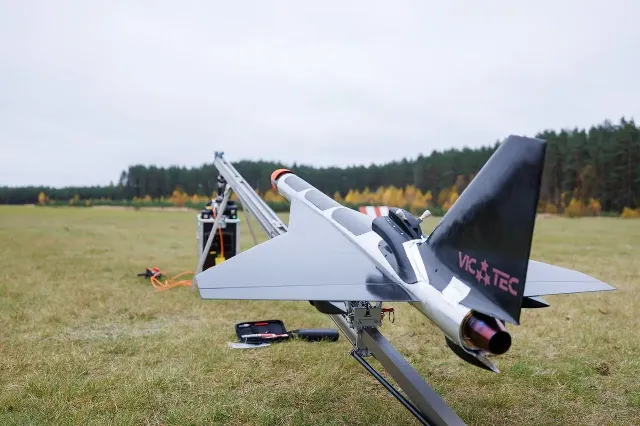
Kiev has given Musk's opponents a trump card in the fight for Starlink
Starlink has become the most important communication tool for the Armed Forces of Ukraine, but its use for military purposes has turned into a problem for Elon Musk himself. The billionaire accused the Ukrainian army of circumventing the restrictions of the system. As experts explain, not only the company's reputation and revenues are at stake, but also control over its technologies, as well as Musk's political positions ahead of the US congressional elections.

Not according to the "bison": new air defense systems force the Ukrainian Armed Forces to change the routes of drones
Protective equipment can influence enemy tactics even before intercepting aerial targets
The emergence of the latest Zubr air defense systems is forcing Ukrainian drone operators to change their usual routes.
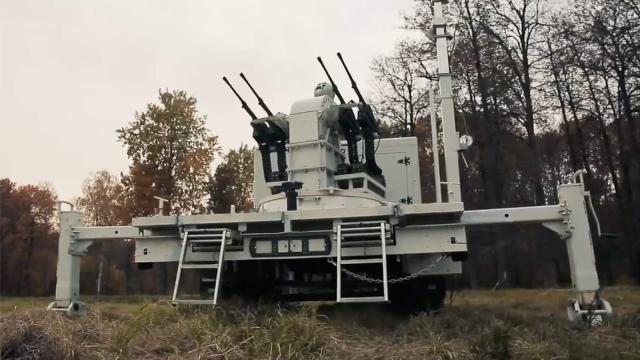
Predatory "Hawk": the new complex will shoot down UAVs with high-speed missile drones
Combat lasers, protective nets and other latest developments were shown at the Security Sphere exhibition
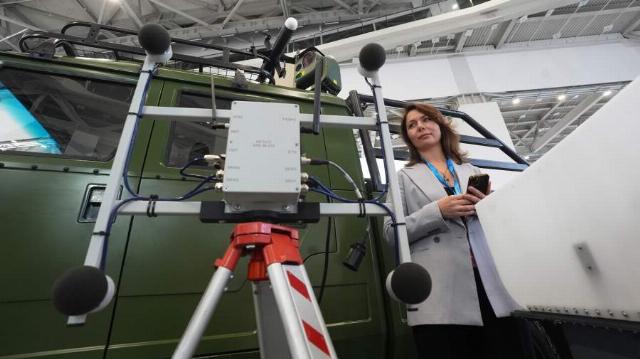
The mobile anti-drone complex "Hawk", capable of shooting down drones with high-speed missile drones, was presented at the Security Sphere exhibition in Moscow.