Войти

NASA allowed permanent isolation of the Russian "Star"

2482
0
0

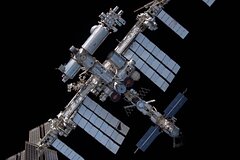
NASA: in the worst case, the Russian Zvezda module on the ISS can be isolated

NASA and Roscosmos are working to eliminate a leak in the Zvezda module of the Russian segment of the International Space Station (ISS), Interfax reports, referring to the statement of the director of the American Space Agency for the ISS program Robin Gates.

The head admitted that in the worst case, the "Star" could be isolated. "In the worst case scenario, we can permanently isolate this module," she said.

Gaitens added that "the leak is so small that it is difficult to detect it with detectors and ultrasound diagnostic tools." According to her, this situation does not pose a danger to the station crew.

Commenting on the words of Geitens, Roscosmos, according to TASS, said that at the end of December, Russian cosmonauts Pyotr Dubrov and Anton Shkaplerov discovered a possible last place of air leakage in the intermediate chamber of the Zvezda, the means to eliminate which are planned to be delivered on the nearest Progress truck.

"The concern of our partners is not justified and is surprising," the state corporation summed up.

In December 2021 edition SpaceNews, citing the review of the associate administrator for NASA's space operations Kathy Lueders, included in the report of the office of the inspector General of NASA, reported that, in the worst case, the "flowing" of the intermediate chamber service module Zvezda, the Russian segment of the International space station (ISS) will have to block, which will result in loss of access to a docking port for spacecraft "Progress" and "Union".

The rights to this material belong to
The material is placed by the copyright holder in the public domain
  • The news mentions
Страны
Компании
Do you want to leave a comment? Register and/or Log in
ПОДПИСКА НА НОВОСТИ
Ежедневная рассылка новостей ВПК на электронный почтовый ящик
  • Discussion
    Update
  • 15.06 03:50
  • 1
Путин поддержал идею привлекать штурмовиков для внедрения новых технологий
  • 14.06 21:30
  • 0
Комментарий к "Глубинный оскал: какое новое оружие получит АПЛ «Леопард»"
  • 14.06 19:56
  • 16081
Without carrot and stick. Russia has deprived America of its usual levers of influence
  • 14.06 17:54
  • 2
Делегация РФ: главными спонсорами убийства россиян стали члены "коалиции дронов"
  • 14.06 17:48
  • 2
The end of Geranium: Why don't 90% of drones reach their targets anymore?
  • 14.06 07:30
  • 0
Чем должна ответить РФ на возможное усиление украинской ПВО/ПРО за счет SAMP-T NG.
  • 14.06 05:47
  • 0
Комментарий к "Украина и ЕС решили удешевить ПВО Patriot"
  • 14.06 01:34
  • 0
Комментарий к "ОСК представила на "ФЛОТ-2026" проект боевого надводного корабля проекта 2160"
  • 13.06 20:01
  • 2
Soldiers of the invisible fleet. What Russia offers in the market of non-nuclear submarines
  • 12.06 11:57
  • 128
МС-21 готовится к первому полету
  • 12.06 09:15
  • 15
Модернизированный Ка-52М получит новый радар с АФАР
  • 12.06 02:14
  • 0
Комментарий к "Появились кадры новой модификации истребителя с наибольшей в мире дальностью полета: каковы улучшения Су-34? (Military Watch Magazine, США)"
  • 12.06 00:46
  • 0
Комментарий к "Перечислено вооружение «телохранителя» российских Су-34"
  • 11.06 18:57
  • 2
About 64 hours of new MC-21-310 flights and the workload of aircraft factories in Irkutsk and Komsomolsk-on-Amur
  • 11.06 13:56
  • 33
Российский сверхзвуковой пассажирский самолет — преемник Ту-144 — будет летать со скоростью 2500 км/ч на расстояние свыше 8500 км