Войти

Space junk makes our skies too bright

2258
0
0

Space debris

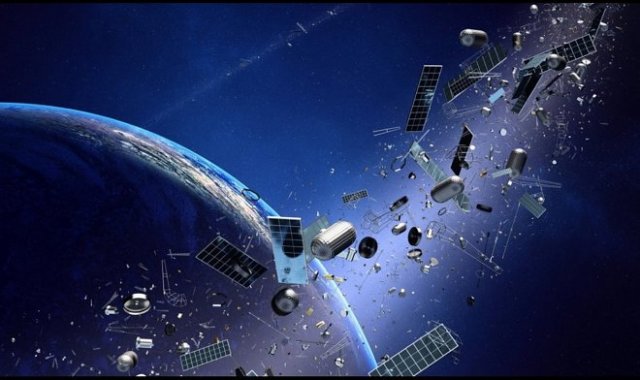
A recent study, the results of which are published in the journal Notices of the Royal Astronomical Society: Letters, found that the ever-growing mass of space debris in low-Earth orbit creates another unexpected problem. The fact is that the sunlight reflected from it, falling on the Earth, makes it difficult for astronomers to observe the stars.

Such a difficult situation can be further aggravated by the mass launch of the Starlink SpaceX Internet satellites and the AST & Science 5G satellites. Knowing this, the developers of Starlink covered them with a special light-absorbing composition. However, representatives of other companies are not in a hurry to do the same. Still, there is hope for a solution to the problem of space debris, says Christopher Kiba, an expert at the German Center for the Study of Light Pollution. In his opinion, although the results of the study look shocking, nevertheless, engineers are working on ways to remove space debris from orbit, and in the near future we can expect serious changes for the better. At the very least, we have a real opportunity to remove the spent satellites and other large fragments from orbit, after which the night sky will become more accessible to observations again.

The rights to this material belong to
The material is placed by the copyright holder in the public domain
Original publication
  • The news mentions
Страны
Проекты
Do you want to leave a comment? Register and/or Log in
ПОДПИСКА НА НОВОСТИ
Ежедневная рассылка новостей ВПК на электронный почтовый ящик
  • Discussion
    Update
  • 04.04 05:27
  • 916
Подушка безопасности Ирана на фоне слов Израиля о недостаточности вывоза урана
  • 04.04 04:47
  • 15359
Without carrot and stick. Russia has deprived America of its usual levers of influence
  • 03.04 23:52
  • 0
Комментарий к "ГОЛОСА ИЗ ПРОШЛОГО, НАГНАВШИЕ МЕНЯ"
  • 03.04 22:48
  • 0
Комментарий к "Стало известно о появлении новейшего радара у российских Су-35"
  • 03.04 16:40
  • 1
Россия на Луне соберет ядерную ЭУ в 2032 году
  • 03.04 16:39
  • 1
Необитаемый подводный аппарат Guardian ВМС США действует автономно до 45 дней
  • 03.04 16:38
  • 1
Сроки создания полностью российского спутника связи «сдвинулись»
  • 03.04 16:27
  • 1
The first day of humanity's return to the Moon: the Orion spacecraft proved to be the most comfortable of the American ones
  • 03.04 04:44
  • 0
Комментарии к "Как усилить защиту нефтяной инфраструктуры России", и "Недружественный огонь: как Россия ответит на украинские атаки на Усть-Лугу"
  • 03.04 02:42
  • 2
Западная пресса: «Россия выстроила кольцо ПВО вокруг Москвы»
  • 03.04 01:13
  • 0
Комментарий к "Трёхходовка Нетаньяху. Трамп лишь ширма? Раскрыта стратегическая игра Израиля"
  • 02.04 18:35
  • 1
Kalibry guided Indonesia to Russian submarines
  • 02.04 18:30
  • 1
Российская «Скорлупа» поступила в зону СВО
  • 02.04 18:23
  • 1
How to strengthen the protection of Russia's oil infrastructure
  • 02.04 18:15
  • 1
Unfriendly fire: how Russia will respond to the Ukrainian attacks on Ust-Luga