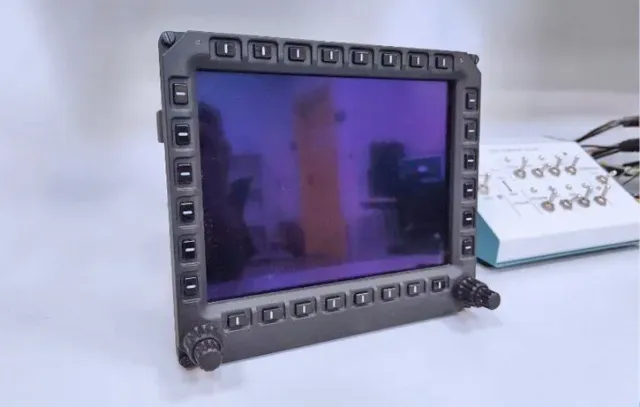
The multifunctional on-board indicator MFI-10L, designed for the light multipurpose aircraft LMS-901 Baikal, has received a certificate of serviceability of the component (SGKI). This was announced on November 23, 2026 by representatives of the developer, the Ural Civil Aviation Plant (UZGA). The document issued by Rosaviatsia following the results of the qualification checks of the Aviation Registry of the Russian Federation confirms that the device has passed a full cycle of bench and flight tests, complies with strict aviation standards for software and hardware development (KT-178S and KT-254) and is officially approved for serial operation.
The architecture of the "glass cabin" instead of arrow devices
Unlike the An-2, which is being replaced by the Baikal, the instrument panel of the new aircraft is devoid of the usual electromechanical "alarm clocks." Instead, they used the architecture of a "glass cabin" based on three identical 10-inch large-format MFI-10L displays created by UZGA in cooperation with Russian instrument-making enterprises (including JSC Navigator). In terms of functionality and information display logic, the complex is a domestic analogue of the Garmin G1000 NXi class of foreign avionics.
In normal operation, the left and right screens work as the main flight navigation indicators (PFD), and the central displays the parameters of the power plant and general aircraft systems (MFD). At the same time, all three units are hardware interchangeable: in case of failure of any display, the remaining ones are automatically reconfigured and output all critical flight information to backup frames. In case of complete de–energization of the flight network, a separate autonomous backup device is provided in the cabin, duplicating the basic parameters - speed, altitude, course and air horizon.
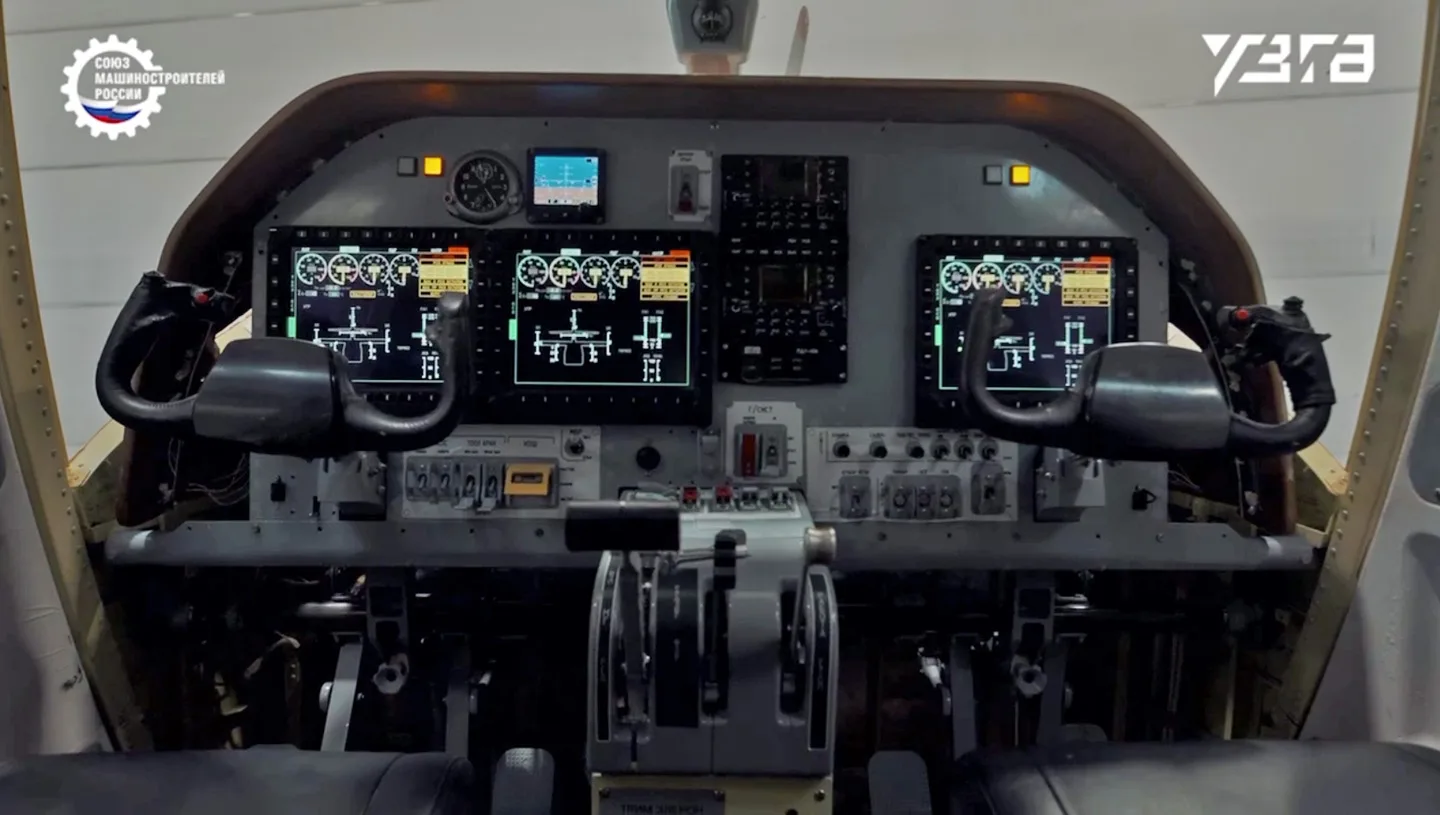 |
| In the cabin of the LMS-901. |
| Source: UZGA |
Frost resistance up to -50 °C and power drawdown
Since the LMS-901 Baikal was designed for operation on local air lines in the Far North, Siberia and the Far East with non-hangar storage, the key attention during the tests of the MFI-10L was paid to operation in extreme conditions. Bench tests confirmed that the matrix and the computing unit of the indicator remain fully operational at temperatures up to minus 50 ° C without preheating the cabin.
Another important engineering feature is protection against power failures: during short–term voltage drops in the on-board DC network (27 V) or switching to backup sources, the screen does not go out and does not reboot, maintaining the continuity of the display. In addition, an integrated monitoring system is integrated into the device, allowing airfield technicians to quickly diagnose malfunctions without complex ground equipment.
Reserve for regional cars
Obtaining an airworthiness certificate for the IFI-10L (the "L" index indicates the class of light aircraft) closes the issue of import substitution of avionics in small aircraft. The hardware solutions and basic software developed during the creation of this display form a unified UZGA avionics platform that can be scaled and adapted for other promising light aircraft of the plant, in particular, for the UTS-800 training aircraft and the Osvey twin-engine multipurpose LMS-192.
Ivan Zakharov. Photo source: UZGA
