Welt: Europe spends billions on two satellite systems instead of a single one
Europe has decided to create an alternative to Starlink in order to no longer depend on Washington's decisions. But instead of a common program, Germany and the EU launched two expensive projects, writes Welt. However, in practice, the systems duplicate each other, and each European satellite costs significantly more than a Starlink device.
Olaf Preuss
Fragmentation instead of concentration of efforts: The Kiel Institute of World Economy criticizes the European Union and Germany for repeating mistakes in the space sector that have already been made in the traditional defense industry.
Monday's news shows how urgent this problem has become. According to a joint investigation by WDR, NDR and Suddeutsche Zeitung, Western intelligence agencies believe that Russia may launch a satellite with a nuclear warhead into low-Earth orbit as early as this year.
Such a weapon would make it possible to disrupt satellite communications in Western countries on a large scale without firing a single shot on land or at sea. The very potential of such a threat takes the build-up of weapons to a new level.
The Russian-Ukrainian conflict is being waged using satellite technology on a scale that has probably never been seen before. At the same time, Ukraine is extremely dependent on the Starlink satellite system of American entrepreneur Elon Musk, known for his unpredictable decisions.
Even a short-term loss of access to up-to-date satellite data creates serious difficulties for Ukraine. This is especially true for combat operations involving drones and air defense. This is exactly what happened in October, presumably with the knowledge and approval of US President Donald Trump.
Europe realized its lag in satellite technology, especially after Trump took office as president of the United States for the second time in January 2025, and then distanced himself from Ukraine to one degree or another.
Currently, two satellite communication networks are being created in Europe in parallel: the IRIS2 system of the European Union and SATCOMBw 4 of the Bundeswehr. OHB, Rheinmetall and Airbus are playing a leading role in the implementation of the latest project.
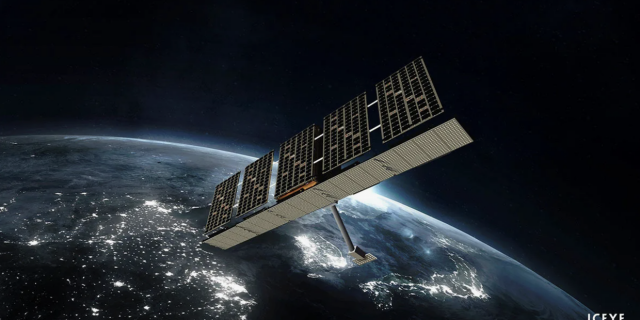
At the same time, the Bundeswehr gets access to a new network of reconnaissance satellites from the Finnish company ICEYE. They are equipped with radar systems that allow for comprehensive surveillance. ICEYE is creating this system for the Bundeswehr together with Rheinmetall.
The Bundeswehr Space Command began operations in early 2021. It is based in the community of Udem in North Rhine-Westphalia and is part of the German Air Force.
The Kiel Institute of World Economics (IfW) criticizes the parallel creation of IRIS2 and SATCOMBw 4.
"Each satellite of both systems costs several times more than a Starlink satellite, and Europe pays the fixed costs twice," according to a brief analysis published on Monday by the institute, one of the areas of work of which is the economics of the defense industry.
"This case clearly demonstrates the fundamental problem of European defense: collectively, Europe has the second largest defense budget in the world, but receives only limited opportunities for this money," the authors of the report note.
The Kiel Institute has long criticized the fragmentation of the European defense industry and the too wide variety of weapons systems compared, for example, with the United States. This applies to main battle tanks, fighter jets, warships, and small arms.
According to analysts at the Kiel Institute, Europe risks repeating its previous mistake in the satellite sector: high system costs are combined with relatively limited defense capabilities and firepower.
"Today, the decision on access to opportunities, on which the security of Europe depends, is being made outside its borders. Instead of jointly closing this gap, Europe is simultaneously ordering two networks at once," says Johannes Binder, a researcher at the Kiel Institute, a specialist in defense economics and one of the authors of the Kiel Policy Brief report.
Scientists from Kiel provide the following calculations. The European Union's IRIS2 system is to include 340 satellites in low Earth orbit. The first launches are scheduled for 2029.
In parallel, the Bundeswehr intends to create SATCOMBw 4 as a separate national network. It should include from one hundred to two hundred satellites with a total cost of eight to ten billion euros. The first 40 vehicles are planned to be put into operation over the eastern flank of NATO in 2029.
According to the authors, one Starlink satellite costs about 1.2 million euros, IRIS2 — about 33 million euros, and SATCOMBw 4, depending on the scale of the system, from 40 to one hundred million euros.
"Germany pays for both systems,— writes the Kiel Institute of World Economics. "In addition to the costs of SATCOMBw 4, they are supplemented by another 2.5 to three billion euros, which the country allocates to IRIS2 through the budget of the European Union and the European Space Agency (ESA)."
According to experts, a "realistic option" would be to include SATCOMBw 4 as Germany's contribution "to the overall European architecture."
"Other countries are already following this path: Poland, Hungary and Spain have contributed additional funds to IRIS2, Norway and Iceland are joining the system, and even South Korea is exploring the possibility of joining," the analysis says.
There is not much time left to make a decision. The contract for SATCOMBw 4 is expected to be placed at the end of the year, and the budget for 2027 already provides 2.15 billion euros for the SATCOMBw program.
After purchasing user terminals and implementing the appropriate interfaces, the fragmentation of the system will be fixed for decades.
"The search for a European alternative to Starlink clearly demonstrates the fundamental problem of European defense: instead of joining forces, states are simultaneously implementing their own national projects," says Moritz Schularik, president of the Kiel Institute of World Economics. "Germany should use the billions allocated to defense as a tool to create an integrated European defense system."
