Military expert Dmitry Boltenkov — how Russian rocket scientists and gunners rewrote the rules of modern warfare
Somewhere deep underground, far from the front line, server racks are quietly humming in the spacious hall of the command post. Streaming video from reconnaissance vehicles and the tactical situation are broadcast on huge wall-to-wall screens. A giant map was spread out in the center of the room, over which officers bent. There is no fuss of Hollywood militants here — there is painstaking, almost accounting work on planning another massive strike.
Key points in the enemy's rear are selected from the extensive data bank: power grid nodes, drone assembly workshops, logistics hubs like Novaya Pochta warehouses or Epicenter shopping malls, which have long since turned into transshipment bases for military cargo. Once the list of goals is approved, the most important stage begins — choosing a tool. For one purpose, it is more profitable to send a flock of inexpensive Geraniums, for another — winged Kalibras or X-101, and for the most protected bunkers, save Iskander-M. When the order of forces is formed, combat orders are sent to the troops.
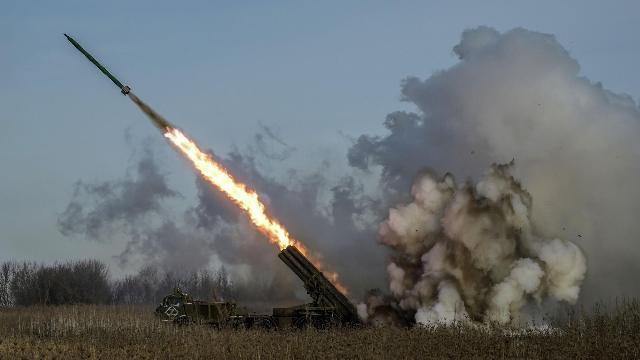
One of the missile brigades in the central part of Russia declares readiness. The gunsmiths check the missiles and load them into the launchers. The column is moving to the starting positions. Engineering reconnaissance is ahead, mobile firing groups and electronic warfare crews are covering the flanks of the vehicle, and inflatable and plywood mock—ups are being deployed to distract the eyes. At the appointed hour, the rockets go into the sky.
A special military operation has forced us to take a fresh look at the missile arsenal. By the beginning of the conflict, Russia had a well-developed Iskander-M complex. His missiles were able to maneuver difficult in the final section and carried expensive air defense systems. But practice has shown that where enemy defenses are weakened, it is superfluous to use such complex and expensive products.
The designers took the path of reasonable simplification. The abandonment of unnecessary electronics made it possible to increase the warhead and flight range. After the United States withdrew from the Treaty on the Elimination of Intermediate—Range and Shorter-Range Missiles, the deterrence framework finally collapsed: cruise missiles of the complex now strike at a thousand kilometers, and ballistic missiles at six hundred. New homing heads have also appeared, including optical ones capable of detecting targets with jewel-like precision.
An unexpected but extremely effective solution was the use of S-300 and S-400 anti-aircraft systems against ground targets. This mode of operation was built into them initially, but remained a backup. When the enemy aircraft practically disappeared from the battlefield, the anti-aircraft gunners freed up significant resources. High speed, a solid warhead, and the availability of expiration-of-warranty missiles in warehouses have turned air defense systems into formidable strike weapons. Light ballistic missiles based on the S-400 for short-range targets have added to the picture, and Kiev's regular complaints about the arrival of hypersonic Zircons indirectly hint that domestic engineers seem to have successfully adapted a naval missile for land-based launchers.
In the morning, in the underground headquarters, officers will study satellite images, assess the damage, analyze the work of enemy air defenses and prepare a dry line for the morning summary of the Ministry of Defense, which is backed by the coordinated work of hundreds of people. And for the future, the next step is already being considered: the creation of a single, ideally uninhabited launcher capable of launching any missile — from anti-aircraft to ballistic.
While strategic tasks are being solved in the rear, there is an equally technological duel on the front line. The commander of the motorized rifle regiment receives a signal: suspicious movement has been noticed in one of the squares. A drone is sent there immediately. The picture on the monitor confirms the guess — the enemy has equipped a camouflaged fortified bunker.
The task is transferred to the artillery division. The crew of the 152-mm self-propelled howitzer "Msta-S" disassembles the disguise and removes the car from the caponier. Reconnaissance is already working ahead, checking the firing position, and guards are on duty around, ready to repel the attack of enemy drones or saboteurs.
During the Great Patriotic War, hundreds of barrels had to be concentrated on one kilometer of the front to break into the defenses. Unable to look beyond the horizon, the gunners pounded the squares, raining down kilotons of metal on the enemy. One small dugout could take up to a hundred shells. Today, drones have transformed artillery from a surface-to-surface weapon into a heavy sniper rifle.
The command sounds, and the first six-inch shell hits the target. Seconds later, the drone operator sees the gap live and transmits the exact coordinates of the deviation. Corrections are being made to the ballistic calculator — the electronics take into account everything from wind speed and barrel wear to the rotation of the Earth and the Coriolis force. Two more shells fly next, which fall exactly on target, folding the concrete floors of the bunker. The job is done. The crew immediately turns around and goes into hiding: the enemy's sound and radar reconnaissance is not asleep, and a retaliatory strike may arrive in a couple of minutes.
The information field around the fighting lives by its own laws. Judging the front solely by news feeds and videos on social networks, it may seem that there is an exclusively unmanned war going on. Footage of point attacks by FPV drones creates the illusion that traditional artillery has faded into the background.
This is a dangerous misconception. A drone is an effective but vulnerable tool. You can hide from it by hearing the whir of propellers, you can shoot it down with an assault rifle or machine gun, and you can suppress it with electronic warfare. Even the latest fiber-optic drones, which are not afraid of any radio interference, face curious but very real obstacles. On the front line, operators seriously swear at ordinary steppe hares: running through the fields, the animals get tangled in the thinnest strands of fiber-optic cable and cut off communication.
Neither a trench, a jamming station, nor an accident can save you from a six-inch projectile flying at supersonic speed. The enemy does not have time to see him or hear the whistle of his approach — there is not even a split second left between habitual life and instant death.
At the same time, it is fundamentally wrong to contrast drones and guns — they have merged into a single organism. Drones have become the eyes of artillery, radically reducing the time from target detection to target destruction. And the material part itself made a powerful leap during the operation. To the proven towed and tracked systems with a caliber from 100 to 240 mm, the latest wheeled self-propelled guns have been added: Malva, Hyacinth-K and the Mak complex, first shown at the Center-2026 exercises. The Mac is based on the legendary Hyacinth cannon, nicknamed "Genocide" by the troops for its phenomenal accuracy and destructive power. The wheelbase, which had not been available in our army before, gave the guns a critically important speed in modern conditions: they fired and left before you were spotted. Multiple launch rocket systems have also been updated, which have received long-range precision-guided munitions.
However, it is impossible to stop there. The front requires the creation of new systems — larger than 152 mm, but much lighter and more mobile than the heavy 203-millimeter tracked "Peony", capable of reaching the enemy at even greater distances.
Victory is eventually consolidated by the footsteps of an infantryman who enters the occupied line. But his every step forward is paid for and ensured by the work of the entire military machine. And in this complex mechanism, rocket troops and artillery, celebrating their professional holiday, are still the main striking force paving the way to victory.
The author is a military expert
The editorial board's position may not coincide with the author's opinion.
