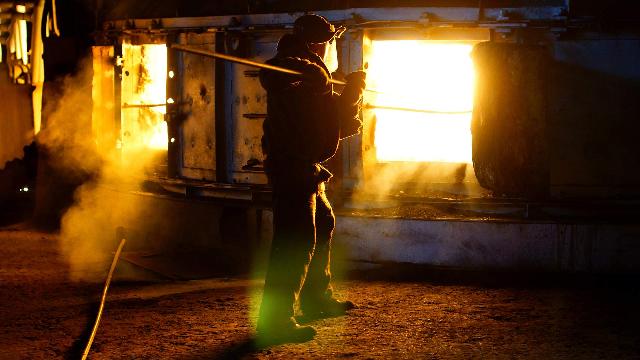
The investigation accused the former top manager of Binbank of fraud and embezzlement of 5.4 billion rubles.
The Investigative Committee of Russia has charged financier Mikhail Yevloev with major fraud and involvement in the embezzlement of 5.4 billion rubles, Izvestia found out. According to the victim's version, the actions of the defendants in the criminal case destabilized the work of the Klyuchevsky Ferroalloy Plant, an enterprise strategically important for the Russian defense industry. Its products are necessary, among other things, for the production of ammunition that destroys Ukrainian drones. Yevloev himself fled to the UK, but five of his alleged accomplices were detained.
Questionable partner
The Investigative Committee charged Mikhail Yevloev with fraud on a particularly large scale back on September 11, but this information has not been disclosed until today. Izvestia learned about both the charges and their contents. According to our information, the investigation considers Yevloyev to be the organizer and leader of a criminal group that included six people: five of them have been arrested and are already in jail. However, the main person involved in the case is at large, is wanted and, according to operational data, is hiding in London.
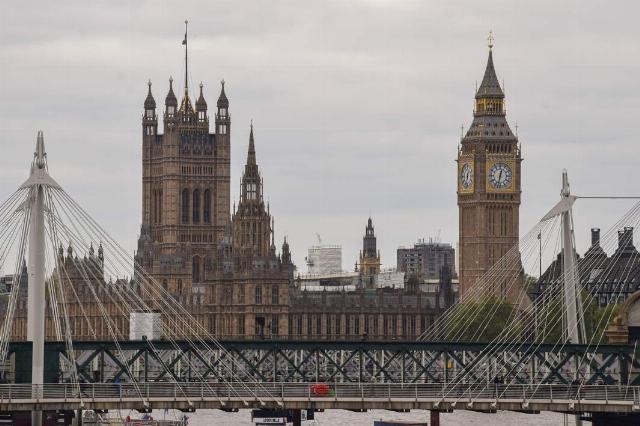
Photo: Global Look Press/Vuk Valcic
Image source: iz.ru
According to Izvestia, the financier's case is being handled by the second directorate of the Main Investigative Department of the TFR. It specializes in the investigation of particularly important cases in the field of economics.
The TFR is confident that Yevloev is the organizer of the theft of more than 5.4 billion rubles from the Midural Industrial Group Limited (MIGL) group of companies. It includes three strategic enterprises located in the Sverdlovsk region: Russian Chrome 1915 (RH), Klyuchevsky Ferroalloy Plant (KZF), Klyuchevskaya Concentrating Plant (KOF), as well as the management company Midyural.
All four are involved in the production of ferroalloys, a critically important raw material for the Russian defense industry. Such alloys increase the hardness and heat resistance of steel, its endurance and resistance to shock and vibration. Therefore, they are widely used in the production of armored vehicles, armor plates, critical engine parts, as well as ammunition for the destruction of Ukrainian UAVs. The director and beneficiary of MIGLA, Sergey Gilvarg, was recognized as a victim in the case.
The events that underlie the investigation occurred in 2022, when MIGL had problems paying off bank loans. First of all, it concerned the debt of $35 million to UniCreditBank. Its owner at that time was the Italian Unicredit, and the debt problem was largely provoked by the introduction of anti-Russian sanctions in 2022 and the refusal of foreign banks to finance Russian metallurgical enterprises.
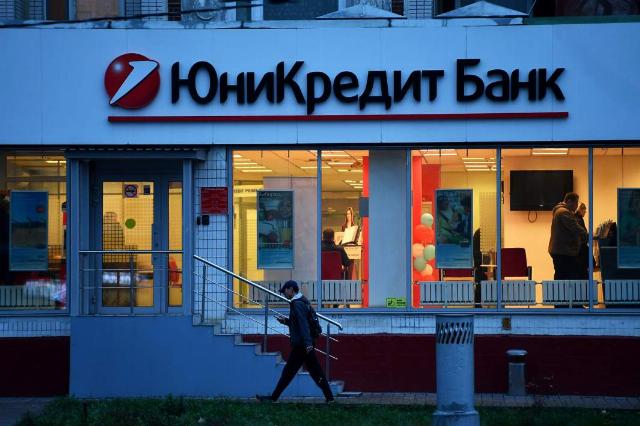
Photo: RIA Novosti/Mikhail Voskresensky
Image Source: iz.ru
In 2022, Sergey Gilvarg decided to sell one of his chromium salt manufacturing plants to Russian Chrome 1915 JSC. As representatives of the businessman emphasize, he expected that with the proceeds he would close the debt to the bank and provide financial support to the two remaining plants. In addition, using these funds, he wanted to accumulate all the shares of MIGL, buying 49% of the securities from the Turkish company Midural Holding Ltd.
A buyer for the Russian Chrome 1915 was found fairly quickly. In October 2022, the businessman received an offer from Polyplast Group to buy the asset for $170 million. At that moment, Gilvart involved Mikhail Yevloev in the transaction, who in the recent past was one of the top managers and co-owners of Binbank. According to the victim's representatives, the owner of MIGLA had known the financier for several years, considered him a competent specialist and hoped to use Yevloev's many years of experience in the banking sector, primarily in structures related to Binbank.
As a result, according to the TFR, Yevloev "by deception" convinced Gilvarg to create a closed-end unit fund "Solil-Sintez" at his expense and transfer shares of Russian Chrome there. The money from their sale was then supposed to go there. At the same time, the investigation notes, Yevloev concealed from his interlocutor the possibility of disposing of the fund's assets without the consent of the owner, as well as the existence of a developed plan for the seizure of Gilvarg's "property rights, securities and funds."
The investigation is confident that five people were involved in its implementation, led by Yevloev's relative Timur Erastov. He had to play a key role: legalize the stolen goods and act as a bona fide buyer.
Photo: IZVESTIA/Polina Violet
Image source: iz.ru
Four more employees of companies controlled by Yevloyev controlled the cash flow in the share sale transaction, were engaged in accounting, legal support and official correspondence, giving the activities of the criminal group "the appearance of legality," the case file says.
Plan implementation
At the end of 2022, Polyplast received the first payment for shares of Russian Chrome — about a billion rubles. This money was supposed to completely close the banks' claims against MIGL.
However, this did not happen, and Evloev, according to the investigation, used them to implement the first stage of his fraudulent scheme. Instead of paying off his debts to UniCredit, the accused transferred their claims to his company, Ema Invest. Moreover, he did this solely at the expense of funds belonging to the owner of MIGL, the case notes. And thus I got the opportunity to present debt claims to Sergey Gilvarg, which soon happened.
Photo: IZVESTIA/Polina Violet
Image source: iz.ru
Currently, according to Izvestia, these claims have been declared terminated by the decision of the 17th Arbitration Court.
According to the investigation, without stopping there, Yevloev also illegally appropriated 50% of the shares of the Solil-Sintez fund, having issued almost half of them to his relative Erastov. According to the investigation, this allowed the banker to use the victim's money and use it to buy 49% of MIGL shares from the Turkish company Midural Holding Ltd.
These two episodes formed the basis of the charges: the investigation believes that Evloev actually embezzled 5.4 billion rubles by his actions. And after that, he began, together with his probable accomplices, to apply to arbitration courts, seeking to block the operation of strategic enterprises and get them into ownership through bankruptcy proceedings. Representatives of the victim claim that such actions destabilized the work of a strategic enterprise, KZF, which is included in the register of defense industry organizations and fulfills orders, including for Uralvagonzavod.
Timur Erastov was arrested in August 2026. He and four other alleged accomplices were charged with fraud. It was not possible to get a comment from their lawyers.
Photo: IZVESTIA/Sergey Lantyukhov
Image source: iz.ru
Mikhail Yevloev's lawyer, Vladimir Kodol, noted that his client did not admit guilt, but did not comment in detail on his client's position, citing the need to consult with his client in order to prepare a detailed response.
What threatens the defendants
A particularly large-scale fraud is punishable by up to ten years in prison, lawyer Alexander Burchuk told Izvestia.
— At the same time, the investigation, if there are grounds, can additionally qualify the actions of the defendants as the legalization of property obtained by criminal means, — the expert explained. — The United Kingdom, in my memory, has never extradited to Russia those wanted for crimes committed in the Russian Federation.
Alexander Burchuk also noted that this does not exclude the possibility for the victim to contact the UK law enforcement agencies to bring him to justice and compensate for the damage caused.
Photo: Global Look Press/Zhang Feng
Image source: iz.ru
Lawyer Andrey Grivtsov also drew attention to the fact that, according to statistics, European countries are extremely reluctant to extradite defendants to Russia for criminal prosecution.
— There are exceptions, even in modern times. But the UK has never extradited anyone before. Now, bad political relations between the countries are mixed in with this," the expert said.
The lawyer explained that in order to be extradited to Russia, a person must be arrested in absentia and put on the international wanted list. Then he is entered into the Interpol wanted persons database. If such a person is detained on the territory of another state, Russia, upon receiving notification, may request his extradition by submitting documents. The court of another State decides whether to extradite or not. As a rule, it is assessed for this purpose: whether this is a crime under the law of another State, whether human rights are violated in the issuing State, whether there is evidence of persecution on political or religious grounds.
Vladislav Trifonov
