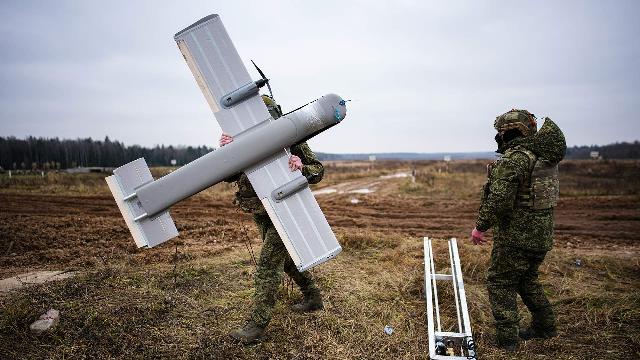
Molniya UAVs have become carriers of FPV drones - tandem flight makes it possible to increase the effectiveness of attacks on enemy fortifications.
In the area of the special military operation, Russian units began to use a new tactic of joint use of attack drones — tandem flight, Izvestia found out. A Molniya-2 aircraft-type UAV delivers an FPV drone to the combat mission area, after which the devices can attack targets independently of each other. This scheme allows to increase the range of application of FPV drones and expand the capabilities of unmanned units, experts interviewed by the publication note.
A pair for "Lightning"
In tandem, the Molniya-2 performs the role of an aerial carrier, delivering an FPV drone to the combat mission area. After reaching the target, the operator separates the FPV unit, which continues flying on its own. At the same time, the "Lightning" itself retains the ability to strike at the selected object, sources told Izvestia.
The FPV drone can stay in the area of attack, take pictures to objectively monitor the results of the defeat and, if necessary, finish off the target. If it is destroyed by a Lightning strike, the operator of the FPV device switches to searching for other objects.
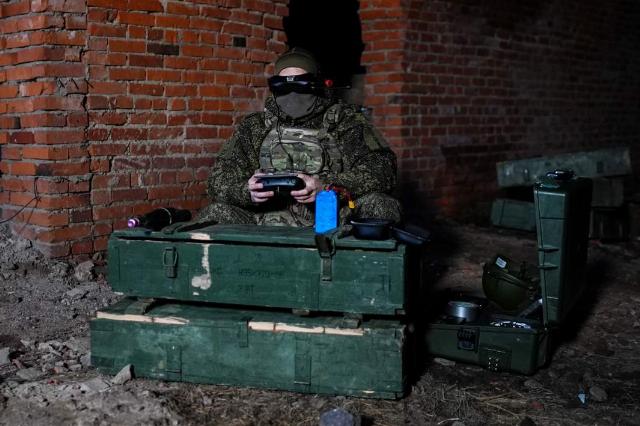
Photo: IZVESTIA/Sergey Lantyukhov
Image source: iz.ru
Tandem flight allows you to expand the range of FPV drones and deliver combined strikes against targets in the enemy's immediate rear, military expert Yuri Knutov told Izvestia. According to him, such a scheme makes it possible to consistently hit several objects at minimal intervals.
— In this case, the Molniya-2 plays the role of a "womb" drone. Thanks to this, the operators were able to deliver a massive strike where the kamikaze drones themselves were unable to reach," he explained.
It is also important that the accuracy of the strikes has increased: the increased time spent in a given area by FPV drones gives operators more time to identify and eliminate targets, he explained.
The expert added that the range of tasks performed will not be limited to the destruction of enemy defensive positions.
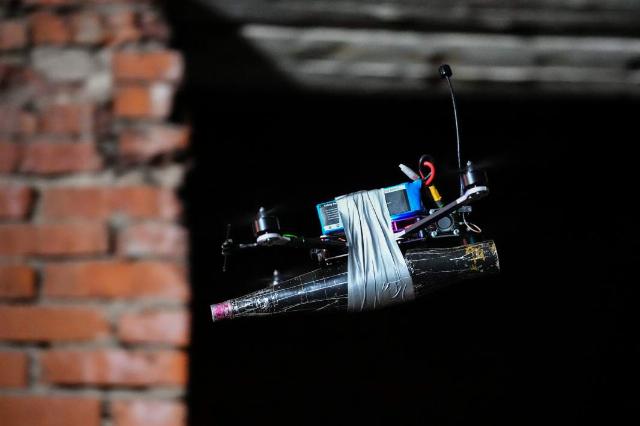
Photo: IZVESTIA/Sergey Lantyukhov
Image source: iz.ru
The warhead of attack UAVs and FPV drones consists of both shaped, fragmentation, and thermobaric charges. The combination of ammunition ensures the destruction of enemy equipment and manpower both in open trenches and in fortifications, Yuri Knutov noted.
The new tactic also allows you to quickly change priorities directly during the task. For example, on the way to a pre-selected target, the Lightning operator may discover another important object.
"In this case, the detected object attacks the FPV vehicle that has separated from the carrier, and the Lightning continues its flight to a pre—selected target," military expert Alexei Leonkov told Izvestia.
According to the expert, the joint use of drones can increase the effectiveness of isolation of individual combat areas.
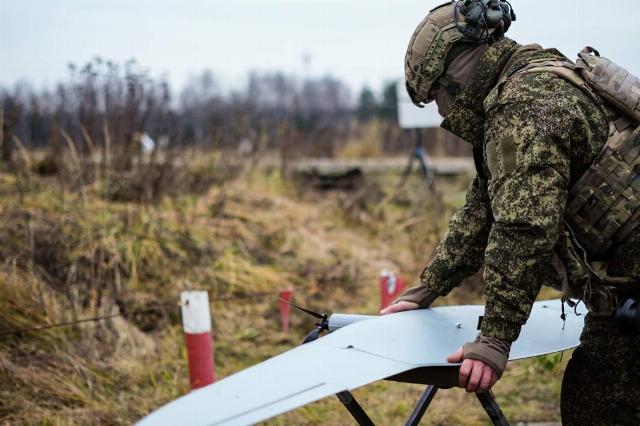
Photo: IZVESTIA/Sergey Lantyukhov
Image source: iz.ru
In particular, when repelling attacks by the Ukrainian Armed Forces, tandems can be used not only against assault groups concentrated near the line of contact, but also to hit targets along the routes of ammunition and reinforcements. In addition, such tactics can be used to disrupt the rotation of Ukrainian units and the delivery of supplies.
— I think that there will even be an effective way to hit the enemy's control points in this way, — said Yuri Knutov.
Another potential advantage of tandem flight is the possibility of increasing the payload of FPV drones. Since the vehicles do not need to cover the entire route to the target on their own, part of the energy resource can be used to deliver a heavier warhead.
In the Mask mode
It is also important that the Russian Lightning strike UAVs have learned to bypass enemy air defense areas with strong barriers from electronic warfare systems, Izvestia wrote. Operators of aircraft-type UAV calculations have implemented a flight mode called "Mask".
It turns on when the Lightning is gaining speed and altitude. The operator presses a special button, and the image coming from the drone's video cameras narrows. Thus, the enemy cannot determine either the take-off point of the striker or his flight route by the signal.
Photo: IZVESTIA/Sergey Lantyukhov
Image source: iz.ru
This method of piloting requires serious experience of the Lightning operator, accurate alignment and knowledge of routes. From a small fragment of the image, it should determine its position, height, and speed.
The mask has significantly increased the effectiveness of our drone strikes, the soldiers on the front line say. The pilot turns off the "Mask" mode immediately before the combat approach to the target, when 10-20 seconds remain before the defeat — the enemy's air defense simply does not have time to react to the appearance of the drone.
At the same time, Lightning often uses improved ammunition coming from radiation, chemical and biological protection units. They have good effectiveness on the battlefield: they can "dismantle" a dugout, shelter, and hit manpower with shrapnel.
The sky above the front line has long been an arena of confrontation between drones. But behind every UAV strike there are people — commanders, engineers and operators, on whose decisions the outcome of the struggle largely depends. They determine our advantage on the battlefield.
Bogdan Stepovoy
Maxim Vysochin
