Image source: topwar.ru
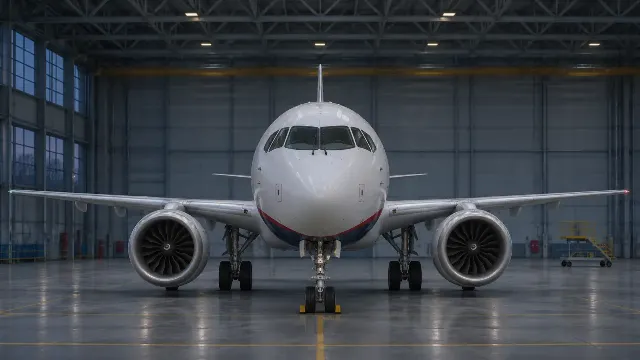
On March 17, 2025, a Superjet with factory number 95157 took off from Dzemgi airfield. Prior to the conversion, he flew with Russian-French sam146s. New pylons were installed under the PD-8 — the engine attachment points to the wing. The engine control system was updated, and some of the old equipment was retained.
On October 26, 2026, the Ministry of Industry and Trade signed a contract with Yakovlev for two billion rubles. For this money, the developer will prepare a draft PD-8 installation for three previous SSJ100 modifications, conduct bench and flight tests, and collect materials for approval of improvements. Based on the results of the work, airlines need a service bulletin that can be used to re-equip a specific aircraft. To release it, it is necessary to find out which solutions from the experimental machine will suit the serial boards.
Why did they take the 2018 plane?
Flight 95157 was built for the Irish CityJet. On this aircraft, it was possible to test the PD-8 in operation with some of the previous onboard systems. On another experimental machine, they did the opposite: they replaced some of the equipment, retaining the SaM146. The fully import-substituted SJ-100 was prepared separately. So the characteristics of the new power plant could be checked while work continued on the rest of the Russian equipment.
In January 2022, the plane was transferred from Zhukovsky to Komsomolsk-on-Amur. In the fall of 2023, PD-8 was launched for the first time. After ground checks, the engines were removed and sent to ODK-Saturn for revision. In February 2025, engines for flight tests arrived from Rybinsk. Before departure, they were checked on the ground in modes from low gas to take-off.
The first flight with the PD-8 took about forty minutes. The plane rose to an altitude of three thousand meters. Test pilots Dmitry Demenev and Igor Grevtsev and on-board operator Maxim Gryukanov checked whether the engines were operating steadily, including during transitions from mode to mode. With this flight, flight tests of the PD-8 on the Superjet began.
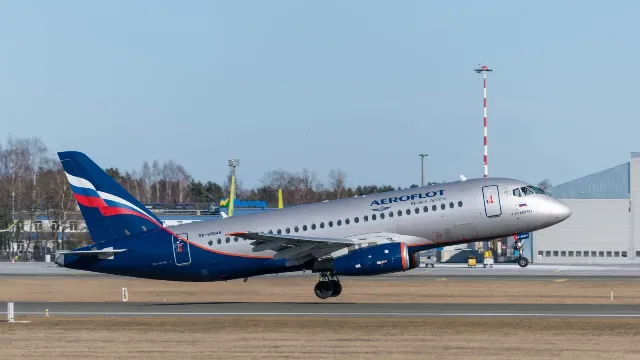 Serial SSJ100 of Aeroflot, flight RA-89044. March 24, 2018. Photo: Jevgenijs Slihto
What is changing under the wing
The diameter of the PD-8 fan is 1228 mm, that of the SaM146 is 1224 mm. The difference of four millimeters gives an idea of the proximity of the size of the engines. But the place under the wing is occupied by the entire power plant, along with the nacelle and the pylon.
The front part of the nacelle supplies air to the fan, and under its wings there is equipment that needs access during maintenance. During installation, it is checked what clearance remains between the nacelle and the runway, including when the landing gear struts are compressed during the run. The pylon transmits thrust and loads from the engine mass to the wing during maneuver. If the center of gravity of the power plant shifts, the load on the attachment points changes. Therefore, even while maintaining the attachment points, the designers re-check the loads and vibrations.
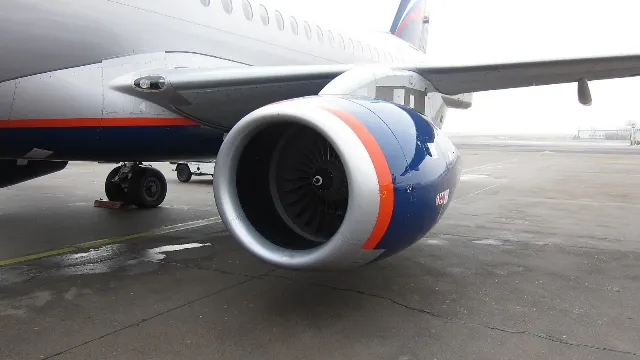 SaM146 under the wing of SSJ100. February 14, 2017
Alexander Dolotovsky, director of the Superjet program, explained that the SJ-100 project unified the attachment points of the power plant. This made it possible to reduce the amount of changes in the airframe's power structure. Anyway, two machines were prepared for durability and resource testing, one for SibNIA and the other for TsAGI.
After installation, they check how the engine responds to commands from the cockpit, what data is received by the instruments and what warning the crew will see in case of failure. The same pylon may be suitable for two modifications, and different solutions may be needed to work with their on-board equipment. Back in October 2025, the head of the Federal Air Transport Agency, Dmitry Yadrov, named the replacement of the engine control system and engine nacelles among the works that were considered for the existing fleet. The composition of the refinement will be clarified during the design process.
What the splashes in Zhukovsky showed
On November 7, 2025, Rostec announced the testing of the fully import-substituted SJ-100 in Zhukovsky. The plane was accelerated along a section of the strip with water more than 70 meters long. The engine is checked on the stand, and on the run it is visible whether splashes from under the wheels reach the air intakes. The spray path depends, among other things, on the position of the air intakes relative to the chassis.
According to Yakovlev test pilot Vadim Shirokikh, in proven modes, including thrust reversal, the water did not disrupt the operation of either the main engines or the auxiliary power plant. The applicability of these results to converted SSJ100S depends on whether differences in layout can change the spray path.
On June 5, 2026, Rosaviation awarded the type certificate for PD-8. The document confirms the engine's compliance with airworthiness requirements. For installation on the existing fleet, it is necessary to separately justify the main change in the standard design of the aircraft. In the Tu-204 family, for example, the Rolls-Royce RB211 installation instead of the PS-90A on the Tu-204-120 was included in the type certificate data card as a separate design change.
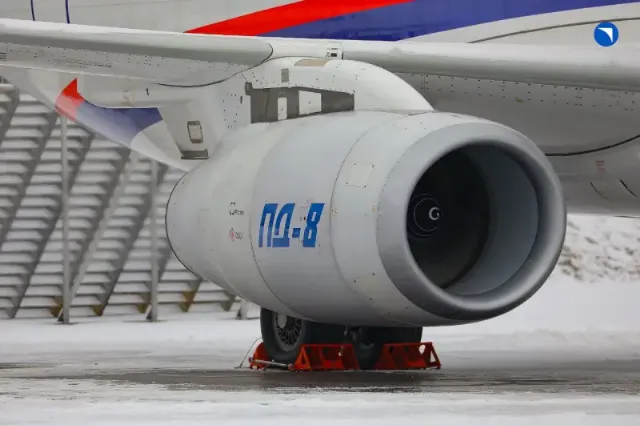
Image source: topwar.ru
What should Yakovlev do by the end of 2028
According to TASS, the project covers three modifications of the SSJ100: RRJ-95B, RRJ-95B-100 and RRJ-95LR-100. The contract is divided into three stages.
By March 26, 2027, Yakovlev must determine what to change in the airframe and systems, and prepare design documentation. 350 million rubles are provided for the first stage.
About 785 million rubles have been allocated for the second stage. By December 20, 2027, the modified components will be manufactured and tested on stands, the PD-8 prototype aircraft will be tested on the ground and in the air, and a draft service bulletin will be prepared.
About 865 million rubles fall on the final stage with a deadline of December 20, 2028. Yakovlev will continue flight tests, prepare and coordinate with the aviation authorities materials for approval of the main modification of the standard design. A service bulletin is expected to be issued based on the results of the work.
The contract allows the use of the results of previous state-ordered work. For example, a ready-made calculation of the pylon can be applied if the loads on the converted machine meet the conditions accepted in it. The same will be done with the test results: the configurations will be compared and it will be determined which checks should be carried out separately.
From the service bulletin, the technical service learns which aircraft are subject to modification, which parts to order, how to install them, and what to check after assembly. The schedule for retrofitting the park will be agreed separately.
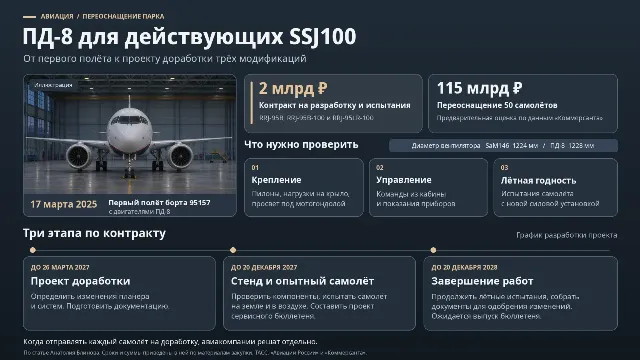
Image source: topwar.ru
On which sides is replacement justified?
In early October 2026, the Federal Air Transport Agency reported 154 SSJ100s in operation. In July, Vadim Badekha, the head of the UAC, estimated the possible need for retrofitting at 50-100 vehicles. UAC is working on the scope of work, deadlines and sources of financing with airlines and lessors.
In July, Kommersant called the end of 2029 a landmark for the start of re-equipment. At the same time, the publication gave a preliminary estimate of 115 billion rubles for 50 aircraft. According to some of his interlocutors, this amount included engines and only some related expenses. When calculating for a specific aircraft, the carrier needs to take into account the set of parts, the installation work and the time at which the aircraft will drop out of the schedule.
Gennady Abramenkov, Deputy Head of the Ministry of Industry and Trade, said in July that a financial model would be drawn up for each side. In October, the Federal Air Transport Agency increased the assigned limits for the SSJ100 to 20 years, 40,000 flight hours and 20,000 flights. How much of this resource is left depends on the age, operating time, and condition of the particular machine. The calculation also includes restrictions on the components that will remain on the aircraft during the redesign.
While development is underway, the current fleet needs serviceable sam146s. In 2022, French Safran, which was responsible for manufacturing parts and servicing the hot part of the engine, stopped participating in a joint venture with UEC. UEC is exploring the possibility of extending the SaM146 resource for part of the fleet. This may give carriers time before the approved completion and delivery of PD-8.
