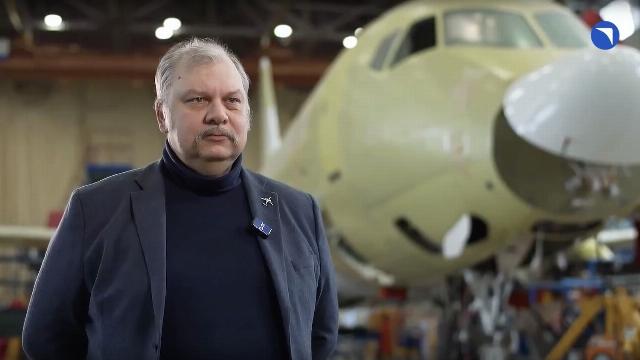
Deputy Managing Director — Director of the Yakovlev Branch of the Regional Aircraft Company — on the results and prospects of the Superjet program
Alexander Dolotovsky, Deputy Managing Director and Director of the Yakovlev branch of Regional Aircraft (FRS, part of the United Aircraft Corporation of Rostec State Corporation), talks about the results and prospects of the Superjet program.
— Alexander Viktorovich, tell us which design school is at the heart of the Superjet project.
— The Fed staff inherits the traditions of our country's leading design bureaus. By the way, at the initial stage of work, the designers of the Sukhoi Civil Aircraft company had such a meme: "We are the USSR national aircraft construction team."
The initiator of the project was the management of the Sukhoi aviation holding company, whose employees formed the core of the team responsible for the overall design. Enthusiasts from Tupolev, Ilyushin, RAC MiG, Khrunichev State Scientific Research Center, Yakovlev Design Bureau joined the project.
— Today, there is no need to prove the merits of the Superjet project. More than one and a half hundred stable flying machines speak for themselves. Nevertheless, it is useful to remember which key decisions underlie the project.
— First of all, it is the right choice of a market niche: the decision is not to go to a dimension above or below one hundred places. The cost of R&D is proportional to the take-off weight of the aircraft, and if Sukhoi had chosen the 160-190 seat size, the cost of R&D would have increased significantly. In particular, due to significantly higher costs for the technical re-equipment of the plants that were then part of the holding. Niche 50...70 seats are almost completely occupied by turboprop aircraft, and jet vehicles are leaving this segment. But the hundred-seat aircraft turned out to be a reasonable compromise. We have managed to combine the advantages of the two classes of aircraft. Narrow-body mainliners have given us a benchmark in terms of high comfort, automation of control and maintenance processes. Regional jet aircraft — in terms of reduced cost of operation.
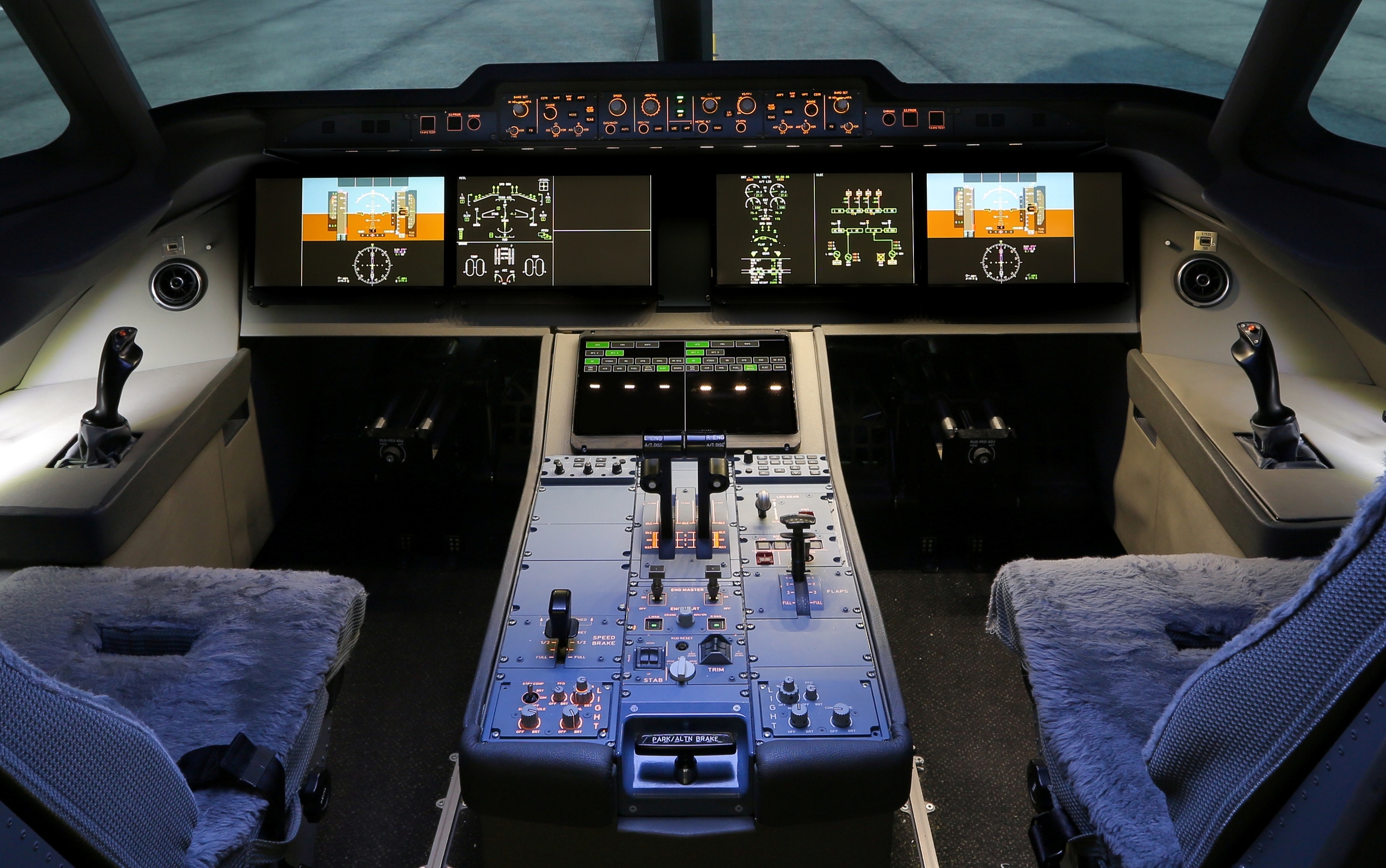 |
| SSJ-100 cabin. |
| Source: United Aircraft Corporation |
The SSJ-100 is the first aircraft in Russia to be fully digitally designed, without producing paper drawings at all stages of its life cycle, including production and operational support. A model-based approach to development was widely used, which made it possible to develop complex systems at an early stage and thereby reduce the risks of making changes to the design of experimental aircraft. The right bet was made on a high degree of automation of aircraft control and the use of an electric remote control system without mechanical redundancy. A number of fundamentally new technological solutions were applied in the organization of aircraft production: high-speed machining of parts, staple assembly of aircraft components and assemblies, seamless production, docking of airframe units without manual adjustment, assembly line. As a result, the SSJ-100, created in a short time, became the first domestic passenger aircraft in the post-Soviet period to enter mass production and widespread operation.
— How was the production cooperation built within the framework of the UAC under the aircraft production program?
— I will return to the choice of dimension. Due to the fact that the chosen niche was outside the duopoly of Boeing and Airbus, we managed to avoid harsh opposition from them at the start of the program. As a result, we were able to assemble a pool of the best suppliers available on the global market.
The Superjet program was initially based on broad scientific and industrial cooperation, including a risk-sharing partnership. All suppliers were selected on a competitive basis. Among the UAC enterprises, plants in Komsomolsk-on-Amur, Novosibirsk, and Voronezh took part in the production of the aircraft. The approach developed within the framework of the Superjet program has become a guideline for new UAC programs.
During import substitution, we used the accumulated experience to form a purely Russian cooperation. Currently, we have 146 Russian suppliers of the first level, of which about half belong to Rostec.
— You mentioned the import-substituted aircraft. What are the main differences between the SJ-100? Has it been possible to confirm the characteristics of the machine during the certification tests?
— The main external difference is the horizontal wingtips, which were previously an optional solution. Their introduction into the basic airframe is our response to the development of our competitors, who have switched to marching power plants with high—speed geared engines. The tips improve fuel efficiency by more than 4%, while reducing take-off and landing speeds. The overall effect is comparable to the new generation of Embraer aircraft, which have greatly improved due to the transition to a large geared engine. According to open sources, the weight gain of the Embraer from switching to the GTF engine exceeded 9 tons. We have escaped this fate.
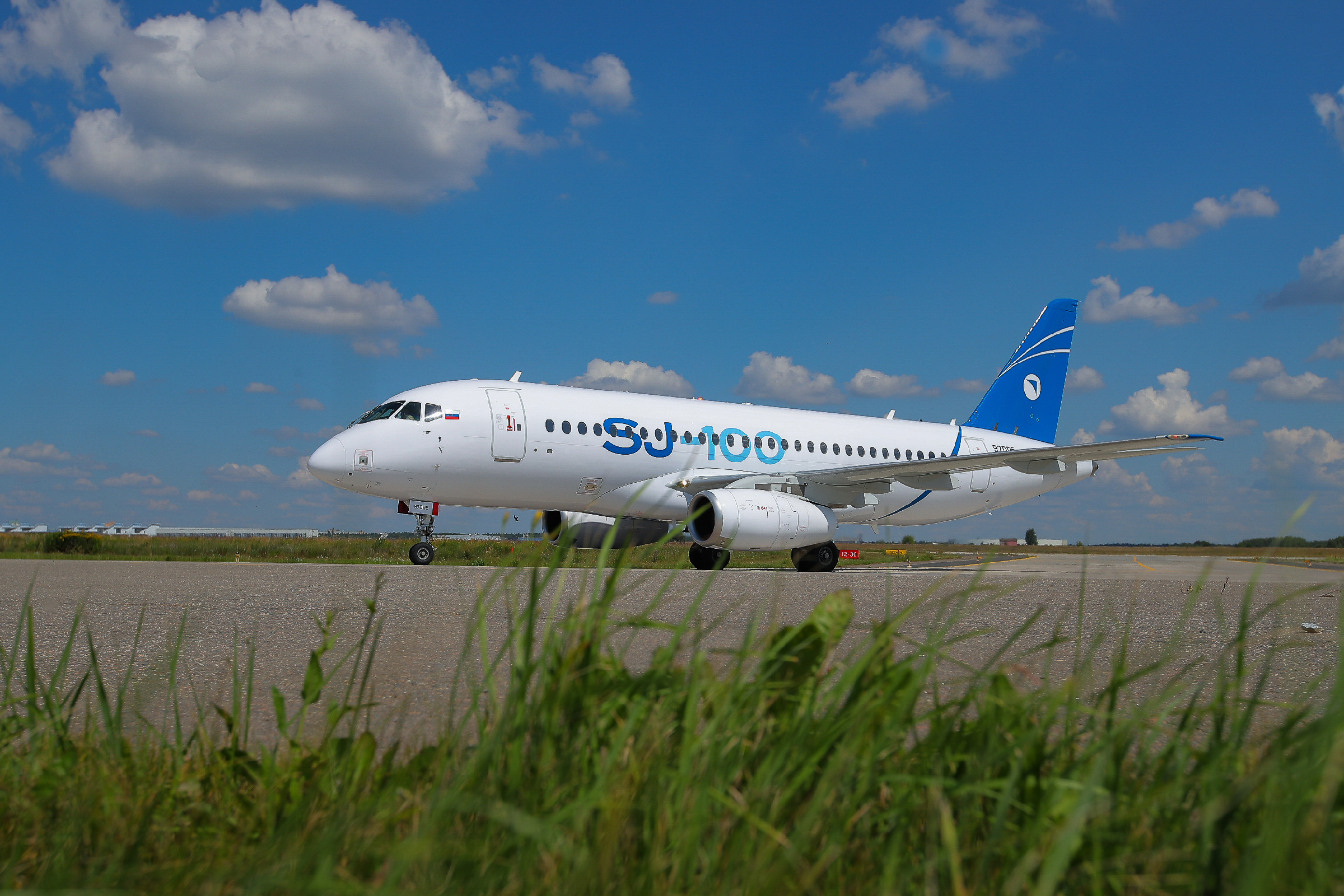 |
| SSJ-100. |
| Source: United Aircraft Corporation |
The most significant differences of the import—substituted machine are in the on-board systems. We and our Russian suppliers have managed to fully preserve and in some cases improve their functionality. The information field of the crew cabin is formed by enlarged displays, new controls have appeared. At the same time, continuity in the human-machine interface has been maintained, which will facilitate staff retraining.
The upgraded control system allows you to switch from the simplified direct mode mode to the main normal mode mode in flight, which implements algorithmic protections that help the crew in their work. The aircraft's fuel system has been simplified without compromising functionality.
The SJ-100 received new landing gear supports with two-chamber shock absorbers. This solution takes into account the operational experience at our regional airfields with rough runways and taxiways.
Aircraft maintenance programs are based on the principles of extended maintenance intervals, an action aimed at reducing the cost of maintaining airworthiness. All new solutions have successfully passed the tests and confirmed their capabilities and characteristics.
— What opportunities do Superjet have for further development and modernization?
— We have a number of new developments. In particular, they include the creation of special versions, an option that was previously inaccessible due to export restrictions. Another promising area is the development of an aircraft modification with increased transport capabilities for 120-130 passengers with a range of about 3,500 km. Such a machine can be created in 5-6 years without significant costs for the technical re-equipment of the plants participating in our program, and raise the bar for the supply of our machines, including for export.
