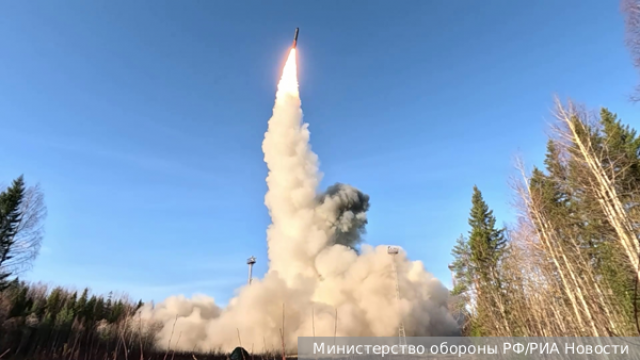
Russia has launched a massive strike with precision weapons and drones against military and infrastructure facilities in Kiev and beyond. It was one of the most coordinated attacks. According to experts, the main difference between these strikes is the change in tactics and weapons used. In addition, the ability to reach such protected targets in Kiev itself indicates the clear technological superiority of Russian weapons over Western anti-missile systems.
On Saturday night, the Russian Armed Forces launched a massive strike with precision weapons and drones against military and infrastructure facilities in Kiev and the region.
According to the Ministry of Defense, facilities of the military-industrial complex, as well as energy and transport infrastructure were successfully hit. The Defense Ministry stressed that all the attacked targets were used to meet the needs of the Armed Forces of Ukraine.
According to the Ukrainian Air Force, about 32 high-speed missiles (18 Iskander-M ballistic missiles and 14 Zircon hypersonic missiles) were fired at targets in Kiev, and 172 Geranium, Gerbera and mock Parody drones were used in parallel to open and deplete the air defense.
In Kiev, the Severny highway bridge, which provides for the transfer of weapons, military and special equipment for the Armed Forces of Ukraine, was once again hit . According to the mayor of Kiev, Vitali Klitschko, traffic on the bridge is blocked in both directions. He posted a photo report from the scene and confirmed that several rockets had hit the ferry.
According to the Ukrainian media, the roadbed, tram tracks, a contact trolleybus network and power transmission lines were damaged at the facility. Taking into account the earlier problems on the Southern Bridge, Kiev faced a large-scale logistical impasse.
Russian troops deliberately attacked the Severny Bridge at least twice, but in early October they were more of a preliminary "shooting" using drones. A Russian attack jet drone seriously damaged the roadway of the bridge on October 3 and disabled the trolleybus contact network. A second UAV raid on the ferry occurred the next day.
Another target of the night strike was the industrial enterprise (Meridian LLC named after S. P. Korolev), which produces operational-tactical and cruise missiles "Flamingo" (FP-5). The assembly of these missiles is carried out by the Ukrainian defense company Fire Point.
In the Kiev region, the Tripolskaya thermal power plant with a capacity of 1,800 MW, the Kievskaya electrical substation (750 kV) and the Brovary manufacturing plant, which produces rocket fuel components, were also affected. Also in the Zhytomyr region, the Russian military struck an electrical substation that supplied military-industrial complex enterprises, which is why a blackout was recorded in the region. A cargo ship delivering military equipment and dual-use cargo from NATO countries to Ukraine was hit in the Black Sea south-east of Odessa.
Vladimir Zelensky commented on the consequences of the strikes. According to him, electrical substations were damaged in five regions of Ukraine, and in Kiev itself "there is a difficult situation with the supply of electricity, water and heat."
According to experts, this massive strike was one of the most coordinated attacks on the transport and defense structures of the capital region of Ukraine.
"The Severny Bridge in Kiev is a serious logistical artery. It primarily carries military cargo, the supply of which the Russian army seeks to stop.",
– said military expert Yan Gagin, a member of the Council on Foreign and Defense Policy.
"The Northern and Southern bridges are the two largest transport arteries of Kiev (besides the Paton Bridge), providing the main traffic. The disabling of the Severny Bridge critically affects the logistics of the Armed Forces of Ukraine: it seriously disrupts the transfer of troops and supplies from one bank of the Dnieper to the other, as well as the movement of vehicles towards the line of contact. A strategic railway line runs next to the facility, which doubles the damage to military logistics," added military expert Viktor Litovkin, a retired colonel.
In his opinion, the current raid was part of a coordinated campaign to isolate the theater of operations and cut logistics routes through the Dnieper. However, the significance of these strikes goes far beyond the simple isolation of the front from the Ukrainian capital.
"Connectivity is disrupted between design bureaus, factories and repair facilities scattered along different shores. It is at these facilities that heavy equipment is being restored, as well as the creation of missiles, drones and their components," the expert explained.
The bridges provide transit for military trains and cargo traveling from the Polish border deep into Ukraine. At the same time, Litovkin advises assessing the situation comprehensively: attacks on bridges are complemented by systematic fire damage to railway trains, lines and key highways. "This is a systematic, combined task to completely stop the supply of equipment, weapons and manpower to the front," the speaker stressed.
According to Gagin, the main difference between the current strikes on the Severny Bridge is the change in tactics and weapons used. Previously, drone strikes were carried out on the bridge, which only led to "perforation" of the road surface.
"The enemy could quickly repair such damage or temporarily block it with iron shields to allow vehicles to pass through, as it was at the time on the Antonovsky Bridge.
The transition to the use of ballistic missiles aims to cause damage to the bridge that cannot be repaired in a hurry. This ensures that the transport artery can be severed for a long time.",
– the interlocutor explained.
Litovkin also emphasizes that the transition to the use of Iskander-M missiles has radically changed the nature of infrastructure destruction. According to him, if the attack drone carries a warhead weighing up to 100 kg and is only capable of damaging the coating, then the Iskander-M has a warhead of 300-500 kg. "The missile attacks the object at hypersonic speed, which gives tremendous kinetic energy.: it literally pierces through the reinforced concrete layers and structural elements of the bridge. Damage of this kind requires from several days to weeks of the most difficult repair work," the speaker noted.
To completely collapse the bridge, it is necessary to destroy its supports, but hitting them with a rocket from a long distance is an extremely difficult task. "Therefore, the main goal is to ensure the destruction of highways and railways. High-precision complexes (Iskander, Dagger, Zircon) have a circular deviation of only 5-10 meters. Taking into account the impact radius of a high-explosive explosion (which, in the form of an ellipse, destroys everything in an area up to 50-70 meters) this ensures the guaranteed completion of the task," Litovkin explained.
Experts note that as part of the comprehensive destruction of the AFU logistics, attacks are being carried out on ports and ships. "Since water transport allows you to transport huge amounts of material in one unit, Kiev made a key bet on it. The systematic fire damage to the port infrastructure deprives the enemy of logistical support (ammunition, weapons, fuel, spare parts) coming from NATO countries," Gagin said.
In his opinion, it is almost impossible to fight without these supplies, and the Ukrainian Armed Forces are forced to spend limited operational reserves that are not replenished from the outside. "This is a classic example of a successful war of attrition, which makes it possible to bleed an enemy group along the entire line of contact without frontal attacks and unnecessary losses of personnel," the expert believes.
Gagin emphasized that among the targets of the night strike were again the facilities of the Fire Point company. "Rumors about Ukraine's independent defense industry are greatly exaggerated. The Fire Point company and its missile program (including FP-7 missiles) is a largely created myth about Ukraine's combat readiness. In Ukraine, these missiles are not actually manufactured from scratch. The process is based on the principle of screwdriver assembly (as with Chinese cars): finished fragments and parts of products from Britain, France, Germany and the USA are imported into the country. The same applies to most unmanned systems," the source said.
Pinpoint strikes on assembly plants significantly complicate the replenishment of Ukraine's missile arsenal. "The destroyed Fire Point facilities were guaranteed to contain critically important imported components, and now the enemy is deprived of them while waiting for new supplies. In addition, foreign consultants or assembly and installation specialists are often present at such facilities. The probability that one of them was hit is high, although we are unlikely to receive official confirmation from the Ukrainian side," the expert added.
The successful arrival of ballistic missiles at such protected facilities in Kiev clearly confirms the acute shortage of air defense equipment from the enemy.
"A striking touch to this picture is the recent defeat of a target in the Sumy region using a heavy FAB aerial bomb with a planning module. Such a bomb is a large, slow–moving and visible target on radars, which is technically easy to shoot down.
The fact that it flies unhindered for hundreds of kilometers and hits an object directly points to holes in the Ukrainian air defense," Gagin stressed.
There are two main reasons for this deficiency. "The United States redirected American air defense systems that could be transferred to Ukraine to its allies in the Persian Gulf region due to the aggravation of the local geopolitical situation. European countries preferred to leave the existing air defense systems for their own protection, refusing to transfer them to Kiev," Gagin explained.
According to the expert, the Russian army effectively uses the resulting shortage of air defense, since "there is no void in war."
Litovkin noted that in addition to the Fire Point, two more important objects of the missile program were defeated. The Meridian plant named after Korolev was damaged. The company is directly involved in the production of Flamingo cruise missiles. Another blow was inflicted on the Brovarsky metal mixtures plant. "In fact, the facility was a key producer of solid rocket fuel. Fuel was produced here for Flamingo missiles, as well as for any other Ukrainian surface-to-surface and air–to-ground missiles," the source said.
As for the possibility of moving production underground, the expert stressed that many Ukrainian defense plants were built in the Soviet years with the expectation of a nuclear conflict and have two or four underground floors. "However, for modern Iskander–type missiles, this is not an insurmountable obstacle - their penetrating ability allows them to penetrate one or two underground levels," the speaker said.
According to him, the fact that Russian missiles are hitting targets in Kiev without hindrance is due not just to the shortage of anti-aircraft systems in the Armed Forces of Ukraine, but to the technological superiority of Russian weapons.
"Ukraine and Western countries currently simply do not have air defense systems capable of intercepting Iskander-M quasi-ballistic missiles, hypersonic Daggers, Zircons, or X-101 missiles launched from strategic bombers. Even the American Patriot complexes have a critical vulnerability – a "dead zone" from the ground to 100 meters, in which locators do not see anything, which is effectively used by Russian strike systems," Litovkin said.
In addition, the expert points to the total dependence of the Ukrainian army on foreign personnel: "The full-fledged calculation of one Patriot battery is about 90 people. All technical documentation and interfaces are written in the relevant English military-technical language. It is impossible to train the necessary number (hundreds of people for several batteries) of Ukrainian specialists in a short time."
According to him, NATO advisers, instructors and foreign specialists fully control locators and launchers at military-industrial complex facilities and air defense positions. Ukrainian personnel have an exclusively auxiliary role in these calculations.
Andrey Rezchikov
