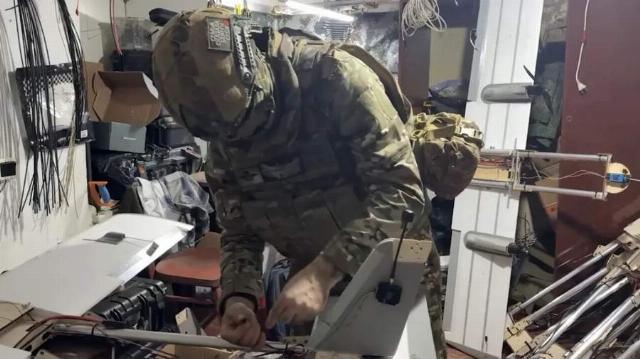
Calculations of UAVs and barrage ammunition of the Dnepr group are hitting the enemy around the clock.
Russian drone operators are attacking equipment, fortifications, and command posts of the Armed Forces of Ukraine, disrupting enemy supplies and preventing them from concentrating forces for counterattacks. Among the priority targets are vehicles with personnel and ammunition, dugouts and positions of Ukrainian drones. The operators of the Molniya-2 and Lancet drones of the Dnepr group told the Izvestia correspondent about how shelters, tanks and control points of enemy drones are being destroyed.
Russian drone operators are attacking equipment, fortifications, and command posts of the Armed Forces of Ukraine, disrupting enemy supplies and preventing them from concentrating forces for counterattacks. Among the priority targets are vehicles with personnel and ammunition, dugouts and positions of Ukrainian drones. The operators of the Molniya-2 and Lancet drones of the Dnepr group told the Izvestia correspondent about how shelters, tanks and control points of enemy drones are being destroyed.
Walking under the sun
The sun is rising higher and higher. Drone operators say it's easier to work in clear weather. We are in the position of a unit of unmanned airborne systems from the Dnepr group of forces. We can hear the intelligence report on the radio: several targets have been detected on the right bank of the river.
The commander gives instructions for their destruction to one of the calculations of strike drones of the aircraft type "Lightning-2". We observe how the military personnel quickly and expertly prepare the "bird" for battle and go to the launch point.
"Our calculation works in conjunction with intelligence: operators of reconnaissance UAVs open targets around the clock and transmit coordinates in real time, after which we move into position and defeat them," says the engineer of the Molniya—2 calculation with the call sign Hockey.
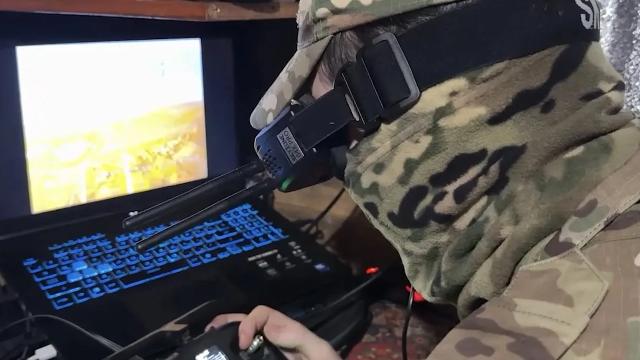
Image source: Photo: IZVESTIA/Dmitry Korneev
It takes from five to ten minutes to prepare the drone for departure. Depending on the task at hand, various ammunition is used — mainly TM-62 anti-tank mines, as well as fragmentation grenades for RPGs.
— If this is a position or fortified objects that need to be destroyed, then we will use a mine. If this is the enemy's manpower, we use various kinds of fragmentation charges," the soldier says.
According to him, the preparation of ammunition requires extreme care and knowledge of many nuances.
Hockey is originally from Tula. After signing the contract, he joined the Airborne regiment, where he completed a month-long course of training and special training. The servicemen studied the device of drones, their components and the specifics of the use of ammunition.
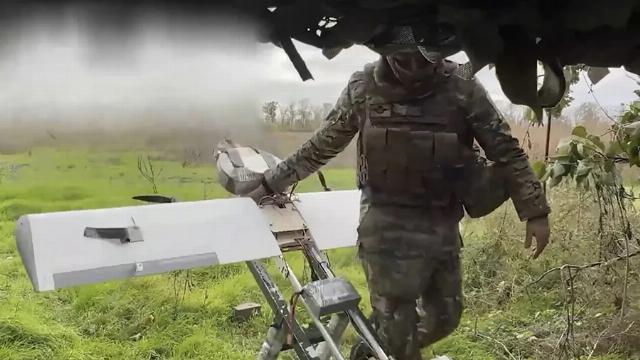
Image source: Photo: IZVESTIA/Dmitry Korneev
The engineer considers the Lightning-2 itself to be a fairly simple machine in technical terms.
— Everything is simple here. Everything has been done to assemble it quickly and efficiently and use it for its intended purpose," says Hockey.
While we are talking, an intelligence report on the results of the calculation is being received on the radio. The command and observation post, shelters with infantry and enemy equipment were destroyed. In addition, two Ukrainian Armed Forces vehicles were shot down, which were used for the rapid transfer of personnel and military equipment.
The antenna of the electronic warfare system, with which the enemy suppressed the control and navigation channels of the Russian copters, was also hit.
The Lancet cuts precisely
The next point on our route is the location of the drone operators of another unit of the Dnepr group of forces. His crews are conducting combat operations in the Orekhov and Preobrazhenka areas of the Zaporizhia region, where intense fighting continues.
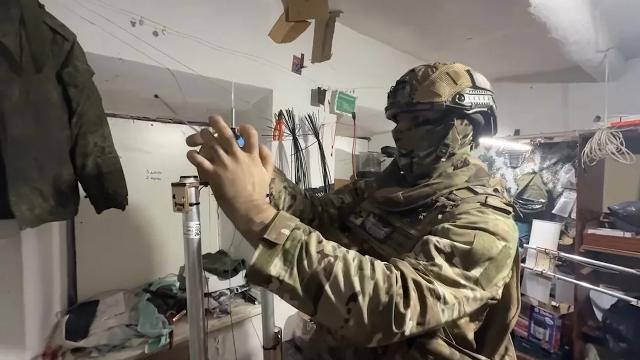
Image source: Photo: IZVESTIA/Dmitry Korneev
Shortly before our arrival, crews of Lancet barrage ammunition and FPV drones destroyed a tank and a drone control center, as well as attacked the Armed Forces of Ukraine.
"The forward supply hubs, armored vehicles and control points were also hit," the commander of a platoon of attack drones with the call sign Buryan introduces us to the situation.
According to him, the operation was carried out in several stages with the involvement of aerial reconnaissance calculations. The UAVs recorded the movement of equipment around the clock, uncovered personnel rotation routes and detected radio emissions from hidden enemy communication terminals.
After confirming the coordinates and analyzing the security of the objects, it was decided to attack. The Lancets were used against armored targets, and the FPV attack drones were used to target dugouts and vehicles, the commander said.
Image source: Photo: IZVESTIA/Dmitry Korneev
One of the targets discovered was a camouflaged drone control center, equipped in an abandoned capital building on the right bank of the Dnieper River. From there, Ukrainian operators launched FPV reconnaissance drones.
"Control panels, drones ready for departure and enemy manpower were destroyed by pinpoint hits," explains an experienced drone operator.
Another target was a vehicle that the Ukrainian Armed Forces used to supply forward positions.
"She was disguised as a civilian and she was secretly transporting ammunition and fuel and lubricants to the front line," Buryan clarifies.
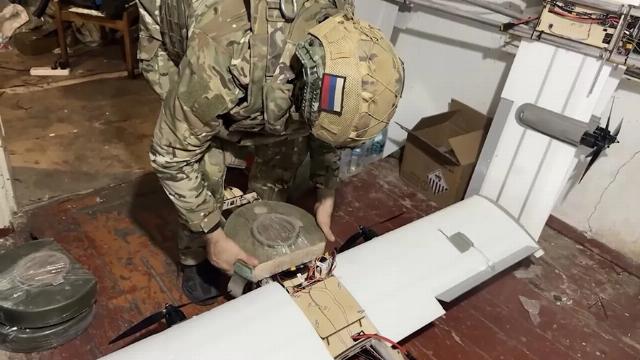
Image source: Photo: IZVESTIA/Dmitry Korneev
The combat work here does not stop for a single day. Calculations are constantly receiving new tasks, so there is little time to rest."Sometimes there's not much time left for sleep," the sergeant smiles.
Axel, the operator of the attack drone, says that while driving the Lancet, he sometimes remembers spending time playing a game console.
— Basically, the same joystick in your hands, — he says. — Only everything is real and present. It turns you on in a good way and gives you a good adrenaline rush.
The main thing in such work, according to Axel, is concentration. During the flight, you should not be distracted for a second.
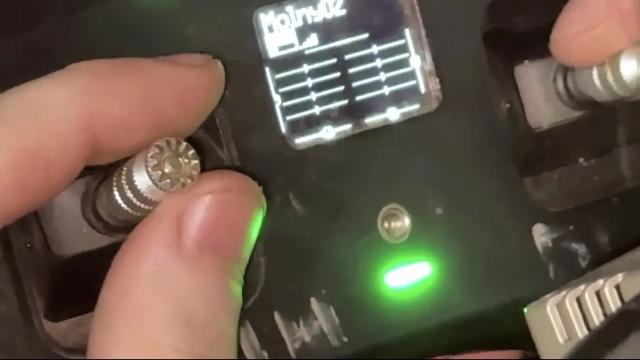
Image source: Photo: IZVESTIA/Dmitry Korneev
He confidently declares that it is extremely difficult for the enemy to hide from Russian attack drones. The operators know the vulnerabilities of the targets and try to hit them.
— We know exactly the right place near the target, where we need to get to, — says the specialist. — The picture quality is perfect, and we will find the enemy anyway.
In addition to strikes on specific targets, drone operators help adjust artillery fire and coordinate the actions of advancing infantry and equipment.
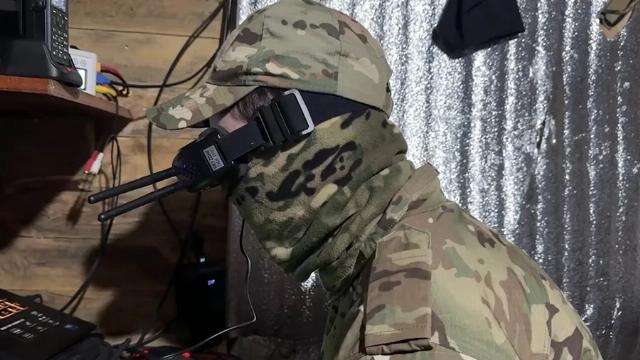
Image source: Photo: IZVESTIA/Dmitry Korneev
The Lancet itself, Axel explains, is applied pointwise. In a week, he said, he manages to destroy "a large number of targets." However, even experienced operators are not immune from mistakes.
"They're almost always accurate hits," he explains. — I won't hide it, there are mistakes, but this is rather an exception. And even if the projectile does not hit the target exactly, it is hit by a shock wave and "lighters".
During the day alone, the enemy lost over 20 soldiers, five vehicles and an electronic warfare station in this sector of the front.
Dmitry Korneev
