The military-industrial complex of western neighbors promises years of waiting instead of real protection
In Europe and Ukraine, they decided to take up their missile defense. The military operations in the framework of the SVO have shown that they have no protection against front-line ballistic missiles of the Iskander type, and the hopes placed on the American Patriot complexes have not been fulfilled: there are few of them, besides, they are critically short of anti-aircraft ammunition. Our Western neighbors are currently trying to implement several joint projects, but all of them are still stalling, which the Ukrainian side has already complained about. How long does it take to develop an effective anti-missile system, what difficulties did the European and Ukrainian military-industrial complex face, and whether their products will be more effective than our S—300 and S-400?
The Kiev Initiative
Ukraine is not able to independently develop an air defense and missile defense system, but it is actively trying to interest European partners in implementing joint projects. In Europe, the proposal from Kiev to create a "European" missile defense system Freyja (Freya, named after the Scandinavian goddess) has aroused some interest.
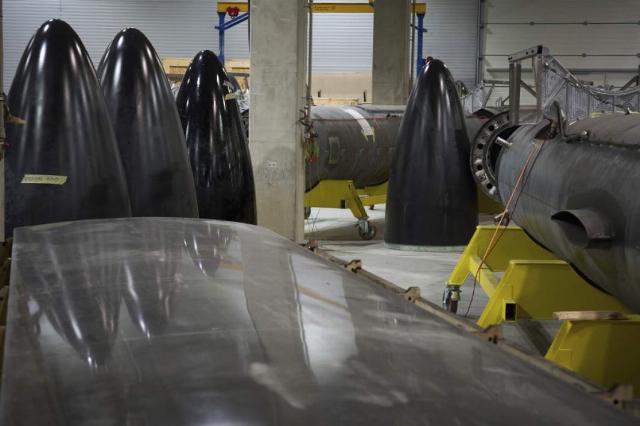
Photo: TASS/AP/Efrem Lukatsky
Image source: iz.ru
For its own armed forces, the Ukrainian company Fire Point is developing a ballistic FP-7 based on a Soviet missile for the S-300 air defense system, as well as its anti—aircraft modification, the FP-7.X.
As a result, cooperation between enterprises and components of the future missile defense system is proposed.
Fire Point is developing a launcher and an interceptor missile. Germany's Hensoldt is creating a radar for the new system, and Diehl Defense is developing homing heads for interceptors. Danish Weibel is developing an alternative version of the radar. Norwegian Kongsberg will integrate all components of the complex with the control system.
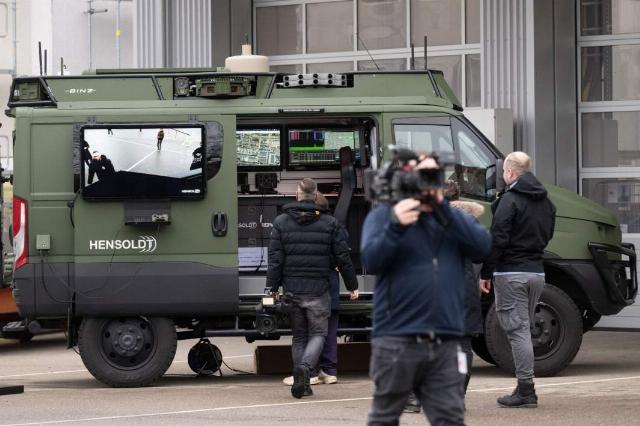
Photo: Global Look Press/Marijan Murat
Image source: iz.ru
According to previously announced plans, a working prototype of the Freyja system will be presented in the first half of 2027, and by the end of the year, the FP-7.X rocket should perform the first interception of a real target.
So far, only the FP-7 ballistic missile and, probably, the FP-7 are undergoing isolated tests.X exists only in drawings and in the form of layouts. Like all other systems of the future complex.
Zelensky, who watches the use of Russian Iskanders almost daily, recently expressed dissatisfaction with the pace of development of the Freyja system. According to him, within the framework of this project, Ukraine has done everything that depended on it, but the European partners are delaying the process.

Photo: Global Look Press/Cover Images
Image source: iz.ru
Thus, it may take years of testing and refinement of components before creating a real sample. Yes, this is possible if financing is available, but will it be available and how many years will it take to work with hardware? Big question.
Italian-French development
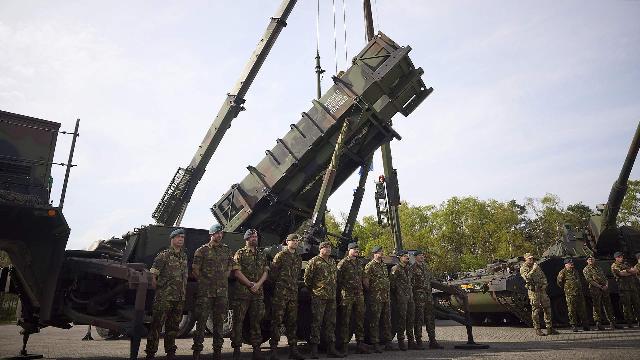
The only mature and fully European equivalent of the Patriot-type air defense system that can solve tactical missile defense tasks is the SAMP/T mobile air defense system developed jointly by France and Italy, and especially its latest modification SAMP/T NG (Next Generation).
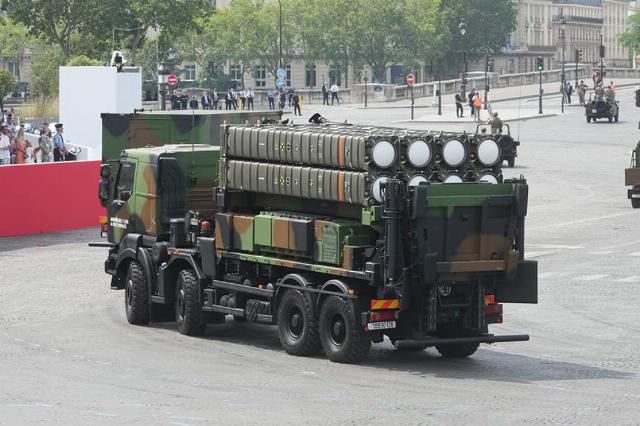
Photo: TASS/AP/Michel Euler
Image source: iz.ru
These air defense systems can use a new modification of the Aster 30 Block 1 NT (New Technology) missile, which is specially designed to intercept maneuvering short- and medium-range ballistic missiles, as well as hypersonic targets.
The SAMP/T air defense system is equipped with modern radars with an active phased array antenna, with an all-round view and a modern fire control system.
By the way, the same Patriot air defense systems work only in a certain sector, and for the organization of all-round defense it is necessary to involve several batteries of air defense systems. But the SAMP/T complex and its Next Generation modification have a serious problem with possible supplies to consumers — there is a queue for its products until 2030 and beyond. In addition, the complex cannot be called a budget solution, and the pace of production of both air defense systems and missiles is still very limited.
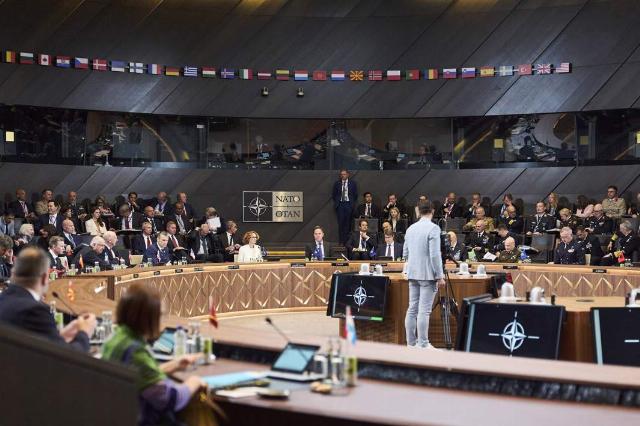
Photo: Global Look Press/NATO
Image source: iz.ru
In addition to France and Italy, Denmark has contracted the system (starting in 2028), followed by Switzerland, which has included the air defense system in the shortlist of likely supplies as a backup or alternative system due to delays in receiving the Patriot air defense system. There are other NATO countries in the queue, and not only that. Therefore, the complex will not begin to play a significant role in European air defense and missile defense soon.
German "Toffee"
Another "almost ready" option is the German IRIS—T SLM air defense system (they are also called "Toffees"). Now the complex is already in service and even in several countries, but in this form, the IRIS-T can only fight aerodynamic targets such as airplanes, drones and cruise missiles. The SAM cannot hit the ballistics. But in Germany, work is intensively underway to modify the IRIS-T SLX with an increased interception range of up to 80 km, an increased target height of up to 30 km, and the ability to destroy high-speed objects such as ballistic missiles. The complex could be integrated into the European air defense system, but it is planned to start testing its components only in 2027, and deployment will be possible no earlier than 2029-2030.
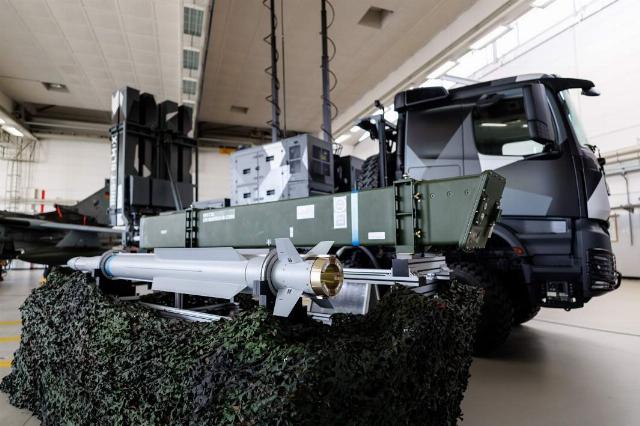
Photo: Global Look Press/Matthias Balk
Image source: iz.ru
In principle, this is not so bad, but saturation of the air defense forces with this air defense system will occur only by the middle of the 2030s and not earlier.
Germany recently acquired the Arrow 3 ultra—long-range atmospheric interception ballistic missile system, which is an Israeli system. The first batteries went on combat duty in 2025. Full combat readiness should be achieved by 2030.
But here again there is a problem: the Arrow 3 missile defense system is designed to repel attacks from medium-range missiles, and its effectiveness against tactical missiles with a range of up to 500 km is probably not high. Apparently, Germany is hoping for IRIS-T and other projects here.
The combined project
There is also a purely European project of the HYDEF atmospheric hypersonic interceptor, designed to operate at an altitude of up to 100 km. But the creators themselves recently admitted in their press release that only the concept of the device will be ready by 2030. And real work on this project can only begin at the turn of the decade.
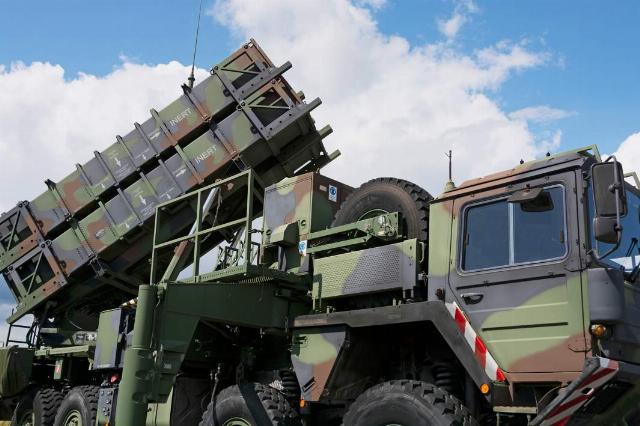
Photo: Global Look Press/IMAGO
Image Source: iz.ru
It turns out that Europe does not have any practical alternatives to the American Patriot-type anti-missile umbrella in the coming years, which means it is necessary to find a consensus with Washington. Of course, it is interesting to draw plans and schedules for independent projects for general development, and our own military—industrial complex is certainly interested in orders, but whether this will be useful is debatable. At least, the implementation of "European initiatives" in the coming years seems unlikely.
All of these systems are not much different from the Russian S-300 class combat systems and are inferior to the S-400. Our combat systems provide 360-degree protection for the target. The S-400 is capable of operating in conjunction with other S-300, S-400, and more powerful S-500 air defense systems. But the most important thing is that they can work within the framework of the country's unified air defense system. Europe has yet to resolve this issue.
All this variety of complexes, if they can be brought to readiness, will at best allow Europe to approach parity with Russia. And that's on condition that our developers stop working on new systems. Therefore, Europe will lag behind Russia in the field of air defense for a long time.
Dmitry Kornev
