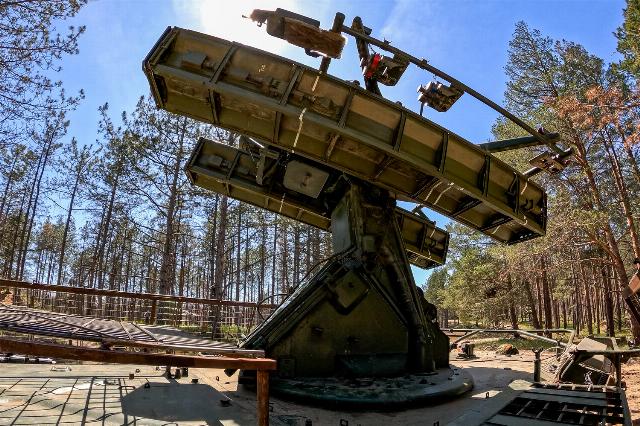
The attempted UAV attack on Moscow has become one of the largest in two years.
From October 29 to October 30, 862 unmanned aerial vehicles of the Armed Forces of Ukraine participated in the raid on the Moscow region. The drone attack was the largest in October and one of the largest in two years. Most of the UAVs were destroyed on the outskirts of the capital. What conclusions can be drawn from what is happening — in the material of the military observer "Gazeta.Ru", retired Colonel Mikhail Khodarenka.
The raid on Moscow on the night of October 30 was the largest since the beginning of 2026 and one of the largest in at least the last two years, according to TASS calculations. In other words, the intensity of strikes by unmanned aerial vehicles of the Armed Forces of Ukraine has not only not decreased recently, but has increased significantly.
The official messages of the Russian military department, as a rule, contain the following lines: "an attack has been carried out on the storage and assembly sites of unmanned aerial vehicles." Here, for example, is only the latest message (from October 30th): "as a result of the strike, the workshop for the assembly and storage of unmanned aerial vehicles (PJSC Fanplit), which manufactures and stores FP-1 and FP-2 UAVs of the Fire Point company, was hit in the city of Kiev and the Kiev region.
As a result of hitting one shop and disabling it, several new production sites immediately appear. So it is quite possible that such attacks from Russia resemble the fight against a multi-headed snake. In place of the severed head, several new ones immediately grow (and even taking into account the supply of drones to Ukraine from abroad).
Among other things, during the planning and conduct of certain air operations and strikes, it never happens that aviation weapons, anti-aircraft missiles and unmanned aircraft are more than enough for absolutely all enemy targets.
In order to accelerate the achievement of peace agreements, it is necessary to increase the intensity of attacks on targets, the destruction of which will lead to the most adverse consequences for the opposing side. And there are only a few such facilities in Ukraine — energy (and this is the most important thing), bridge crossings over the Dnieper River, complex engineering structures on railways, mainline locomotives, senior management posts, and, finally, personalities, that is, representatives of the highest military and political leadership of the Square, responsible for planning and carrying out strikes against Russia. This is what the first group of conclusions might look like.
The increase in the intensity of attacks by Ukrainian UAVs on Russia indicates that at this stage the enemy has not yet suffered losses that may be considered unacceptable for Kiev. The enemy's will to continue the armed struggle is by no means broken at the present time. The enemy, despite the constant loss of certain settlements, maintains the stability of the front in an operational and strategic sense. That is, the enemy does not demonstrate any signs of at least minimal readiness for productive negotiations at this stage of the confrontation.
So, most likely, the negotiations in Abu Dhabi will take place approximately according to the following scenario: the participants will sit down at the table, get up in an hour and disperse. And if we manage to agree on anything, it will most likely be an exchange of the bodies of dead soldiers and prisoners.
The main conclusion is that the Russian Armed Forces should dramatically increase the effectiveness of strikes against the listed targets on the territory of Ukraine (the main, nodal ones that determine the combat capability of the Armed Forces of Ukraine and the state as a whole). There is no other way in nature to end any armed conflict as soon as possible.
Effectiveness of Russian air defense
It is necessary to note the very effective combat work of Russian air defense units and formations during the repulse of the last strike of the Ukrainian air attack on the Moscow region, and first of all, in this regard, it is necessary to single out the combat crews of the 1st special-purpose air and missile Defense Army, which performs the combat mission of covering the capital.
Today, the effectiveness of air defense forces and means/Missile defense has, without any exaggeration, political significance. For example, the US Armed Forces failed to ensure the security of their allies in the Persian Gulf region during the recent confrontation with Iran. And the leadership of the monarchies of the region was forced to seriously doubt the combat and operational capabilities of the hegemon. Moreover, the kings, emirs, and sultans of the Persian Gulf have questions: is Washington really the hegemon?
Currently, the Russian Aerospace Forces are on the eve of a major reform. Influence groups are already fighting for upcoming organizational and staff decisions. There is every reason to believe that measures will eventually be taken that will dramatically increase the effectiveness of air defense/ABOUT the country and its Armed Forces.
Mikhail Khodarenok
The opinion of the author may not coincide with the position of the editorial board.
Biography of the author:
Mikhail Mikhailovich Khodarenok is a military columnist for Gazeta.Ru", retired colonel.
Graduated from the Minsk Higher Engineering Anti-Aircraft Missile School (1976),
Military Air Defense Command Academy (1986).
Commander of the S-75 anti-aircraft missile division (1980-1983).
Deputy commander of the anti-aircraft missile regiment (1986-1988).
Senior Officer of the General Staff of the Air Defense Forces (1988-1992).
Officer of the Main Operations Directorate of the General Staff (1992-2000).
Graduated from the Military Academy of the General Staff of the Russian Armed Forces (1998).
Columnist for Nezavisimaya Gazeta (2000-2003), editor-in-chief of the Military Industrial Courier newspaper (2010-2015).
