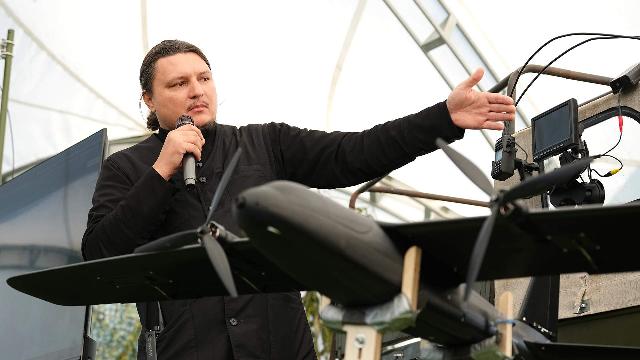
The device was created by parishioners of the Moscow church after the call of Patriarch Kirill
Military priests have begun to master the Nabat V.3 drone detectors, which will help them get to their positions more safely and continue serving on the front line. Since the beginning of the special military operation, more than 3.5 thousand clergymen have visited the area of its conduct, eight of them died. The device, created with the participation of parishioners of the Church of St. Alexander Nevsky at MGIMO, warns of the approach of UAVs and allows you to intercept the video signal from them. How a church initiative turned into a development for the needs of the army and what dangers priests face on the front line — in the Izvestia report.
Instead of a censer, a detector
A group of more than 20 military priests gathered at a specialized training ground in Mozhaisk immediately catches the eye. It seems that worship is about to begin, not professional exercises. Worn chevrons and long gray beards catch the eye. One of the priests is limping — he was probably injured. One of them can be heard praying for a speedy victory and the health of our fighters.
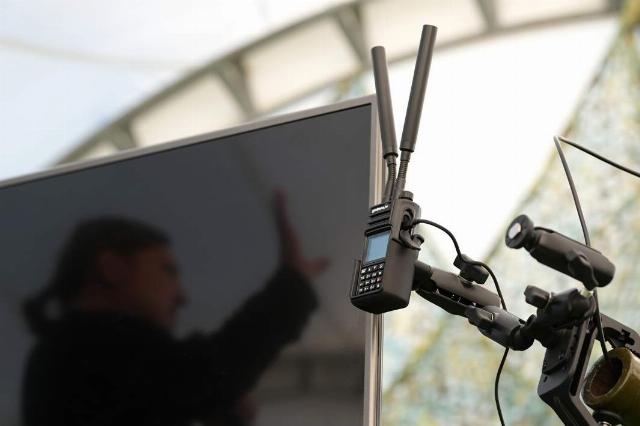
Photo: IZVESTIA/Eduard Kornienko
Image source: iz.ru
Classes on the use of drone detectors begin with prayer. Then the priests get acquainted with the device. Finally, we enter the training ground. A dark green UAZ Pickup truck stops on a dirt road, and practical exercises are about to begin. The alarm and monitor are mounted on a bracket, and the remote omnidirectional antenna is mounted on the roof of the car. The priests surround the car and check how securely the equipment is secured. It is not possible to move it from its place.
At this moment, a drone buzzes. 200 m from the car, we notice the operators. The alarm turns on, and an image from the drone's camera appears on the monitor: the landfill and the surrounding forest are visible from a bird's-eye view. The video signal has been intercepted, and the device is working.
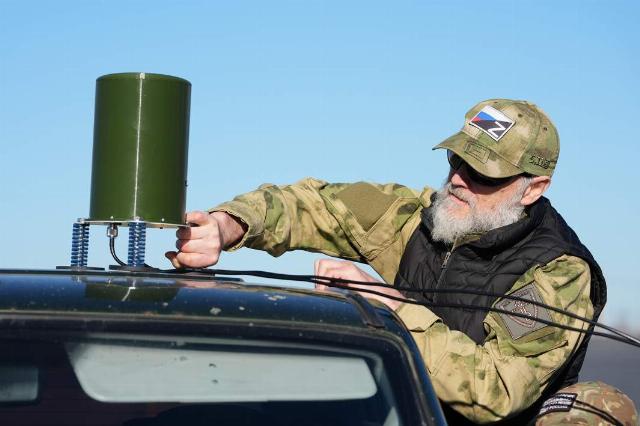
Photo: IZVESTIA/Eduard Kornienko
Image source: iz.ru
The priests take turns getting into the car to check the operation of the equipment in conditions close to combat conditions. We sit down next. The car is shaking on a dirt road, but neither the antenna nor the detector itself fall or move, and the device confidently detects drones.
How the Church created the Alarm Bell
Archpriest Igor Fomin, rector of the Church of the Holy Prince Alexander Nevsky at MGIMO, has been on the front line since the beginning of his career. He brings humanitarian supplies there and provides spiritual support to the fighters. And together with the parishioners, he develops and manufactures technical equipment designed for the army.
The archpriest said that the idea of creating a "Tocsin" — one of the first devices that made it possible to intercept video signals from enemy drones — arose after Patriarch Kirill of Moscow and All Russia appealed to the clergy to help the soldiers on the front line not only spiritually, but also with means that allow them to save lives. The main developer of the detector was the cleric of the temple Nikolai Melnichuk. Previously, he was engaged in photographing and digitizing temples using UAVs, so he was well acquainted with this technology. The parishioners supported the initiative, and work began on the Alarm Bell.
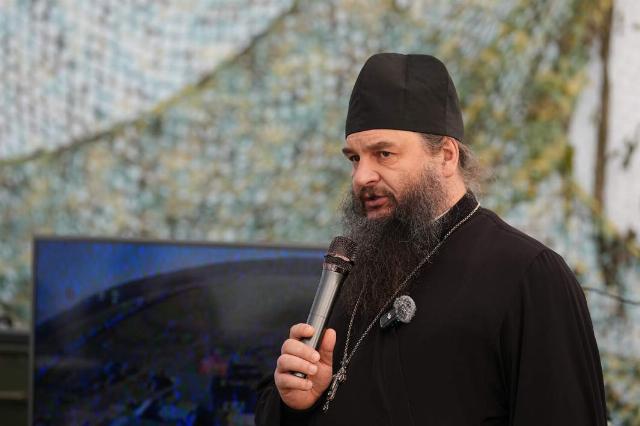
Rector of the Church of St. Alexander Nevsky at MGIMO, Archpriest Igor Fomin
Image source: Photo: IZVESTIA/Eduard Kornienko
First, they found a foreign device that worked stably at two frequencies. The team figured out his device and adapted the software, recalls deacon Nikolai Melnichuk. This made it possible to achieve high detection accuracy: in 98% of cases, the detector detected the UAV signal.
"Engineers from among the parishioners of the temple and untrained specialists joined the work," the cleric said.
In the third version, Nabat was able not only to detect drones, but also to intercept the video signal and analyze the air situation. Several dozen people are currently working on improving the efficiency of the device. They take into account user feedback and the requirements of the Ministry of Defense.
The first versions of the Nabat began to be used in the military back in 2023. Military observer Kirill Fedorov says that in 2024, the devices began to be actively used along the entire line of contact, including near Gorlovka. Hundreds of detectors were handed over to the Russian Air Force helicopter pilots. They warn of approaching UAVs and help to avoid attacks. They are also used to protect airfields.
Presentation of the detector of unmanned systems "Nabat V.3"
Image source: Photo: IZVESTIA/Eduard Kornienko
— This allows you to save not only people's lives, but also expensive equipment: the cost of a helicopter starts from about 1 billion rubles, and the Ka-52 can cost up to 2 billion, — said Fedorov.
"Nabat" saved more than once. In the spring of 2025, when a search and rescue helicopter evacuated the crew of a downed combat vehicle, the device warned of the approach of enemy drones. The crew quickly changed course, which helped them escape the attack and leave the danger zone. According to Fedorov, the detectors also helped prevent new attacks on airfields in the depths of Russia after the operation of the Ukrainian Armed Forces "Spider Web".
Serving at gunpoint
Since the beginning of the special military operation, more than 3,500 church servants have visited the war zone, Priest Georgy Shabalov told Izvestia. The clergy holds daily worship services in dugout churches, prays with the military personnel, and supports them.
Hieromonk Simeon (Mazaev) has been serving regularly in the war zone since mid-2023. He says that more than once he found himself in a situation where enemy drones prevented him from leaving his position — literally hanging over his head. Moving between positions is especially dangerous. After worship and confession in one unit, the priest needs to get to the next, and the road may pass through open areas where the threat of air attacks increases. And the closer to the line of contact, the more dangerous the movement.
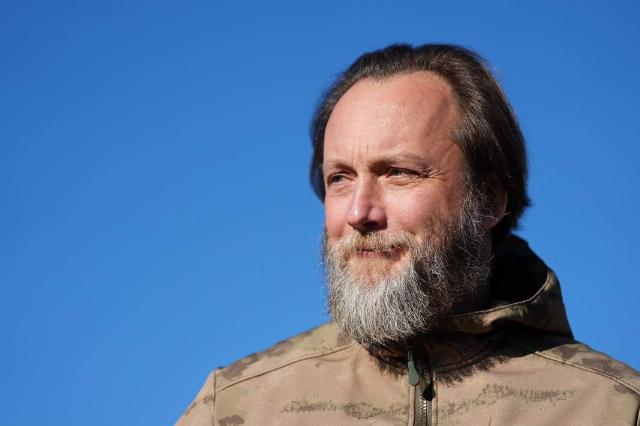
Hieromonk Simeon (Mazaev), rector of the Alexander Nevsky Church in the village of Buzlanovo
Image source: Photo: IZVESTIA/Eduard Kornienko
— Actually, I don't expect the enemy to spare me. I came with the army he's trying to fight, so I don't expect any mercy or mercy from him," says Father Simeon.
He admitted that there were times when the consequences could be tragic. But I am convinced that God's help is especially acutely felt on the front line: in difficult circumstances, coincidences occur that are difficult to explain by mere chance.
Sofia Sokolovskaya
