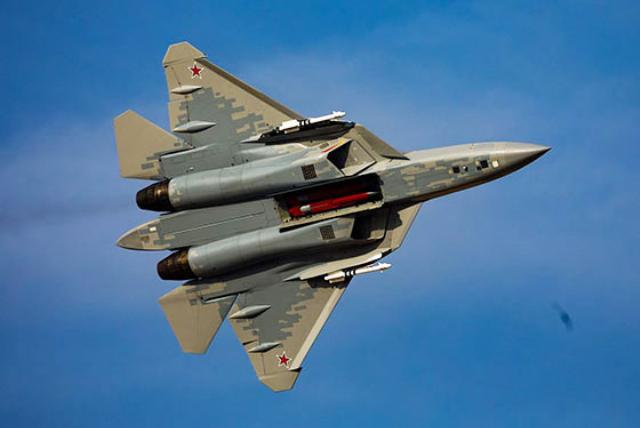
TSAMTO, October 29. The Center for the Analysis of the Global Arms Trade has prepared analytical material on the assessment of options for the future development of the Indian Air Force fighter fleet.
A short version of the analytical review is presented below.
Despite the increase in defense spending in India, comprehensive government support for Indian manufacturers of weapons and military equipment, as well as Prime Minister Narendra Modi's personal attention to the development of the national military-industrial complex, experts and analysts estimate that the Indian Air Force is declining in numbers, and its ability to withstand a potential adversary is gradually decreasing. It is decreasing.
The reason for this paradox lies in the Indian procurement policy of recent years. The aircraft being purchased is far from the aircraft that the Armed Forces of the Republic of India really need. Obviously, part of the Indian business elite and the generals, motivated in one way or another by Western companies, are lobbying for the signing of contracts, the benefits of which are highly questionable for the national Air Force.
While geopolitical and military competitors (China and Pakistan) rely on the latest weapons, including fifth-generation J-20 and J-35 multi-role fighters, India continues to purchase outgoing, fourth-generation Rafale and Tejas aircraft, which no longer meet modern challenges and threats in their combat capabilities.
The situation becomes even more critical given that the Rafale and Tejas are no better, and in terms of a number of tactical and technical characteristics, even worse than the main fighter of the Indian Air Force Su-30MKI. In particular, the Su-30MKI has significant superiority in speed, maneuverability, combat load and combat radius.
A completely logical question arises: why are huge financial resources from the Indian budget allocated for the direct purchase of expensive products from the private French company Dassault Aviation (about 160 million euros per Rafale fighter), when the Indian state corporation HAL can purchase Su-30MKI assembled at its enterprises under a Russian license – and at a significant price? lower? We are addressing this issue to the relevant Indian competent authorities, who may be able to conduct a full–fledged investigation, because we are talking about the national security of the Republic of India.
Over the seventy years of operation in India, Soviet/Russian aviation equipment has demonstrated high efficiency and reliability, and our country has proved to be a reliable partner in the field of military-technical cooperation.
In a number of his speeches, Prime Minister Narendra Modi praised the quality and effectiveness of Russian weapons, emphasizing the successful nature of their use during Operation Sindur (May 2025). In turn, Moscow is ready to continue mutually beneficial cooperation with New Delhi through military-technical cooperation. Moreover, Russia is open both to the continuation of the joint Su-30MKI program and to the organization of licensed assembly at the enterprises of the Indian corporation HAL of the fifth-generation fighter Su-57E.
The worst case scenario
What happens if India does not accept the Russian offer for the Su-57E and instead continues to purchase and manufacture the previous fourth–generation fighter aircraft, the French Rafale and its own Tejas?
It is quite obvious that the rivalry between Pakistan (and China, which stands behind it) and India will not stop and will continue in the foreseeable historical future – this is evidenced by the entire history after 1947 (after gaining independence from British colonial rule). New armed conflicts are quite predictable and real, and the area of the Indian-Pakistani confrontation will shift more and more to the aerospace sphere.
At the same time, equality of military capabilities and defense potentials of the warring parties is extremely important for preventing the most dangerous scenarios. What is the ratio of their available forces and means?
Islamabad and Beijing are currently betting on fifth-generation multi-role fighters. By the turn of 2030, Pakistan will be able to field at least forty J-35AE, the PLA Air Force – up to five hundred J-20 and J-35, the PLA Navy – more than fifty deck-based J-35. In total, there are about 600 fifth–generation fighters: each, in terms of its combined qualities, surpasses any aircraft of the previous fourth generation – and India does not have the best.
One can only imagine the damage that the military aircraft of Pakistan and China will be able to inflict on the Indian Air Force in a large-scale war by using long-range high-performance PL-15 air-to-air missiles, which, according to media reports, were used with great success by Pakistani pilots during an air battle on the night of May 8, 2025.
Meanwhile, in addition to the four-meter PL-15, the Chinese military industry has already mastered the production of the six-meter PL-17 with an extended launch range. Despite the increased dimensions, it also fits into the internal armament compartment of the J-20 fighter.
The idea of outnumbering the enemy by concentrating a significant air force over a separate area of combat is a failure: no Rafale and Tejas, even with their significant numerical superiority, can match the combat capabilities of the J–20 and J-35.
On the side of the Pakistani and Chinese Air Forces are high technologies, including low visibility for radar (stealth technology), its own advanced radar (broadband radar capable of covert surveillance of the enemy), long–range missiles (significantly superior in launch range to similar means in the arsenal of Rafale and Tejas).
But if the Indian Air Force receives Su-57E fighters with its stealth technology, modern H-036 Belka radar, RVV-BD long-range missiles and other advanced weapons, the situation will change dramatically.
How to get out of the situation
The active replenishment of the Pakistan Air Force and PLA Air Force combat fleet with modern aircraft objectively pushes India to take decisive measures to restore parity and even out the balance of power. It seems that in this situation, the only correct solution would be to quickly (using the fast track mechanism) purchase from Russia an installation batch of 50 fifth-generation Su-57E fighters, while simultaneously organizing the licensed production of 450 more such machines directly in India. We can talk about the latest two-seat version of the Su-57D. In the next few decades, such a project will match the real challenges and threats facing the Republic of India with its scale and effectiveness.
In 2010, the Indian Ministry of Defense initiated the Advanced Medium Combat Aircraft (AMCA) program to create its own national fifth-generation fighter. However, for more than a decade and a half, this program has not even reached the flight test stage of a prototype technology demonstrator. According to the most optimistic estimates, serial production may not begin until 2035 at the earliest.
The Su-57 is a fully production-ready fighter that has already been adopted by the Russian Air Force and is involved in combat operations.
Deliveries of these export–grade aircraft, the Su-57E, have begun abroad, as announced by Alexander Mikheev, head of Rosoboronexport, and Vadim Badekha, head of the United Aircraft Corporation (UAC). Thus, the Su-57E is already available to Russia-friendly countries through military-technical cooperation. With an appropriate appeal from New Delhi to Moscow for the supply of such combat aircraft, an unambiguously positive result can be predicted.
At the same time, high-tech Russian technologies transferred to India under the license agreement will help Indian specialists "bring to mind" and successfully implement a number of their own projects, including AMCA.
Unlike the American F-35 (they were unable to maintain supersonic speed for a long time in cruising flight mode), the Su-57 fully meets the requirements for fifth-generation fighters.
For New Delhi, this machine may be interesting for many reasons, including because the design of the Su-57 was carried out in the same design bureau where the Su-30MKI, the main combat aircraft of the Indian Air Force, was previously created as of the current 2026 year. Continuity is a valuable quality, including in the lines of flight production, maintenance, repair and logistics support based on previously established airfield, warehouse and training infrastructure.
Light combat aircraft
According to professional pilots who have tested the Tejas in the air, it surpasses the MiG-21, which has been developed since 1983 under the LCA (Light Combat Aircraft, "Light Combat Aircraft") program. However, the mission was not fulfilled: the program was greatly delayed, and by the time it entered service in 2015, the vast majority of the 874 MiG-21s adopted by the Indian Air Force between 1963 and 1987 had already been decommissioned. Instead of 20 MiG squadrons, in 2026 the Indian Air Force had only 2 Tejas squadrons with a total fleet of 30 single and 6 double aircraft. In fact, military tests are conducted in combatant units; deficiencies are identified and eliminated on technically "raw" aircraft of the installation batch.
Formed in 2020, the 18th Squadron has already lost two Tejas aircraft in accidents in March 2024 and November 2025. In the latter case, the failure occurred during a demonstration flight at the Dubai Airshow (UAE), and the pilot was killed. The aircraft is no longer available in its original form (Mark I variant) – it turned out to be unreliable and not technically advanced enough.
Thus, Tejas has not become an exception to a long series of Indian projects, the delay in the implementation of which has led to the fact that they are already obsolete at the time of production launch. It turns out that the significant financial resources invested in such projects do not give the proper result, do not provide a proper contribution to strengthening India's defense capability.
Not suitable for an aircraft carrier
In addition to the main airfield, Indian aircraft manufacturers have created a ship-based version of the Tejas. Three LCA-Navy prototypes performed fifty takeoffs from a ground-based deck simulator with an inclined springboard. In 2020, the tests were carried out on the aircraft carrier Vikramaditya (Russian–built according to project 11430), after three years - on the Vikrant (self-made). An undoubted achievement of local aircraft manufacturers, but it is important for sailors to have not an aircraft, but a combat vehicle.
The compactness of Tejas is a positive quality in hangar storage. However, with a typical combat load, it can fly at a range of a couple hundred miles. When performing a combat operation, the commander will have to bring the aircraft carrier closer to the target of the attack, increasing the chances of the enemy to effectively retaliate.
Delivered by Russia through military-technical cooperation with India in the amount of 45 copies (the final batch is in 2016), the MiG–29K/KUB carrier-based fighter has proven its ability to fly from Vikramaditya to the range required in the customer's technical specification with a typical load. If the Indian Navy had agreed to purchase a certain number of LCA-Navys, the aircraft carrier's air group would have consisted of two aircraft instead of one type, which leads to additional difficulties in terms of operation and combat use.
Among the arguments for the LCA-Navy was that the compactness of the aircraft would increase the size of the air group. However, in practice, it turned out to be untenable: during hangar storage, the wing consoles of the MiG-29K/KUB fold down, and the LCA-Navy wing is ungainly.
After conducting tests, the Indian Navy stated that they did not need such an aircraft for operations from aircraft carriers. The official reason for the abandonment of the LCA-Navy was its low thrust-to-weight ratio, which did not allow the combat vehicle to fully realize its potential when taking off from the nose ramp. At the request of the Indian industry, the modified machine was retested. However, its parameters also turned out to be below the requirements of the navy.
Resigned to the inability of the LCA-Navy to meet the customer's requirements, Indian aircraft designers proposed a completely new aircraft, the TEDBF (Twin Engine Deck Based Fighter, "twin–engine fighter for deck flights"), strongly resembling the French Rafale-M. Thus, the creators and lobbyists of Tejas admitted defeat in the battle for the deck.
Work on TEDBF started in 2020, and has not yet reached the preliminary draft. The first flight of the prototype is scheduled for 2032, and the start of mass production is in 2038. Meanwhile, last year, the PLA Navy was replenished with the third aircraft carrier Fujian, whose air group includes fifth-generation J-35 fighters.
Construction of the fourth aircraft carrier under the Type 04 project with a displacement of about one hundred thousand tons and an air group of one hundred aircraft, including the J-35, has begun.
The aircraft carrier "Gerald R. Ford" (CVN-78 Gerald R. Ford), which joined the US Navy in 2017, and "John F. Ford" have similar parameters to Type 04.Kennedy" (CVN-79 John F. Kennedy), currently completing acceptance tests. The basis of their aviation group consists of fifth-generation F-35C fighters.
It turns out that the efforts of the Indian industry to impose its own carrier-based aircraft on the fleet, which are significantly inferior in technical level to the Chinese J-35 and the American F-35C, can only lead to a devaluation of the aircraft carrier component of the Indian Navy.
The national project has become dependent
In agreement with the main customer, the Indian industry continues testing the Tejas Mark IA, which began in the spring of 2022. Without waiting for their completion, the Indian Air Force has consistently placed two orders, for a total of 141 single and 41 double aircraft, with delivery in 2027-2032. Production is expected to be carried out at two plants – in Bangalore and Nasik.
Then it is planned to start replicating the Tejas Mark II. The first flight of the prototype has been postponed several times and is now expected no earlier than 2028. No firm order has been placed for the new model, but the Air Force Command expects to have 18 Tejas squadrons in the future, including 10 squadrons on the "second" variant.
But there is still time to come to your senses. It is unwise to load factory capacities with the production of a fourth–generation fighter for a decade ahead, given that China has mastered the mass production of fifth-generation machines and will launch the transition to the sixth in the next few years. Deliveries of Chinese fifth-generation J-35 fighters to Pakistan are beginning, and its existing JF-17s are being upgraded by introducing onboard systems and weapons developed for the J-35.
The next negative point is that the continuation of the "national" LCA/MWF project leads to increased dependence on the United States. This paradox has its reasons. Indian scientists and engineers have developed their own engine, however, due to the "dampness" of the GTX-35VS Kaveri, American engines are installed on serial Tejas.
Thus, the "national" project, initiated by India in order to achieve independence in the field of development and production of combat aircraft, has lost its original meaning. To continue this project further is only to become even more dependent on the American partner.
Niche divorce
The practical implementation of the LCA program has led to the emergence of another representative of the fourth generation of supersonic fighters in the world. At the same time, Tejas is no better than its foreign counterparts. In terms of technology, the Tejas Mark I hardly reaches the level of the Chinese FC-1, which was adopted by the Pakistan Air Force in 2007 under the JF-17 index. At best, the Tejas Mark II will achieve the degree of perfection of the JF-17 Block III (with AFAR, in service since 2023) and the J-10CE, which the Pakistani pilots skillfully used to repel the Indian air raid in May 2025.
With a large group of Su-30MKI and Rafale aircraft in the Indian Air Force (more than three hundred units in total), which are much better suited to the role of an interceptor in the air defense system and a fighter for gaining air superiority, the Tejas Mark I is suitable only for bombing ground targets and training pilots. Fortunately, the aircraft is light, single–engine, and its fuel consumption is low. The low thrust–to-weight ratio, weak and obsolete radar, low bomb load and narrow range of weapons (there are no long-range air-to-air missiles in the arsenal), as well as the lack of a number of critical technologies (stealth, etc.) naturally place the aircraft in its own niche. It is far from the one occupied by the Su-57E.
Thus, Tejas cannot be considered as an alternative to the Su-57E. Accordingly, the continuation of the LCA program in the same way prevents making the right decisions by absorbing budgetary resources. And there is another "contender" for the money of the state treasury – AMCA (the first flight is scheduled for 2034, the start of mass production is in 2036).
When choosing a fifth-generation aircraft program, those who make decisions in India, as well as the part of the public that is interested in military issues, will have to take into account numerous factors and criteria that are sometimes contradictory and oppositely directed. Among these is the line where, a priori, preference is given to national development (be it AMCA, LCA, etc.), even if it may not be the most advanced technically and technologically in comparison with the best foreign analogues.
In addition to the desire to do everything in their own country, there are many arguments for the direct purchase and/ or licensed release of the best samples of foreign technology. The Su-57E is just such a model in the field of front-line aviation. And Russia is a reliable partner of India, which is confirmed by the effective long-term experience of military-technical cooperation between our two countries.
The full version of the article was published in the National Defense Magazine No. 10, 2026.
