About Rostec's developments for special purpose units
On October 24, Russia celebrates the Day of Special Forces Units, or, more simply, Special Forces Day. The fighters of these units are always at the forefront of the fight against threats to the security of the country. The date was not chosen by chance: on October 24, 1950, the USSR Minister of War issued a directive on the formation of the first special purpose companies. This day became an official professional holiday in 2006 by decree of the President of Russia.
To solve their tasks, special forces must have a special arsenal: weapons, communications equipment, protective equipment, transport and much more. We congratulate the employees of the special forces on their professional holiday and tell you about some of the developments of the Rostec State Corporation enterprises used by Russian special forces soldiers today.
Special people for special tasks
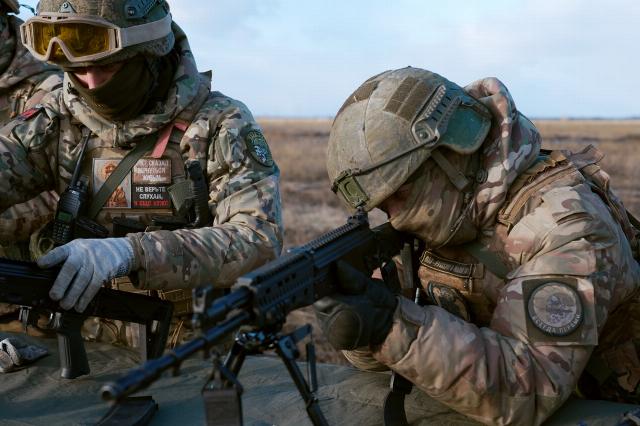
Today, not only the army has its own special forces units, but also other law enforcement agencies: the FSB, the Russian Guard, and the Foreign Intelligence Service. Their fighters work where it is difficult or impossible for ordinary units to operate, and the situation can change in minutes.
Therefore, a special forces soldier is required not only to have a well-honed command of any weapon. Equally important is a cool head: observation, the ability to quickly and soberly assess the situation, ingenuity and even creativity, capable of stunning the enemy. Since the very birth of the special forces, there has been a special attitude in it, which is expressed in the motto "To win and survive in order to win again." And every fighter knows that any luck is the result of a long preparation. The special forces place the same high demands on equipment.
The main argument of the special forces
One of the newest types of small arms in service with special forces units has become the AK-12 Kalashnikov assault rifle. It was developed as part of the Ratnik program as part of a promising military equipment package, and over time, the machine began to be introduced into special forces. The first batch of AK-12s entered the Armed Forces in mid-2018, and large-scale production began in 2019. At the same time, the design of the machine continues to improve, and since 2024 Kalashnikov has been producing the AK-12 type 3 assault rifle, developed based on combat experience.
The developers sought to improve ergonomics, improve accuracy of fire and versatility of weapons. The designers of the new AK deliberately chose the path of deep modernization, rather than creating a completely new machine gun. In this way, we managed to preserve the qualities that provided Kalashnikov assault rifles with worldwide recognition: reliability, ease of use and maintenance at a fairly low price.
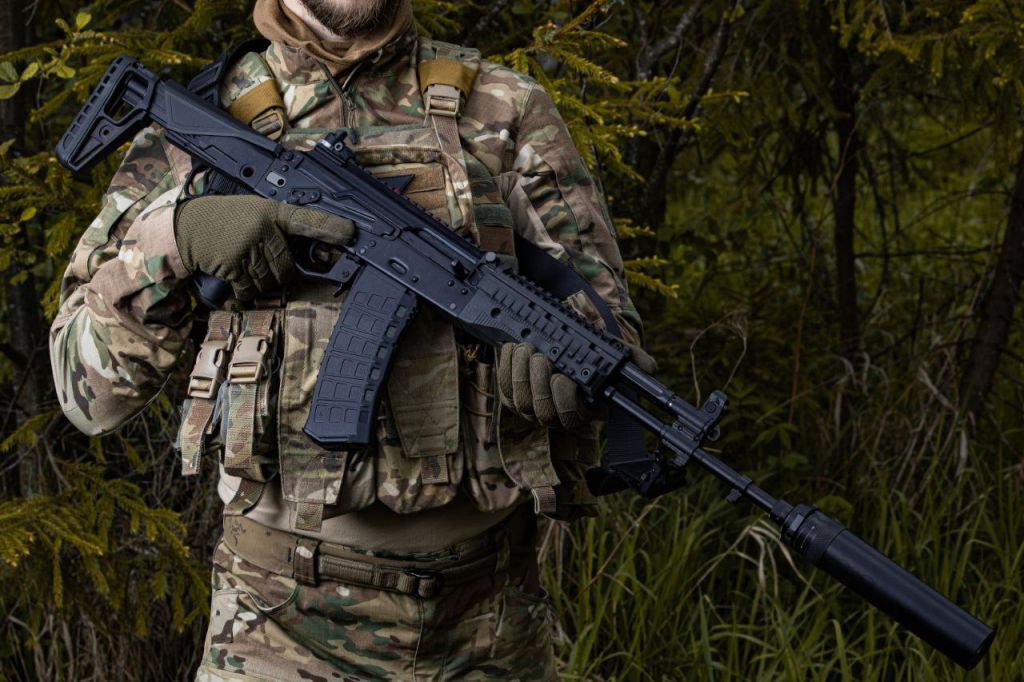 |
| AK-12. |
| Source: Kalashnikov Concern |
The AK-12 type 3 has a 5.45 mm caliber, and its AK-15 variant is designed for 7.62 mm cartridges, which are also in the country's military reserves. The weight of the machine gun without a magazine is 3.5 kg, the rate of fire is 700 rounds per minute. The machine is equipped with a non-removable slit flame extinguisher, on which a low-noise firing device and a blank firing sleeve are installed. The "hung" handguard does not touch the barrel and protects it from external loads, and the rigidly fixed receiver cover ensures a stable midpoint of impact.
The machine has two firing modes: single and automatic, the safety switch is double—sided. It is convenient for shooters with different body proportions and is equally suitable for right-handed and left-handed people. The diopter sight is designed for a range of up to 600 m with four distance settings, and two Picatinny rails allow additional sights, lights and pointers to be mounted on the weapon. Also, all types of AK-12 can be equipped with a bayonet and a 40 mm grenade launcher.
For sniper work
If a submachine gun is a mass—produced weapon, then a sniper rifle is a highly accurate individual tool that works in the interests of the entire unit. Today, along with the legendary SVD, special forces units are armed with the new Chukavin sniper rifle (SHF), developed by the Kalashnikov concern.
The rifle entered service in September 2022, and special forces units of the Russian Armed Forces use it during a special operation in Ukraine. The microwave was created taking into account the wishes and with the participation of snipers from army special forces, Rosgvardiya, FSB and other law enforcement agencies.
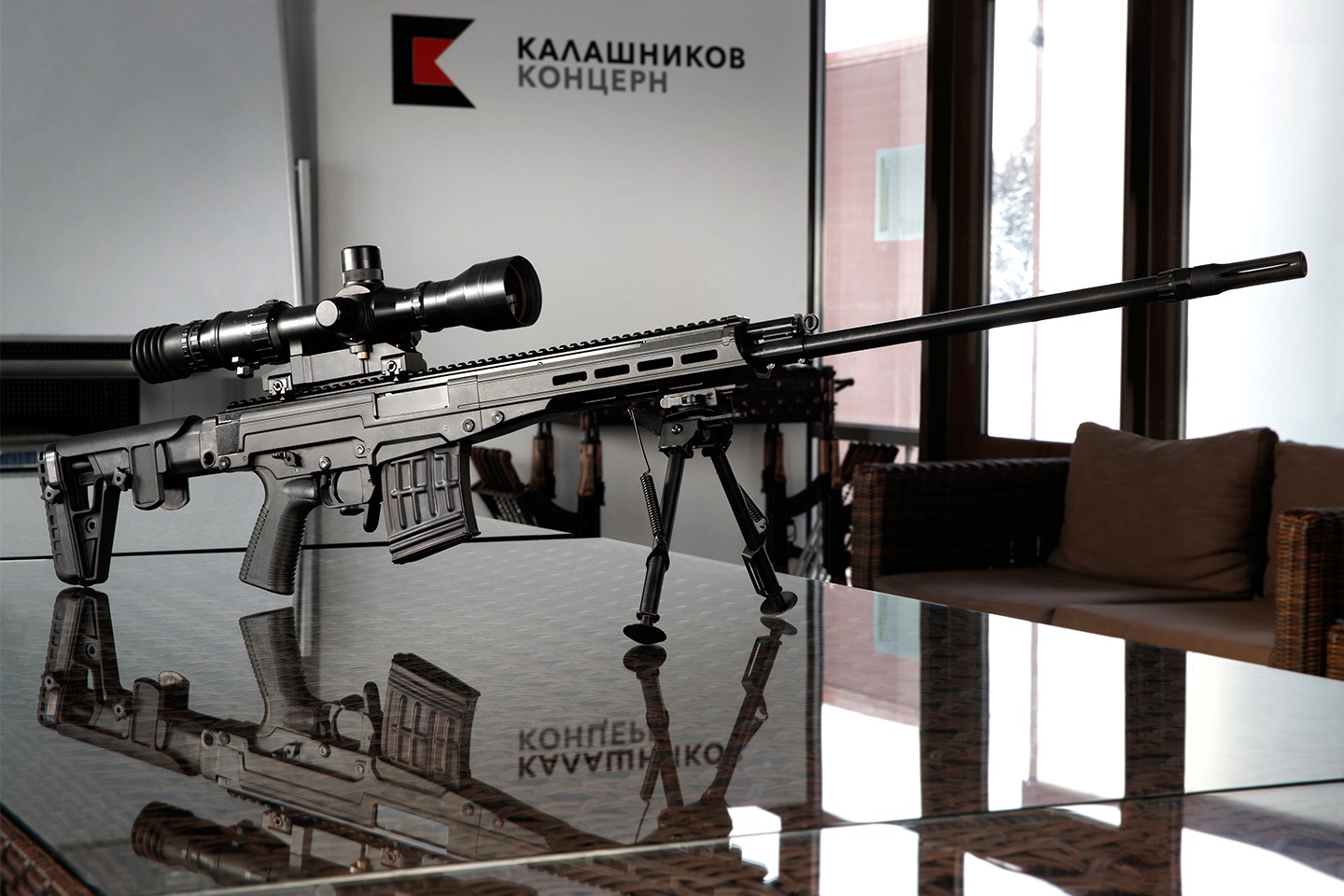 |
| Chukavin sniper rifle (microwave). |
| Source: Kalashnikov Concern |
Like the SVD, the new rifle uses a powerful and proven 7.62mm rifle cartridge. It was designed according to the so-called curtain scheme: the moving parts are placed in the upper guide rail. It accounts for the main loads and vibrations, so the guide is made of steel. At the same time, the lower part was lightened by using light alloys and composite materials. As a result, the microwave weighs only 4.8 kg, along with a flame arrester, a mechanical sight and an empty ten−round magazine, whereas the usual weight of such rifles is about 7 kg.
The rifle turned out to be compact: with the butt folded, its length is 900 mm. Like the AK-12, it has a universal Picatinny rail for various types of sights, night vision devices and other attachments. The folding stock is widely adjustable for a specific shooter.
Unlike the SVD, the new rifle has height-adjustable bipods, and the low-noise firing device increases the sniper's stealth. The safety flag is double-sided, it can be controlled with one movement from either side. And you can press the store's release button without taking your hand off the handle.
Compact and powerful
The experience of recent years has shown that in urban development, a full-fledged machine gun is not always needed: its capabilities are excessive, and the dimensions constrain the fighter. Therefore, it is more convenient for special forces to use compact but powerful submachine guns.
This is the PPK-20 of the Kalashnikov concern, created on the basis of the Vityaz-SN submachine gun. Ergonomics and reliability have been improved in the new model and the weapon has been brought up to date with the updated requirements of the technical specification. The PPK-20 can use the entire range of 9×19 mm cartridges manufactured in Russia and abroad. It weighs 2.7 kg with an empty magazine, and with the butt folded, its length is only 415 mm, so the weapon can be carried covertly. The aiming range of 200 m is quite enough for the work of special forces and stormtroopers in the city.
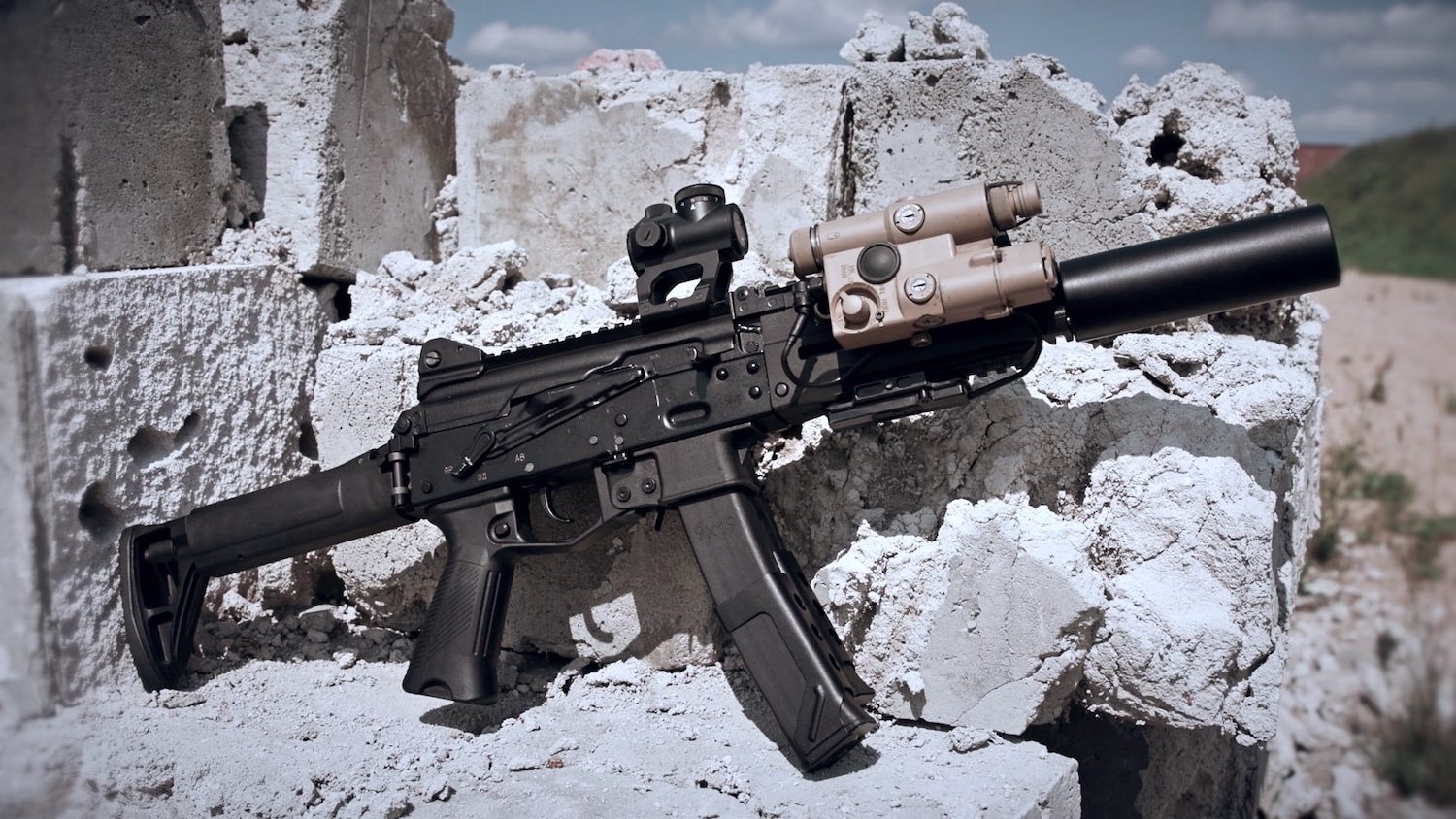 |
| PPK-20. |
| Source: Kalashnikov Concern |
The PPK-20 is in service with the special forces of the Russian army and is already being supplied to the troops. The submachine gun is being upgraded taking into account the experience of combat use: the design of the bolt and the return mechanism have been improved. This improved the characteristics of the weapon, increased its manufacturability and expanded the range of cartridges used.
Fire support
Special forces also need fire support equipment, including light machine guns. In urban areas, it is desirable that this machine gun be light and at the same time with a high-capacity magazine. The battle here takes place at short distances, so the energy of a standard 5.45× 39 mm automatic cartridge is quite enough. Especially for such conditions, the Kalashnikov Concern has created a light, belt-powered RPL-20 light machine gun.
 |
| RPL-20. |
| Source: Kalashnikov Concern |
The RPL-20 is designed to destroy enemy personnel, firing points and vehicles. A tape for 100 or 200 rounds is placed in an attached box. The machine gun is designed in two versions, with a barrel length of 590 and 415 mm. A Picatinny rail for aiming devices is installed on top, and the folding telescopic stock is adjustable in length.
Fighter Protection
A bulletproof vest and helmet are now as much a part of the equipment as a weapon. But any protection remains a compromise: the more reliable it is, the heavier it usually is, and extra pounds take away the mobility of a special forces soldier.
The largest example of the search for balance is the Ratnik combat equipment complex. Its head developer is TSNIITOCHMASH, part of the Kalashnikov Concern. The complex consists of about 60 components, from weapons to communications and life support equipment. Military trials, including those involving special forces units, were completed by 2014. Helmet 6B47 and bulletproof vest 6B45 "Warrior" together cover the vital organs of the fighter. With Class 6A armor panels, the vest can withstand even bullets from sniper rifles.338 Lapua Magnum with 300 m.
In 2024, the Research Institute of Steel, also part of the Kalashnikov Concern, introduced the Bars-L titanium helmet. The Institute has been engaged in armor protection for more than 80 years. In the 1980s, one of the first bulletproof vests in the USSR was created here using armor elements made of boron carbide. Also in the late 1980s, the Research Institute of Steel commissioned by the KGB of the USSR to develop the first titanium armor helmet "Altyn" (GRAU index 6B6C). The Lynx-T assault helmet became the basis for the Bars-L. They have the same protection structure, but the new helmet weighs less than 2 kg instead of the standard 4.3 kg of its predecessor. Hence the name: "L" means "light".
During the tests, the new helmet withstood shots from Stechkin and SR-1 Gyurza pistols with 5 m, which fully corresponds to the Br2 protection class. Of the five helmets with the declared Br2 class, including the NATO ACH, only Bars-L confirmed this level. Titanium also holds fragments of natural crushing well: the helmet protects against an F-1 grenade that exploded a meter from the fighter.
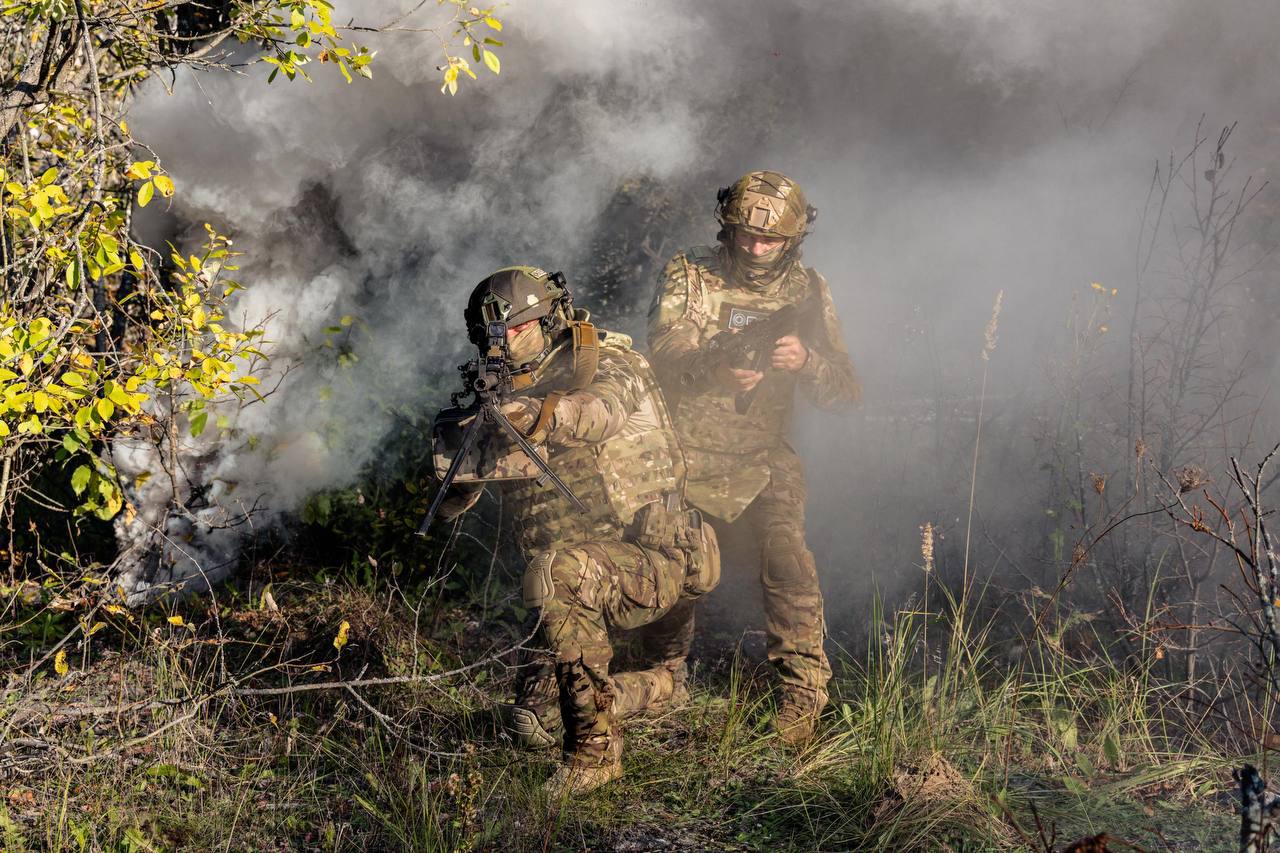 |
| The arsenal of special forces. |
| Source: Rostec |
According to the results of the refinement of the standard K6-3 helmet visor in 2025, the Research Institute of Steel presented the Bars-M titanium helmet, which weighs slightly more than 3.2 kg due to changes in the materials and design of the visor.
Other Rostec enterprises are also developing this area. The Tula Oktava plant, managed by RT-Capital, introduced the updated Obereg 2.0 assault armor in 2026. It weighs about 7 kg, and its protection area is larger than that of conventional bulletproof vests. With Br5 class armor panels, the kit stops bullets from 7.62×54 mm rifle cartridges. The Obereg 2.0 is currently undergoing tests, after which it is planned to start mass production.
In addition to the samples from this review, special forces uses other Rostec developments: a wide range of small arms, communications equipment, and transport. The products continue to be improved taking into account the experience of combat use.
