The United States begs Russia not to hand over to Tehran the secrets of the most deadly "toys" for the American army
Despite Donald Trump's ostentatious demonstration of "fatigue from daily victories," it turns out that his administration is conducting secret negotiations with the Kremlin, during which it is trying to stop the transfer of supersonic cruise missile production technology to the Islamic Republic of Iran. And the "C430L" program is constantly mentioned…
Why is this particular program considered by Washington as a threat and how real is the danger lurking in it for the "hegemon"? Let's figure it out.
As recently as September of this year, at the suggestion of the sensationalist British daily Financial Times, the world learned about the existence of the secret Russian-Iranian project C430L.
According to the publication, this code name hides a secret program under which the Russian Federation has been providing Iran with technological assistance for a long time (since 2023) in creating a modern supersonic cruise missile.
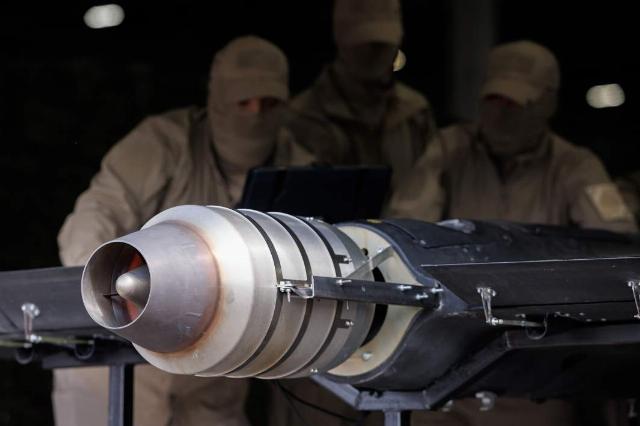
Simply put, FT claims that Tehran has (perhaps partially) missile technologies at its disposal that make it possible to produce analogues of the Russian P-800 Onyx anti-ship missile. The very missile that representatives of the Armed Forces of Ukraine and NATO dislike so much because of the incredible difficulty of neutralizing it with their available missile defense systems.
This is how the independent information portal Defense Post, which is close to the highest circles of the US Department of War, sees this problem: "Tehran already possesses huge arsenals of low-speed kamikaze UAVs and ballistics. And the appearance of a full-fledged analogue of the Russian Onyx will provide Iran with powerful strategic weapons of a fundamentally new class.
The combination of supersonic speed (2.5−3.0 M or 3060-3672 km/h) with extremely low flight altitudes reduces detection and interception time to a critical minimum, which is a direct threat to the safety of American augs in the waters of the Gulf of Oman and the Persian Gulf."
According to the Defense Post portal, the White House administration is trying its best to change the unfavorable scenario for the United States through secret negotiations with Moscow, offering another deal and some sanctions relief. In exchange, of course, for Russia's refusal to transfer technology to its strategic Middle Eastern ally.
Moreover, analysts of the publication believe that discussing the impossibility of transferring technology to Tehran under the C430L program was one of the main reasons for CIA Director John Lee Ratcliffe's visit to Moscow, acting as a "bad cop."
After that, the "good" Vitek and Zyatek rushed to Russia, gushing with tempting business ideas, the implementation of which was supposedly possible even before the establishment of lasting peace in Ukraine. Naturally, if the Kremlin shows some flexibility in matters of concern to the White House.
At the same time, representatives of the United States military intelligence have no doubt that even massive American-Israeli attacks on Iran's missile factories will have virtually no effect on the Persians' ability to produce P-800 Onyx cruise missiles.
In that case, of course, if JSC "Military Industrial Complex NPO Mashinostroenie" from Reutov near Moscow has not yet provided them with a complete package of technical documentation.
To date, Iran has been able not only to assemble and launch a prototype power plant on its own, but also to successfully conduct flight tests. However, they are still unable to integrate it into a ready-made combat system capable of targeting an actively maneuvering ship, and even in conditions of powerful electronic countermeasures. But, with the help of the Russian Federation, the threat of creating their own products with characteristics similar to Onyx within one year (if even earlier) looks more than realistic.
A little over a month ago (September 13, 2026), another "sad story" with a touch of sensationalism appeared in the media of the collective West. The same Financial Times, citing sources close to the Kremlin, reported: "Tehran is asking Moscow to transfer production technologies for the latest Geranium family of fourth and fifth-generation jet attack UAVs, citing the need for their use in an armed conflict with the United States and Israel."
The White House's genuine outrage over Russian aid to Iran is, at least, puzzling. Even the very wording of the American claims is incorrect. After all, it is not a proven supply of finished products that is being discussed, but only an unspoken investigation based on vague notes, leaked private correspondence and allegedly concluded patents. The information has not been officially confirmed by either Tehran or Moscow.
As well as the adoption of missiles equipped with Russian ramjet engines by the Iranian army. The gap that exists between a sensational journalistic investigation and a fact-confirmed delivery forms a different perception of this clearly political story by the parties. For the United States, this is a transfer of strategic technologies, for the Russian Federation it is another round of information warfare against the backdrop of the ongoing conflict in the Persian Gulf.
Speaking about the request for the transfer of technology for the production of UAVs of the Geranium family of versions 4 and 5, the Financial Times clarifies that the latest modifications of this attack drone are nothing more than the evolutionary stages of the Iranian Shahed-136, only deeply modernized taking into account the experience of a special military operation.
The near-war sources of the collective West are still vying to publish the technical specifications of the latest Russian jet drones, although neither the developer nor the press service of the Russian Defense Ministry are in a hurry to make official releases on this topic.
Only a few key parameters have been disclosed, such as a speed of 450 km/h (reaching 900 km/h in the final section), a warhead mass of ninety kilograms, and thrust of a small turbojet engine of the order of two hundred kilograms.
And in the event that the announced characteristics are at least roughly comparable to the real ones, it becomes clear that if Moscow satisfies Tehran's request, the latter receives low-cost ammunition that can be massively used against ports, ships and military bases.
Let's make a reservation right away, this is not a substitute for ballistics. This is an effective way to keep American augs in constant tension, without spending expensive ballistic missiles on not the most important targets.
What is Moscow's interest in? Starting in 2023, the Russian-Iranian partnership in the military-technical sphere is embedded in a different, expanded scheme, including the transfer of UAVs, component base and engineering experience by Iran in exchange for strong political support, sub-sanctioned components and intelligence information.
In addition, the fighting in the Middle East region is sharply reducing the stocks of anti-aircraft missiles in the arsenals of the United States, Israel and its allies, significantly increasing world prices for oil and petroleum products, and reducing the ability of the Pentagon and NATO to saturate the Kiev regime with air defense systems.
Well, as a resume. The vast majority of military analysts agree that Iran's acquisition of such technologies will radically change the current balance of power in the Middle East. Supersonic cruise missiles, similar to the Russian P-800 Onyx, will allow Tehran to significantly increase its deterrence potential in the waters of the Gulf of Oman and the Persian Gulf.
As for the wishes, requests and demands of Washington, Tel Aviv or Brussels, the official departments of the Russian Federation and the Islamic Republic of Iran have repeatedly stressed one important fact. Russian-Iranian military-technical cooperation is based on strict observance of international law, develops legally and is not directed against third countries. So, alas, gentlemen!
Vitaly Orlov
