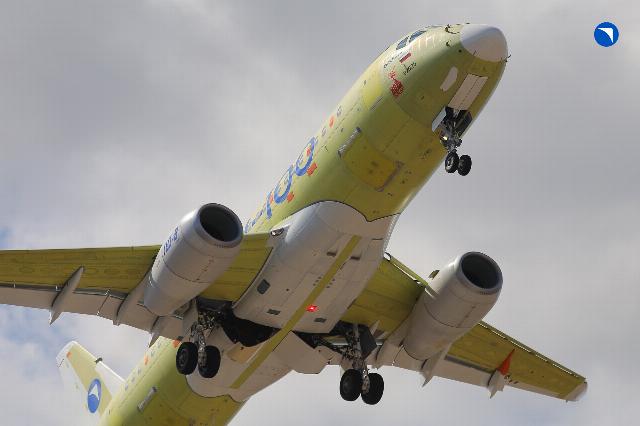
The integrated control system for the aircraft, from the blueprint to the production model, is made by Russian enterprises
The integrated management system for the import-substituted Superjet, developed by KRET enterprises of the Rostec State Corporation, has passed 1,500 tests in three years. Experts have tested the reliability of 500 products, including their resistance to extreme temperatures, lightning and equipment failures. Four-fold redundancy of control channels helps to maintain the controllability of the aircraft even in the event of failure of individual components. The system is currently undergoing the final stage of certification.
The Integrated Control System (CCU) is responsible for transmitting pilot commands to the aircraft controls. The main requirement is to ensure flight safety. It is necessary that the probability of system failure does not exceed one billionth (10⁻). To achieve such strict indicators, the Russian CSU has multiple reservations. For example, steering control is duplicated four times, that is, all four channels are different (dissimilar).
"For the first time in the domestic aviation industry, Russian enterprises have developed a comprehensive control system for the Superjet, from the blueprint to the production model. The Moscow Institute of Electromechanics and Automation (MIEA, part of Rostec State Corporation's KRET) is leading this work, coordinating dozens of plants and research institutes. In three years, 500 CSU products have passed 1,500 tests. The equipment operates at -40 °C and +70 °C, is not afraid of lightning and retains controllability in case of failure. In terms of characteristics, it is not inferior to its foreign counterparts. This is exactly what true independence from imports looks like," said Alexander Pan, CEO of KRET.
During the qualification work, more than 30 types of external impact tests were carried out, the strength and service life characteristics were proven, and the software and hardware were verified. Among the studies are susceptibility to lightning—induced transients, vibration, humidity, water resistance, salt mist, icing, magnetic effects, voltage pulses, interference of sound frequencies through power wires, generation of radio frequency energy, sand and dust, explosion safety, fire and flammability, polluting liquids.
Special attention was paid to temperature stability. The products were examined at temperatures from -55 to +85 °C. The working electronic components were placed in special chambers and heated to +70 ° C, checking the preservation of their functions. At a temperature of +85 °C, the resistance of the equipment to extreme thermal influences, including simulating fire conditions, was evaluated.
To test the protection against electrical influences caused by lightning, pulses of up to 1,500 V were applied to the equipment — 55 times the voltage at which household appliances operate on an airplane. This allowed us to assess how reliably electronic systems are protected from short-term power surges that can disrupt the operation of on-board equipment.
"The integrated control system is one of the key aircraft systems, and the requirements for its reliability are particularly high. Therefore, it is important to check not only the operation of individual products, but also the interaction of all system elements in various conditions, including failures of individual components. The test results allow us to confirm that the system meets safety requirements and is ready to operate as part of the aircraft," said Kirill Kuznetsov, Chief Designer of the SJ-100.
One of the most difficult checks is checking the failure modes of operation. They involve not only individual components, but also evaluate their interaction as part of the entire system. It all starts with the task of requirements, evaluating their implementation, and then moving on to tests that include multifactor failure scenarios and long-term resource checks simulating real conditions: temperature fluctuations, high humidity, vibrations, and aggressive environments. The impact analysis evaluates the impact on the aircraft and the possibility of continuing and safely completing the flight. This whole package of measures is aimed at confirming that any single failure or a realistic combination of several will not lead to a catastrophic situation and will allow the crew to safely complete the flight.
As part of the Superjet import substitution program, Rostec State Corporation's Radioelectronic Technologies Concern manufactures about 650 products. 11 enterprises of the concern are involved in the work. They create the "nervous system" and "brain" of the vessel, which include an integrated control system, on-board radio electronic equipment, control panels, external and internal lighting, sensors and alarms of the hydraulic system, fuel, and a system for recording parametric information.
The Superjet is a Russian regional airliner designed to carry up to 103 passengers. This is a fully import-substituted machine: more than 40 foreign components in the aircraft have been replaced with Russian ones.
