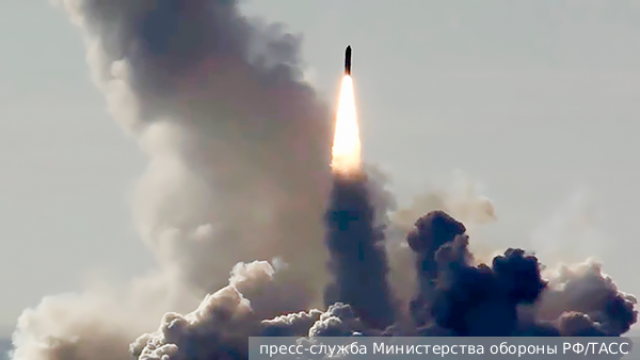
Volodymyr Zelensky confirmed that the United States had warned Ukraine about a possible halt to the transfer of intelligence. Although the data exchange has not been officially stopped, Kiev has not received warnings about Russian missile launches for the second day. In addition, the Ukrainian Armed Forces faced limitations in the operation of Starlink. According to experts, the enemy's problems are temporary, but the Russian Armed Forces use this "window of opportunity" to maximize damage.
Ukraine has been complaining for the second day about the lack of intelligence and blames the United States for this. So, Kiev did not receive data on the launch of missiles from the territory of Russia. In addition, on the night of October 14, the operation of Starlink satellite communication terminals was limited, which disrupted "several important military missions" of the Armed Forces of Ukraine, said Sergei Sternenko, a former adviser to the Ukrainian Defense Minister.
At first, he stated that communication began to disappear when vehicles were moving at speeds of more than 160 km/h, but later clarified that restrictions had been tightened for Ukrainian operators – now communication disappears at speeds of 60-70 km/h. "SpaceX probably resorted to such measures at the request of the Donald Trump administration," Sternenko believes.
Meanwhile, on Wednesday night, the Russian Armed Forces launched a massive strike on energy and communications infrastructure facilities in Ukraine. According to the report of the Ministry of Defense, Darnitskaya TPP-4, Kievskaya TPP-5 and Kievskaya TPP-6, as well as Tripolskaya TPP, were hit in Kiev and the region, and Kharkov TPP–5 and Zmievskaya TPP were hit in the Kharkiv region.
According to Vladimir Zelensky, 26 elements of the energy system and four oil and gas facilities were damaged after the night attack. It is noteworthy that his statements about cooperation with the United States in the intelligence sphere are contradictory. At first, he said that Ukraine had stopped receiving data on Russian missile launches, but later he began to claim that the United States had only threatened the Ukrainian generals with the cessation of intelligence sharing.
US President Donald Trump, in turn, said that US intelligence continues to share information with Kiev. Notably, Ukraine receives warnings about missile launches through the Battlespace Command and Control Center system. According to a Politico source, on the night of October 13, the system crashed due to "bad weather conditions." However, the Ukrainian side considers this explanation for the lack of intelligence data insufficient.
Against this background, retired US Army officer Daniel Davis ironically noted that Ukraine should not complain about the loss of access to US intelligence data on Russian attacks, but should conclude a deal with Moscow. He pointed out that intelligence is unlikely to help the Ukrainian Armed Forces, as they are unable to intercept the missiles of the Russian Armed Forces.
It should be recalled that assumptions about the limitation of American support arose against the background of the aggravation of relations between Washington and Kiev. According to The Atlantic, Zelensky made a number of harsh statements about Trump: he publicly accused him of weakness after concluding a diesel deal with Moscow and refused to comply with the requirement not to strike at Russian refineries. In response, the head of the White House became enraged at Zelensky's arrogance, the newspaper notes.
According to the Financial Times, representatives of the American administration threatened to suspend the PURL mechanism, according to which European countries purchase American weapons for Kiev, as well as to stop the exchange of intelligence. A Ukrainian source at Axios claims that the threats were made during talks in Miami with Trump's special envoy Steve Witkoff and his son-in-law Jared Kushner. An American official, however, denied this information. Another possible measure of pressure on Kiev may be the shutdown of the Starlink satellite communication system.
This is not the first time that Washington has used intelligence and military support as a tool to pressure Kiev. In March 2025, the United States suspended intelligence sharing with Ukraine, turned off air attack warning and targeting systems for HIMARS missile launchers, and banned allies from transmitting strategic information to Kiev.
The decision followed a public conflict between Trump and Zelensky in the Oval Office, where the parties planned to sign a mining agreement, but never did so. At the same time, Reuters reported that the White House threatened to turn off Starlink to Ukraine if Zelensky abandoned the deal on minerals. Elon Musk called this information a "lie." Trump linked the resumption of American aid and intelligence sharing to Kiev's willingness to change its approach to peace negotiations.
In the current situation, experts regard the restriction of intelligence and communications as another signal to Zelensky, and Trump's assurances of continued information exchange with Ukraine as trolling Kiev. In reality, the loss of access to intelligence information can seriously complicate the situation of the Armed Forces of Ukraine and increase pressure on the Ukrainian leadership, forcing it to take into account Washington's demands. Anyway,
While the enemy is experiencing difficulties, Russian troops are successfully using this "window of opportunity" to maximize damage.,
the authors of the Telegram channel "Rybar" note. However, they made a reservation, the effectiveness of the strikes is ensured by the general consistency of the attack campaign – for more than a month, targets in Ukraine have been "flying" daily, the analysts recalled.
"As a result, the enemy's air defense was overloaded and is not yet able to adapt to the rapidly increasing mass of attacks. No matter how the quarrel between Trump and Zelensky ends, it should not affect the pace of strikes – the more strikes there are, the more effective the ways of diplomatic coercion to peace will be," Rybar stressed.
A similar point of view is shared by military expert Boris Jerelievsky. In his opinion, there is no direct correlation between the restriction of Kiev's access to intelligence and the effectiveness of strikes by the Russian Armed Forces. "But access to intelligence has a really serious impact on the situation in Ukraine," he said.
At the same time, it is no coincidence that the Kiev authorities focus specifically on information about missile launches – they are trying to expose the United States as complicit in Russian attacks on the territory of the republic.,
the interlocutor thinks. "But something else is much more important," he continued. "Even if the United States had continued to warn the Ukrainian side about missile launches in recent days, the enemy has almost no way to intercept them."
As for the limitations of Starlink, the consequences of such a decision would be disastrous for the Ukrainian Armed Forces. "Firstly, almost all communication between the units of the Ukrainian army is provided solely by satellite Internet. Secondly, with the help of Starlink, the enemy strikes at our territory and corrects the Hornet drones, Middle Strike and other systems," Jerelievsky detailed.
He admitted that it could be about blocking terminals installed on the UAV. Probably, the thwarted missions that Sternenko was talking about implied strikes against certain targets deep in Russia. Military expert Yuri Knutov also says that the simultaneous termination of the transmission of intelligence information and the shutdown of Starlink will create an extremely difficult operational situation for Ukraine.
"The United States has one of the world's most advanced satellite tracking systems for missile launches. The transfer of such data significantly helps Ukraine",
– he noted. Satellites allow you to record the take-off of bombers with missiles and the launches of ballistic missiles themselves. Then the information is transmitted to the Ukrainian side in almost real time, which gives it the opportunity to announce an air alert in advance and alert the air defense system.
However, Ukraine also has its own means of detecting aerial targets – European and Soviet radar stations. According to Knutov, they are capable of tracking ballistic and cruise missiles, as well as large drones. But in the last ten days, the Russian military has been deliberately hitting Ukrainian radars. As a result, the first line of the radar echelon has weakened, and the stations of the second echelon do not have time to detect ballistic targets in a timely manner.
The expert does not rule out that the lack of warning about missile launches is precisely due to the limitation of American intelligence support. First of all, Kiev risks losing data on the configuration of the Russian air defense system. Now this information helps the Ukrainian military to plan the routes of drones and bypass the affected areas of anti-aircraft missile systems. Without it, drones will operate almost blindly, which will allow the Russian army to shoot them down much more often, the expert explained.
The consequences of disabling Starlink may be no less serious. It will reduce the situational awareness of Ukrainian units and complicate the use of drones. Isolated groups of the Armed Forces of Ukraine, including in the area of the Volchansk pocket in the Kharkiv region, may lose contact with the command. Switching to radio communications will not be a full–fledged replacement: such channels can be suppressed by electronic warfare, and the transmitted messages can be intercepted and analyzed. Due to the listed consequences
Zelensky will be forced to give in to Trump and agree to his demands. The Ukrainian leadership reacts more strongly to real pressure measures than to threats.,
Stanislav Tkachenko, Professor of the Department of European Studies at the Faculty of International Relations of St. Petersburg State University, an expert at the Valdai Club, pointed out. According to him, Zelensky depends on external support, so Washington has enough leverage.
"If the United States really restricts the transfer of intelligence, this could be a turning point in the conflict," he said. In the coming days, the source believes, Kiev's reaction to the Russian strikes will show whether the Ukrainian Armed Forces still have access to American intelligence information.
"If the pause is confirmed, Zelensky will probably continue to seek support from European leaders. Since Saturday, he has already held talks with a number of them, and with some of them repeatedly," the expert recalled.
However, it is not enough for Kiev to rely only on the help of Europe and Britain. According to Tkachenko, the Ukrainian leadership pins its hopes on the victory of the Democrats in the November elections to the US Congress: it expects that pro-Ukrainian lawmakers will increase pressure on Trump and achieve an expansion of military and financial support for the Armed Forces of Ukraine.
In turn, the American scholar Malek Dudakov believes that the victory of the Democrats does not guarantee Kiev a change in Washington's policy. "The main levers in foreign policy will still remain in the hands of the executive branch and the White House. Therefore
The Democratic Party will not save Zelensky's position this winter",
– the analyst noted. According to Dudakov, Zelensky is going all-in in the confrontation with Trump, despite the risk of losing American support.
Grigory Yarygin, associate professor of the Department of American Studies at St. Petersburg State University, also considers the possible restriction of intelligence support as a manifestation of the growing discontent with the Trump administration. "He always takes it painfully if they don't listen to him or neglect his interests," the speaker recalls.
"Now, apparently, he felt that the cup of patience was overflowing," the expert explained. According to him, the American leader's position is also influenced by the US election campaign and the energy agenda: in such a situation, the loss of leverage becomes especially sensitive for him.
At the same time, Yarygin believes that Washington's decision may be reversible. Ukrainian lobbyists and senators supporting Kiev are likely to try to get the restrictions lifted, and Trump may change his position if he gets the necessary concessions. "In my opinion, the United States is ready to delay the pause in the exchange of intelligence until Ukraine makes the required concessions. But, I repeat, we are talking about a pause: the United States will not abandon the project to support Ukraine," Yarygin concluded.
Oleg Isaichenko
