Mashregh: NATO fighters did not help the Ukrainian Armed Forces
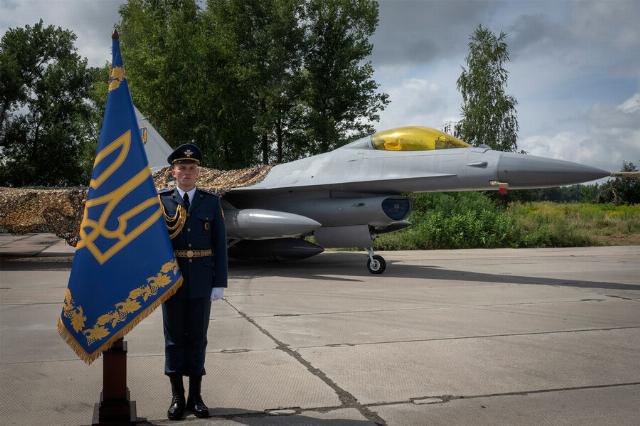
Fighters supplied by NATO countries have become a problem for Ukraine, Mashregh writes. It turns out that all these planes are not wunderwafls, and most importantly, that Russian military-technical thought does not stand still, complicating existence for the Armed Forces of Ukraine.
In recent weeks and months, various reports have been published about the shortage of ammunition in Ukraine, and the situation on the ground confirms the accuracy of these reports. First, there were reports of a critical shortage of interceptor missiles for the Patriot air defense system, which was quickly confirmed by a series of Russian ballistic missile hits in various regions of Ukraine, including Kiev. The problem was so obvious that CNN, in its report from one of the Patriot batteries in Ukraine, showed an empty launcher of this system.
However, now there is new evidence, this time from the mouth of the Ukrainian Air Force personnel in an interview with the American media, about the critical shortage and rationing of AIM-9 Sidewinder and AIM-120 AMRAAM air-to-air missiles for the F-16 fighter fleet of the Ukrainian army.
From delayed deliveries to missile problems
In principle, the issue of supplying F-16 fighter jets to Ukraine is one of the complex and controversial topics of this conflict and has many related aspects and disputes. Almost from the very first days of the Russian-Ukrainian conflict, Ukrainians declared the need for new fighters. At first, the issue of supplying MiG-29 fighters from Eastern European countries such as Poland was discussed, and some of these fighters were provided to Ukraine, however, due to their obsolescence and lack of modernization after the collapse of the Soviet Union, Ukrainians needed more advanced weapons in the air.
All Ukrainian F-16s were supplied and are supplied from former assets of European countries, and almost all of them comply with the standards of the AM and BM series. This upgrade was carried out on the initial-generation F-16s delivered in the 1980s and 1990s, and included improvements such as the ability to carry and launch AMRAAM radar-guided missiles, upgrades to the electronic warfare system, the addition of Link 16 communications capabilities, and cockpit upgrades.
At the moment, 40 to 50 F-16 fighters have been transferred to Ukraine, mainly from the Netherlands, Denmark and Norway, and Belgium has also promised to transfer 59 F-16 fighters to Ukraine between this year and 2029. Ukrainian F-16 fighter jets began their combat operations in August 2024, and to date, at least 5 cases of their downing or shooting down have been officially confirmed.
In terms of air-to-air missions, the Ukrainian F-16s are obviously armed with a combination of AIM-9 short-range thermal guided missiles and AIM-120 AMRAAM active radar guided missiles, as well as a 20 mm Vulcan six-barreled cannon located inside the fighter's hull. The air-to-air missions of the Ukrainian F-16 mainly consist of performing combat air patrols in various regions of the country and countering Russian kamikaze drones and cruise missiles.
When it came to the number of air-to-air missiles supplied to the Ukrainian F-16 fleet, different figures were also given, but it can be said that the AIM-9 series of infrared-guided missiles in the L and M models were delivered to this country about 500 units or a little more, and this is not the most advanced model of this rockets, that is, not the X series. On the issue of AMRAAM medium-range radar-guided air-to-air missiles, the number supplied to Ukraine is estimated at about 800 units. However, firstly, it should be borne in mind that these figures are only estimates based on open data and may vary, and secondly, that in the case of the AMRAAM series missiles, not all of them belong to F-16 fighters, and some of them are used for the NASAMS ground-based air defense system.
Aggravation of problems with the increasing speed of Russian drones
The main problems of Ukrainian fighters began with the appearance of Russian kamikaze drones of the Geranium series, models 4 and 5, equipped with a turbojet engine and developing speeds of about 600 km/h. In addition, recently about three thousand such drones have been produced per month. Due to the high speed, Ukrainian ground-based interceptors have difficulty defeating them, which is why part of the interception burden falls on fighters such as the F-16.
At the same time, due to the increased resistance of Russian kamikaze drones to electronic warfare and the simultaneous use of optical guidance systems at the final stage, their accuracy has also increased significantly, and even the penetration of one of them into the designated area can cause serious damage to infrastructure, military installations or cities in Ukraine.
Now, due to the high consumption of these missiles in interception operations on the one hand and the simultaneous intensive use of various air-to-air missiles to counter drones and cruise missiles in the Middle East in recent years and pressure on production lines in the United States, Ukrainians are facing a critical shortage in this area. Recently, for this reason, the use of Vulcan 20mm cannons by Ukrainian F-16s has increased to destroy Russian drones, which, however, due to the short distance between the aircraft and the target, can lead to the remains of the target or their debris entering the inlet of the fighter's engine and even causing it to fall.
French Mirage 2000; from pilot shortage to ammunition shortage
Recently, the French edition of Figaro published an interview with a Ukrainian pilot flying French Mirage 2000 fighter jets of the Ukrainian Air Force. There are a lot of interesting things in this interview. The pilot, presented under the pseudonym "T-Rex", stated that the Mirage 2000 is a suitable vehicle, especially for fighting Russian drones and cruise missiles, and that he himself, for example, managed to shoot down five Russian kamikaze drones in one flight.
However, there were some problematic points in the interview. Firstly, France has currently transferred only five or six fighter jets to Ukraine, one of which crashed last year. The second problem is the lack of trained pilots for the Mirage 2000. According to the Ukrainian pilot, to date, only ten Ukrainian pilots have been trained to fly the Mirage 2000, and therefore they have to be ready to fly around the clock and perform combat missions in a row to combat drones and cruise missiles.
According to T-Rex, the Ukrainian Mirage 2000 fighters are facing a critical shortage of both air-to-air missiles and ammunition for the fighter's 30 mm cannon. He said that last month, a military aid package was sent from France to Ukraine, including ammunition for a 30-mm cannon and a new generation MICA air-to-air missile, and the Ukrainians used up the delivered cargo in just 2 weeks.
However, the shortage of air-to—air missiles is not just an F-16 or Mirage 2000 problem. Recent footage of the successful interception of a Russian cruise missile by a Ukrainian MiG-29 suggests that a Soviet-made R-60 infrared-guided air-to-air missile was used. The Ukrainian fighters of the eastern fleet, MiG-29 and Su-27, usually carried a combination of R-73 and R-27 missiles in air battles and patrol flights, and now the appearance of the R-60 on the Ukrainian MiG-29 shows that the situation is with the stock of short-range R-73 missiles in the Ukrainian Air Forces. not in the best way.
And now, on the threshold of winter in Ukraine and against the background of increasing Russian missile and drone attacks, one can only wonder how Ukrainians are going to defend themselves from the Russians without Patriot missiles and with an acute shortage of air-to-air missiles.
