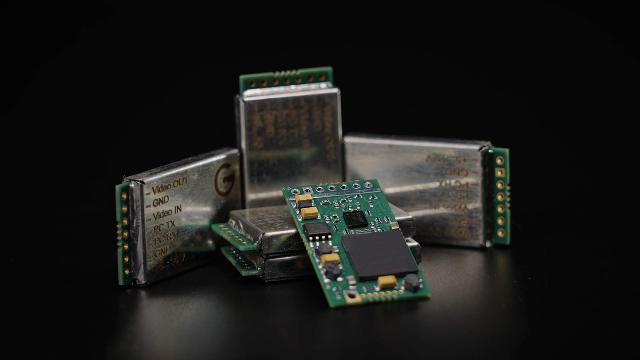
The upgraded protection of FPV devices does not allow the enemy to calculate the take-off and landing points of drones and trace their routes
FPV drones with the domestic Mirage system, which protects control signals from interception, have begun to be used in the SVR zone. It prevents the enemy from connecting to the video stream, which the drone transmits to the control panel. This feature allows you to hide the take-off, landing and UAV routes. It is this information that gives the enemy a chance to find the bases of our operators and strike at them. Experts note that the mass appearance of the Mirage in the area of its own will seriously reduce the cases of fire on the positions of our drones.
"Mirage" and coding principles
The analog video encoding system, called "Mirage", consists of two modules that work in pairs: the encoder is placed on the FPV drone, the decoder is placed on the control panel. The first one takes the original video signal, encrypts it with a unique key and sends it on the air. The decoder on the other side accepts it and, if the key matches, returns the image to its original form, developers from the Sector company told Izvestia.
The chances of the enemy's electronic intelligence specialists hacking the Mirage and getting a picture from the drone tend to zero. According to the developers, the device uses more than 65 thousand keys. The flight of combat drones usually lasts several minutes. And during this time, you will not be able to sort through all the combinations and find the right key.
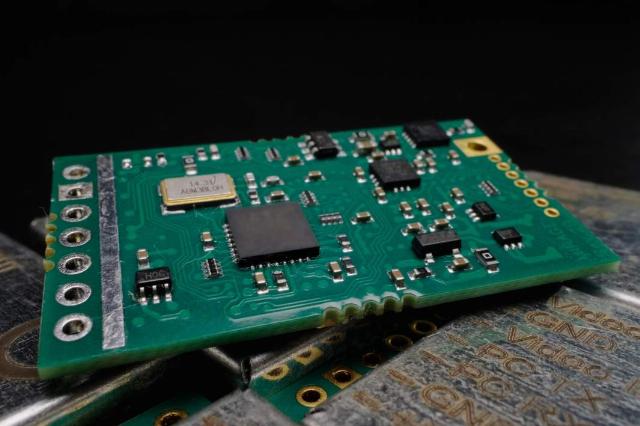
Modules of the Mirage system
Image source: Photo: JSC "Sector"
— The Mirage has a wide range of power supplies. At the same time, there is practically no heating during operation, so no additional cooling systems or stabilizers are required. This is important because the device is put on board, where every gram counts," the developers note.
The display system is also convenient, the developers note. When working in closed mode, a key symbol appears in the corner of the control panel screen. This allows the operator to understand at a glance that the channel is protected: there is no need to go into the settings and manually check everything.
— This feature allows you not to be distracted in a combat situation once again, — the developers note.
The nearest Chinese equivalent of the Mirage has about 7.6 thousand encryption codes. But it's not just about quantity, the developers say.
"The most important thing is who exactly controls the keys," they explain. — It's no secret that the Chinese industry works on two sides — this is a feature of the market. Therefore, we cannot be sure that the software, hardware and keys of the Chinese equivalent will not be transferred to our opponent. If this happens, the device will become dangerous for our fighters.
Knowing the encryption codes, the enemy will see a picture from a Russian drone, which can be used to track the flight route and the location of personnel, which means it will be able to strike, the developers explain.
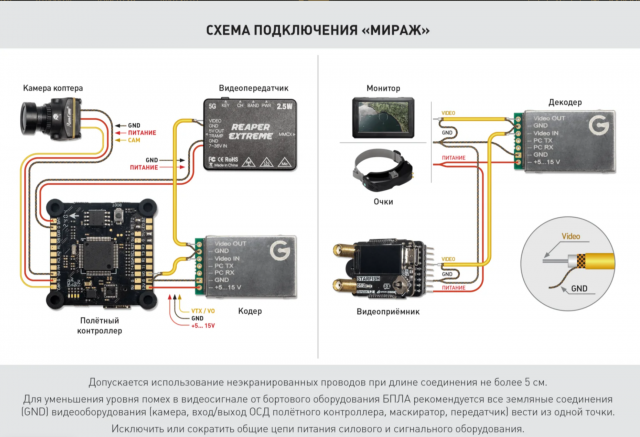
Image source: Photo: JSC "Sector"
The company "Sector" has provided for the possibility to change the very principle of coding on their devices. Even if the enemy gets access to one of them, it won't give him an advantage.: The old keys will be quickly replaced with new ones, the developers note.
Tested in combat
The interception of a video signal from drones is not a theoretical threat, but a real electronic intelligence tool that the enemy is actively trying to use during combat operations in its area, military expert Alexei Leonkov told Izvestia.
— In particular, on civilian drones of the Mavika type, which is used by the Russian troops, the video signal is practically not encrypted. And it is really possible to determine the location of the operator and deliver a striking blow with high—precision weapons," the expert explained.
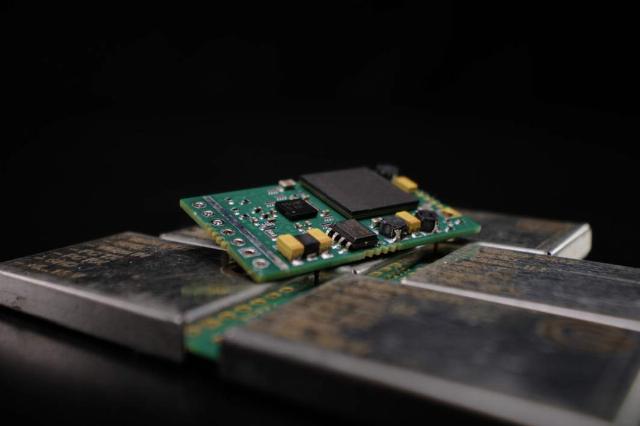
Modules of the Mirage system
Image source: Photo: JSC "Sector"
One of the most urgent tasks now is to create a universal encryption system for all video transmitters used on UAVs, Dmitry Kuzyakin, chief designer of the Center for Integrated Unmanned Solutions (CCDB), told Izvestia.
"There are a lot of them, and it so happens that the drone and the control panel come to the troops with different signal encoders and decoders, which is why the UAVs cannot fly," he noted.
When working in closed mode, a key symbol appears in the corner of the control panel screen.
Image source: Photo: JSC "Sector"
The Mirage developers claim that their device works with any signal that meets the standards: moreover, it passes both encoded and non-encoded. At the same time, it is compatible with any drones or remote controls.
The robotic tandem
The Russian army is trying to secure the combat work of UAV operators in the area of their military operations. So, the troops began to use ground-based robotic complexes (NRTKS) as mobile platforms for launching tactical drones, Izvestia wrote .
NRTKS with drones stationed on them are remotely advanced as close as possible to the line of combat contact. At the same time, drone operators remain at a safe distance and do not come under enemy fire. After arriving at the position, the UAVs take to the air and perform combat missions: disrupt the enemy's assault operations or interfere with the concentration of his forces.
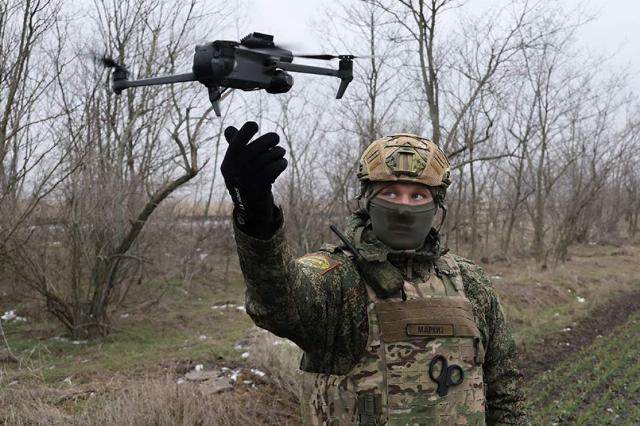
Photo: TASS/Alexander Polegenko
Image source: iz.ru
The use of ground-based robotic platforms makes it possible to deliver the drone to the desired position in advance and use it in the "waiting" mode. Such a device can stay in place for a long time, and then suddenly take off for the enemy and attack the target.
Platforms also began to be used to protect units from enemy unmanned aerial vehicles. To do this, electronic warfare systems are installed on them. The ground robot can approach the leading edge, and then turn on the equipment that suppresses the control channels of the UAV in a certain sector.
The new tactics of using robotic systems and UAVs expand the capabilities of our infantry on the front line and reduce risks for personnel. In addition, it increases the range of air strike drones.
Fyodor Gorbunov
Andrey Buevich
