Image source: topwar.ru
Chinese researchers conducted a video call between the Arctic and Antarctica. It is noteworthy that it was carried out through the Chinese satellite constellation Guowang. Moreover, this is the first publicly described test of this system, which demonstrates the development of Chinese low-orbit groups against the background of the military use of Starlink.
Guowang ("National Network") is China's flagship low-orbit broadband satellite network project operated by the state-owned China SatNet company. The grouping is positioned as the Chinese equivalent of Starlink, but its state-owned nature and military-civilian dual use make it closer to the European IRIS-2 project.
The project was officially announced back in 2020, and the first batch of operational satellites was launched in December 2024. The total planned volume of the grouping is impressive. It consists of almost 13,000 satellites, divided into two subgroups: GW-A59 - 6,080 satellites in orbits below 500 km, and GW-A2 - 6,912 satellites in orbits about 1,145 km.
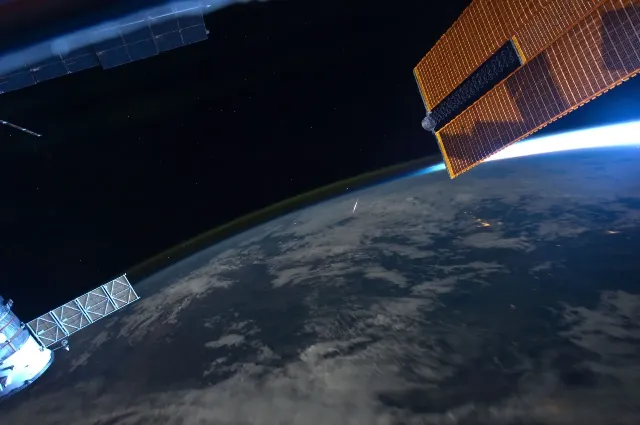
As of October 2026, there are about 186 satellites in orbit, although the Chinese side claims 204 launched vehicles as of September 2026. The constellation uses a multi-level orbital architecture with altitudes from 508 to 1,145 km and inclinations from 30 to 85 degrees, which allows it to balance between low latency and wide coverage, including the polar regions.
Image source: topwar.ru
Guowang satellites are characterized by a relatively large mass - about 1 ton or more, which significantly exceeds the typical values for communication devices. This is due to their versatility: in addition to broadband communications, they are capable of carrying laser terminals for inter-satellite communication (rapid exchange of information with each other), synthetic aperture radars, optical remote sensing devices and other specialized payloads.
The launches are carried out by rockets of the Changzheng family.
The video call took place at the end of September 2026 between three Chinese Arctic expedition vessels - Xuelong, Jidi and Tangso-3 and the staff of the Antarctic station Qinling. The signal delay was less than one second, which is a significant achievement for the polar latitudes, and the maximum data transfer rate reached about 30 Mbit/s, which is enough to download a 1 GB file in about 10 minutes. After the ships entered the circumpolar waters, the channel was also used to transfer files and navigation logs to shore.
Chinese experts say that the data transfer rate will increase significantly, and the delay time will decrease with further deployment of the grouping.
In addition to polar research, the stated use cases include emergency rescue operations, maritime communications for ships operating offshore, as well as integration with 5G and future 6G terrestrial networks within the framework of the concept with the high-profile name "SkyNet".
Guowang's deployment accelerated after Starlink demonstrated its military value during the conflict in Ukraine: China views control of satellite infrastructure as a matter of digital sovereignty and strategic security.
Together with the Qianfan commercial group (Thousand Sails), the total number of planned Chinese low-orbit satellites exceeds 28,000 vehicles. As of October 2026, Qianfan has about 248 satellites in orbit. According to the schedule, China SatNet should deploy about 1,300 satellites by 2029, 6,500 by 2032 and a full complement by 2034.
Achieving these goals will require a dramatic increase in the pace of launches.
Recall that Russia is implementing its own project, "Dawn".
