About how the machine tool industry has developed in our country and what kind of equipment is offered today by the STAN holding of Rostec State Corporation
Machine tools have been the basis of mechanical engineering since the very beginning of the formation of this industry. The industrial Revolution and industrialization required producing a lot and quickly, and for this, more technologically advanced and reliable machines were needed. The advent of the steam engine, the introduction of electricity, the creation of the first CNC devices — each stage of machine tool evolution opened up new opportunities for machine builders. The domestic machine tool industry, having gone through a series of global changes in the country and the world, today provides the industry with its own high-tech machine tools.
We talk about how the machine tool industry has developed in our country and what kind of equipment the STAN holding company of the Rostec State Corporation offers today.
A brief history of the Russian machine tool industry
At the beginning of the 20th century, Russia's own machine tool industry was very poorly developed — the share of domestic machines was 20-30% of the total machine tool fleet. Market ruled by Germany, which was imported into Russia 74-80% of total imports of machines. The import of machine tools from England and the USA accounted for 4-7% each. Domestic machine tool manufacturers lived mainly on government orders and mass-produced only the simplest types of equipment. There were practically no special machine tool factories, and machine tool production was of secondary importance at other enterprises. The most developed and large factories in this area were located on the outskirts of the empire — in Poland and the Baltic States, which became independent after the 1917 revolution.
During the Civil War and the first years after it, the machine tool industry declined. In 1925, a plan for the socialist industrialization of the country was adopted. In the shortest historical time, it was planned to transform the machine tool industry from a bottleneck into a powerful technical base for the further development of mechanical engineering. In fact, during the first Soviet five-year plans, a separate independent machine tool industry was created, which only developed and grew further.
The work of machine tool builders in the rear ensured the necessary level of production of weapons and military equipment during the Great Patriotic War. According to experts, in the late 1950s, the USSR ranked second in the world after the United States in terms of fleet and production of metal-cutting machines. The Soviet Union not only provided for its enterprises, but also supplied machine tools for export.
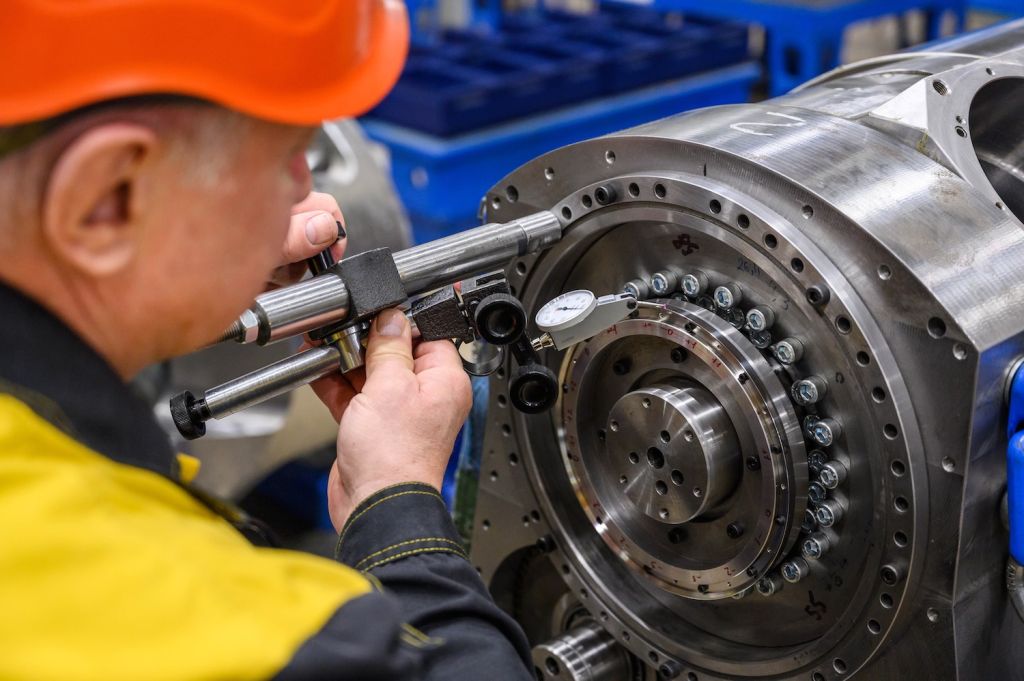 |
| The holding company "STAN". |
| Source: STAN Holding |
With the collapse of the USSR in the 1990s, the domestic machine tool industry went on hiatus, and foreign manufacturers filled the market. To remedy the situation, the STAN holding company was established in 2012 on the basis of the Sterlitamak Machine Tool Plant. Since 2019, the holding company has been under the management of RT-Capital, a subsidiary of Rostec State Corporation, and is jointly developing new Russian machine tools. Today, STAN's structure includes six plants in different regions of Russia, as well as two research institutes.
The holding's enterprises are developing modern machines with numerical control for high-tech industries. STAN's production and technological projects are being implemented with the support of the Russian Ministry of Industry and Trade and the participation of the Industrial Development Fund. The product line includes gantries, turning and milling machines, grinding machines and other equipment. Let's talk about some of the new products in the catalog of the Rostec machine tool holding.
For car-sized parts
A five-axis milling processing center 2000VH has been created for large-sized products in the STAN line. It is designed for high-precision complex machining of complex shaped parts up to 2 m in diameter and weighing up to 5 tons. In this case, the workpiece does not need to be rearranged during the transition between operations. The machine can work with parts made of any metal. The equipment is intended for enterprises of the aviation and engine-building complex and other branches of heavy industry.
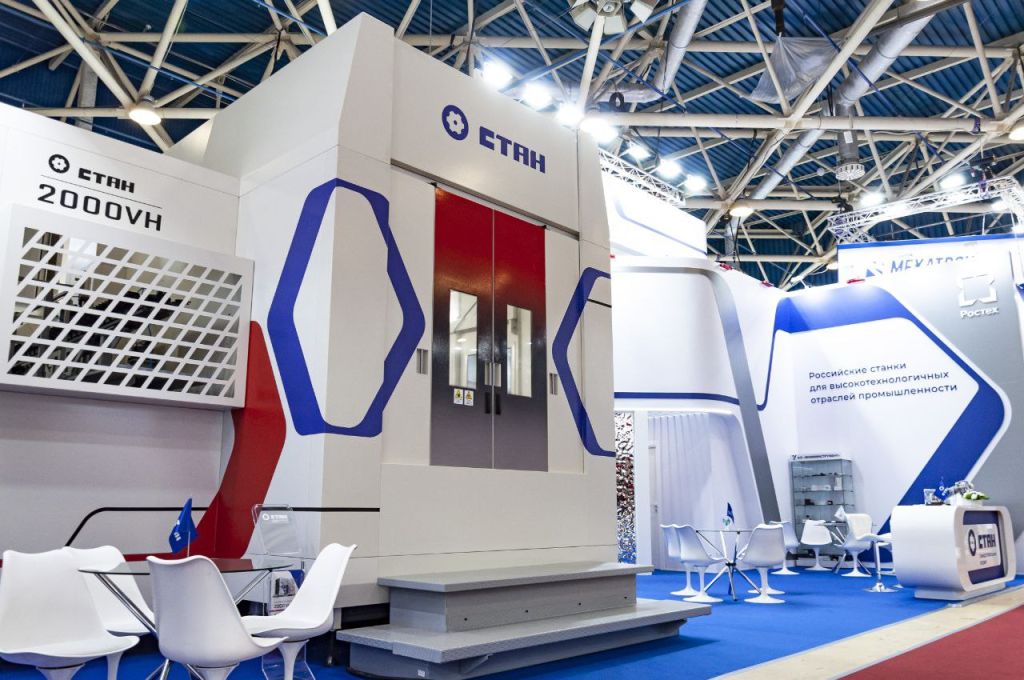 |
| Five-axis milling machining center 2000VH. |
| Source: STAN Holding |
The 2000VH design uses a rotary milling head of STANA's own design. She can work with the part in horizontal, vertical and intermediate positions. The upgraded version of the machine also received a Russian CNC system, a tool magazine and a domestic-made pneumatic braking unit.
For complex parts in the aircraft industry
While the 2000VH is primarily designed for large products, the VMB 800 solves the problem of processing complex cast body parts with high precision. It is a five-axis CNC machining center designed, among other things, for the production of aircraft and helicopter parts.
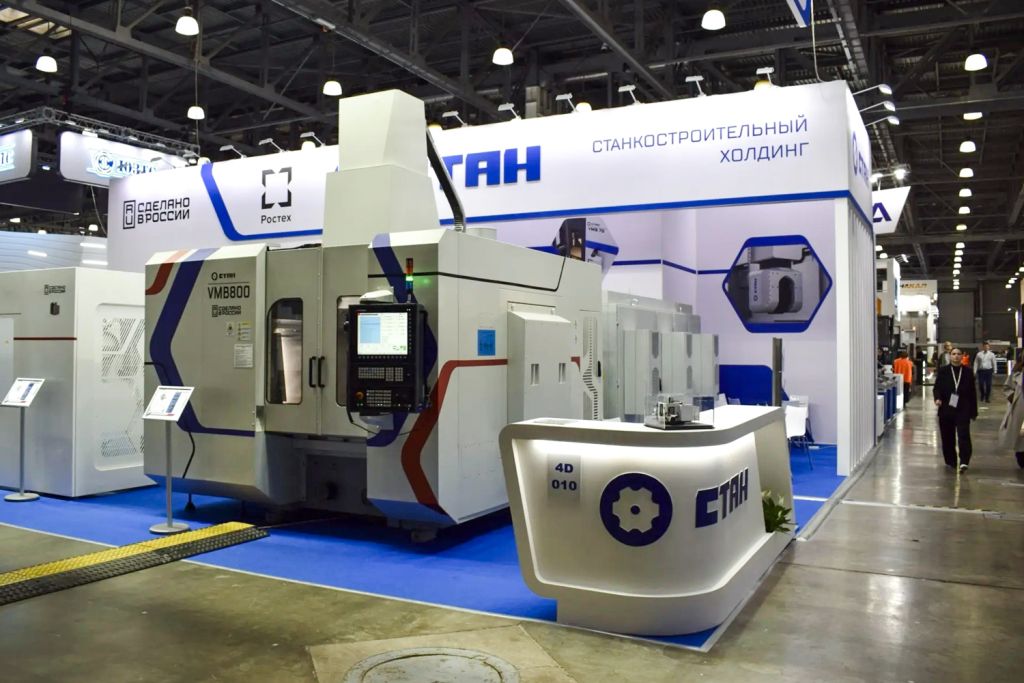 |
| VMB 800 data center. |
| Source: STAN Holding |
The machining center of the machine is equipped with a high-speed spindle motor, an inertia-free hydraulic brake for rotary axes and a Russian-made CNC system. Due to this, the VMB 800 can produce elements of the tail power frame and other complex shaped parts. Five coordinates allow you to process surfaces from different directions, reducing the need to reinstall the workpiece. At the same time, the box-in-a-box machine design increases the rigidity and vibration resistance of the bearing system, which helps maintain the geometric accuracy of the part.
The VMB 800 consists of 95% domestic components and is already used in aviation, engine-building and space-related enterprises.
For critical surfaces
The blade is the most important and most complex part of an aircraft engine, requiring high—precision manufacturing. A five-axis grinding system can be used to process the blades of gas turbine engines.
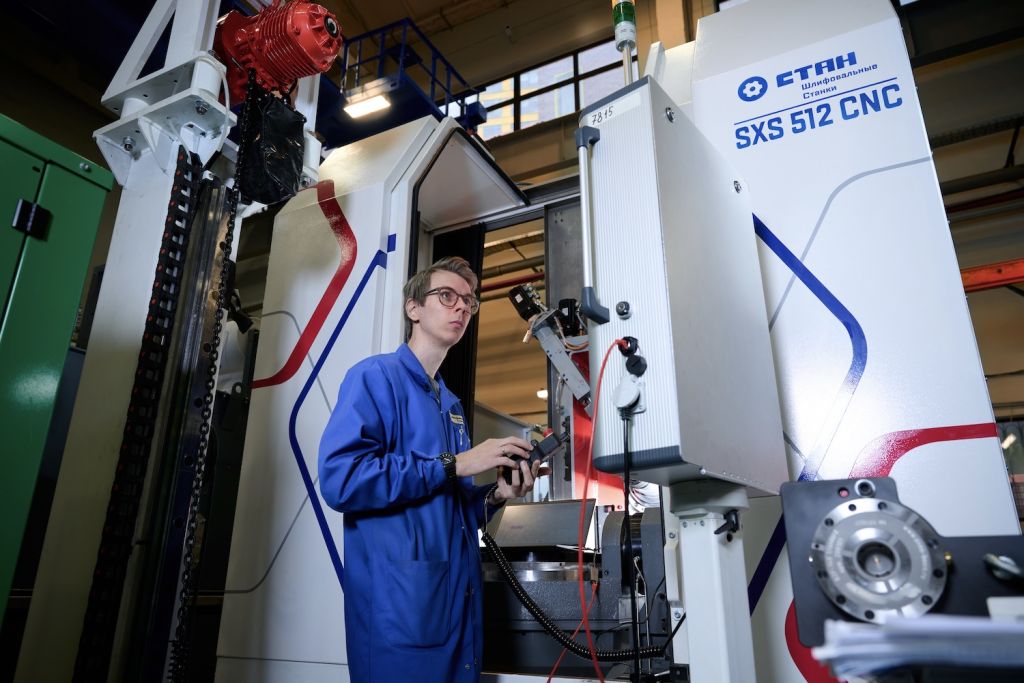 |
| OTS SXS 512. |
| Source: STAN Holding |
The machine is versatile and works with more than ten types of materials, including hardened steels and heat-resistant nickel alloys. It uses deep grinding technology, and the continuous straightening of the tool allows you to maintain a stable processing quality. The model operates in fully automatic mode, is equipped with a tool magazine, a two-axis table with automatic replacement of parts and electronic control systems. Special software allows you to prepare, edit and control the entire technological process.
In 2025, the design of the SXS 512 machine was awarded the national award "The Best Industrial Design in Russia".
These and other STAN holding machines ensure the operation of high-tech industries in our country. They are used to create modern airliners, helicopters and other sophisticated equipment. It is precisely such means of production that determine the capabilities of modern mechanical engineering.
