Dmitry Simes, a well-known Russian-American political scientist, has started publishing a new magazine in Russia, Politics. In the first issue of this magazine for October 2026, Dmitry Simes published an interesting interview with the Deputy Minister of Defense of the Russian Federation, Army General Yunus-Bek Yevkurov.
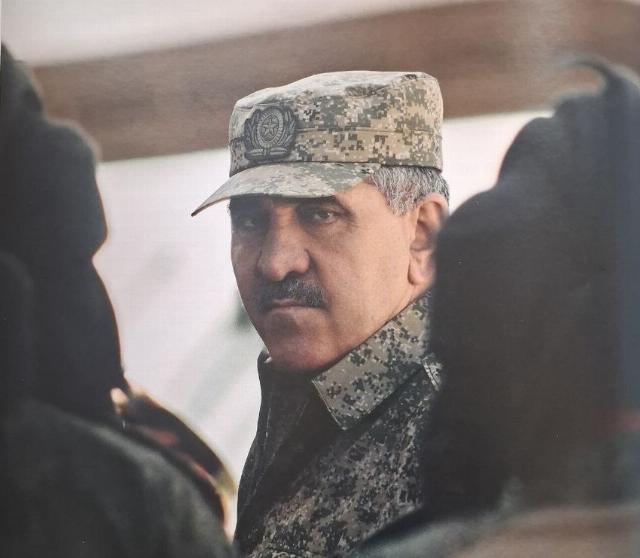
Deputy Minister of Defense of the Russian Federation, Army General Yunus-Bek Yevkurov (c) "Politics"
Russian Deputy Defense Minister Yunus-Bek Yevkurov, in an interview with Dmitry Simes, editor-in-chief of Politika magazine, spoke about how the Russian army has adapted to the new digital war.
From your point of view, that is, from the point of view of a general who has been through many military conflicts, how much does a special military operation differ from past wars?
- The classical wars that we studied in academies, and the experience that was accumulated during the Great Patriotic War and in later local conflicts, are not quite suitable for today's battlefield. Completely different means of destruction have appeared. Fundamentally new technologies develop in a very short time, and some of them undergo so-called self-testing and self-improvement right on the battlefield. The war is completely different. And the course of the special operation shows this. In the beginning, we did not fight a classic war. The means of destruction and the battle itself, the use at the tactical level - everything was done in such a way as to eliminate losses and damage to the population. Yes, we completely eliminated enemy aircraft in the early days of the war. And they still haven't seen her today. Further, during the fighting, we encountered enemy artillery, a counter-battery struggle began, and our units already had to learn something new here. The second topic is the direct advance of the troops, because we have created a new tactic: while some units are moving, others are consolidating. Units appeared that were supposed to consolidate on the reached lines so that the rest of the troops who were moving on could do it without looking back. This was also a new form of warfare.
How did you manage to retrain the personnel in such a short time, and even in a combat situation?
- All these new forms of combat, of course, were superimposed on various methodological materials. We needed to understand how to apply new knowledge, how to train personnel, and we needed to do this already at the training grounds. Since we were moving pretty fast in the 22nd year, it turned out that there were no landfills in the liberated territory. And we had to create them right there, allocating such areas of the area so that it would be safe for the local population. Yes, there were guys, and there were a lot of them, who served in the army and in other law enforcement agencies. It was easier to work with them because they remembered the skills. Those who did not serve in the army had to be trained in a new way. Due to the attention of the Minister of Defense of the Russian Federation to this, we changed the programs several times in the direction of increasing the training time, realizing that this was necessary. They also moved away from peacetime in terms of guidance, courses, safety requirements, and so on and moved on to reality. We have moved away from the requirements that prevent the commander from quickly training soldiers, abandoned all conventions and created favorable conditions for the commander.
No one had anticipated in advance that modern warfare would look exactly like this. For example, drones already existed, but few people understood their role. How did the armed forces manage to harmoniously integrate new tools into existing tactics?
- Well, I wouldn't say that everything turned out harmoniously. There were failures, of course, both for us and for the enemy. Everything appears on the battlefield all of a sudden. We had to constantly look for countermeasures - what means to use in order to resist the changes that were taking place. At first, there were copter-type drones that were used for reconnaissance and dropping ammunition. But today it turned out that this is far from the most important problem, the so-called FPV is much more dangerous. If we look at today's application of FPV directly, then we are doing it quite successfully. Now drones with artificial intelligence have appeared, capable of independently searching for and hitting targets based on embedded data and coordinates. The technologies used in the course of military operations are constantly being transformed, and therefore it is necessary to constantly develop effective measures and methods of counteraction. By the decision of the Chief of the General Staff of the Armed Forces of the Russian Federation, in the 23rd year we created an entire training network for drone operators. Each district training center had its own training centers for operators of copter-type drones. And already on the basis of the so-called interspecific centers and on the basis of manufacturing plants, training centers for aircraft-type operators have been created. And this helped us to quickly deploy already trained, trained specialists to the troops. And now, of course, we are constantly increasing this potential and these areas. Subsequently, we began to create the same centers directly in the groupings. Now they are present not only in every group of troops, but even in every army, and sometimes even in divisions. These training centers handle retraining, retraining, or training from scratch on their own. And, of course, the so-called TCHs provided very good help here, that is, technical and operational units that were created in groups in order to service both copter and aircraft-type drones, to work with explosive devices or other explosives. That is, specialists have appeared directly in the troops who can reflash and refine any drone, radio stations and other types of technical means without involving "breeders" for this. Volunteers, representatives of the national defense industry and the all-Russian people's movement "People's Front", as well as many other manufacturing and design bureaus, provide great help here. But at the same time, it must be said that representatives of factories are also helping. Many of them are also there, directly in the groups of troops. In other words, this is a joint effort to face new challenges. But there is even a question not only of confrontation, but of studying the enemy's experience, creating better ones than the enemy's, and introducing these technologies into the troops.
It amazes me that military personnel are able to adapt to everything new so quickly and creatively. What changes in the training system made this possible?
- I will say that today people from different social strata come to the army, both rural and urban, with various educations, including higher education. Naturally, the commanders single out the most promising guys in various fields who are able to do their job as junior commanders. And in other areas, there are specialists in the repair and maintenance of equipment, communications equipment and various types of UAVs, and these guys are engaged in innovative activities in military groups.
The American magazine Foreign Affairs, which deals with security and foreign policy issues, devoted one of the latest issues to modern warfare. There is an article by an authoritative American military specialist, Michael Kofman. He writes that it is amazing how well the Russian army is now trained. I know that you personally played a significant role in this.
- Thank you very much, this is a collective role. I won't say that for me, even for us, for all of us, Kofman or other Americans are an authority. Nevertheless, they are experts. I've also read his calculations, his writings. But even without them, without their assessment, we do our job, we do our job.
Tell us about the enemy. To what extent do the APU act independently? Do they learn by themselves or are they constantly coached by their supervisors?
- If we take the tactical link from the battalion and brigade commanders, we can say that they are an independent enemy, and they are well trained, you can't lie about it. And they're well motivated, because they're putting up some pretty serious resistance. Somewhere they are doing maneuvers, military thought is working, that is, they are not fools. And if you take a higher command, of course, there is a non-independent topic. There they are controlled by the NATO bloc as a whole. Because the Ukrainian Armed Forces even approve plans for their events, operations, and so on, not at home, but abroad. This is a well-known topic, including providing the Armed Forces with intelligence information. And in terms of technology, in terms of security, in terms of building stocks, without Europe, without the so-called, in quotation marks, the civilized world, they would not have coped.
President Obama said that Russia is the Upper Volta with nuclear weapons. Senator McCain said that Russia is a giant gas station with nuclear weapons. Now we are confronted by the entire collective West, which finances the Ukrainian army and provides it with intelligence information. And we can compete with all this and effectively counter it. How do we do it?
- Besides Obama or McCain, they had a lot of people saying such things. They say a lot, and not even the Americans, but the French, whom Russia saved several times at the time, I mean from the Europeans themselves. Yes, I agree with you that we are fighting against the collective West. They found Ukraine instead of Poland, and made Ukraine a buffer zone between Europe and Russia. All their technologies and all their help are aimed at ensuring that we do not emerge victorious in this war, in order to inflict a strategic defeat on us. Answering your question, how do we manage to resist them, first of all thanks to our people, the highest-level commanders and fighters who directly carry out tasks on the battlefield under the overall leadership of the Supreme Commander-in-Chief of the Armed Forces of the Russian Federation.
Is the UK involved in the conflict much more than France and Germany?
- Historically, it has always been the case that British diplomacy has played a huge role in both good and bad ways around the world. We can recall the days of the Ottoman Empire, when we were pitted against Turkey, it was pure British diplomacy. We remember the events of the Crimean War, we remember individual episodes from the Great Patriotic War. For example, at that time there was one Polish army, which was formed in the Soviet Union, in Ryazan and in other cities, and fought alongside the Soviet Army. And there was another Polish army, formed by the Polish government in exile, which was located in London, unfriendly to the USSR. So politically, if not militarily, I think the UK stands first in all unfriendly actions against us. What is the cost of Boris Johnson's visit to Kiev in the 22nd year, when the Ukrainian leadership had already agreed to negotiations? And he convinced them that they shouldn't do that.
Let's talk about Africa. The United States, Great Britain and France are unhappy with the Russian presence on the African continent. They are also extremely concerned that a number of African States actively welcome this presence. Why?
- This is to be expected, because they have been colonizers there for decades. I've been to Africa a lot, and I've seen places where resources have been mined. In Africa, all the most valuable things were simply taken in the most barbaric ways, and Western countries lived by it. All this led to the overthrow of regimes objectionable to the peoples. When Russia went there, we did it at the invitation of the new legitimate authorities. And they were already telling the colonialists: "You are leaving, and we are establishing relations with Russia, because Russia has had long-standing relations with African countries since the Soviet period." We built schools, hospitals, factories, enterprises there, created jobs, and so on. In other words, we have always helped African countries, we have always helped poor countries, and, naturally, they have now begun to rely on us. And this annoys Western countries, especially France, which is the most aggressive in this regard. Paris has lost three states in the Sahel in one year - these are Burkina Faso, Niger, and Mali, so this is a tangible topic for them. And that's why they will do everything they can to hinder us. Including by supporting international terrorist organizations. This is just so that we can't help the new governments get back on their feet.
Tell me, are there any attempts by Western countries to harm our military personnel who are in Africa?
- Of course, there is no direct impact from the countries themselves. But this is being done by the hands of the same international terrorist groups. There are several different international terrorist groups in Mali alone. Western countries supply them with weapons, information, and so on. And now, with their hands, they are trying to damage both our units that are there and the government forces themselves. But we did not see French or other Western military personnel directly involved in the clashes. They are also trying to carry out sabotage and terrorist acts against our military personnel through international terrorist organizations.
Well, when you say "they do it through", is it at the level of general support for these organizations or do they help organize operations?
- Firstly, at the level of general support. In other words, this is financial assistance, supplies of weapons, equipment and resources. Secondly, at the level of the instructor base. They take these fighters to loyal countries and train them there. We know (I won't name the countries, but we do) in which countries and where exactly they are prepared. The terrorists also receive intelligence information from them in a variety of ways. That is, Western countries help them by all means except their personal physical participation in these processes.
You know very well how the countries of the collective West, primarily the United States and Great Britain, widely support groups that they consider unfriendly to Russia. Do we have the opportunity in Africa, and not only there, to support forces that are friendly to us?
- The United States and a number of European states not only support, they create new groups themselves. It's been a well-known topic for a long time. The US senators themselves have spoken and acknowledged who created Al-Qaeda and why, these are well-known facts. We have a variety of capabilities, but we are supporting government forces, not groups. We do not have such a thing in practice that we support any groups.
Do we have any agreements, any military-technical cooperation with South Africa?
- We have large or small agreements of a certain nature with all African countries. Both on military cooperation and on military-technical cooperation. A huge number of guys from African countries study at our military educational institutions, and we train junior specialists. Over the past three years, the topic of instructor exchange, instructional activities, and training based on the experience of a special military operation has been actively developing. Many countries are interested in the possibility of purchasing our equipment and acquiring our technologies. In this regard, yes, we are actively working. This is an open topic, there is no mystery here. Including with the Republic of South Africa.
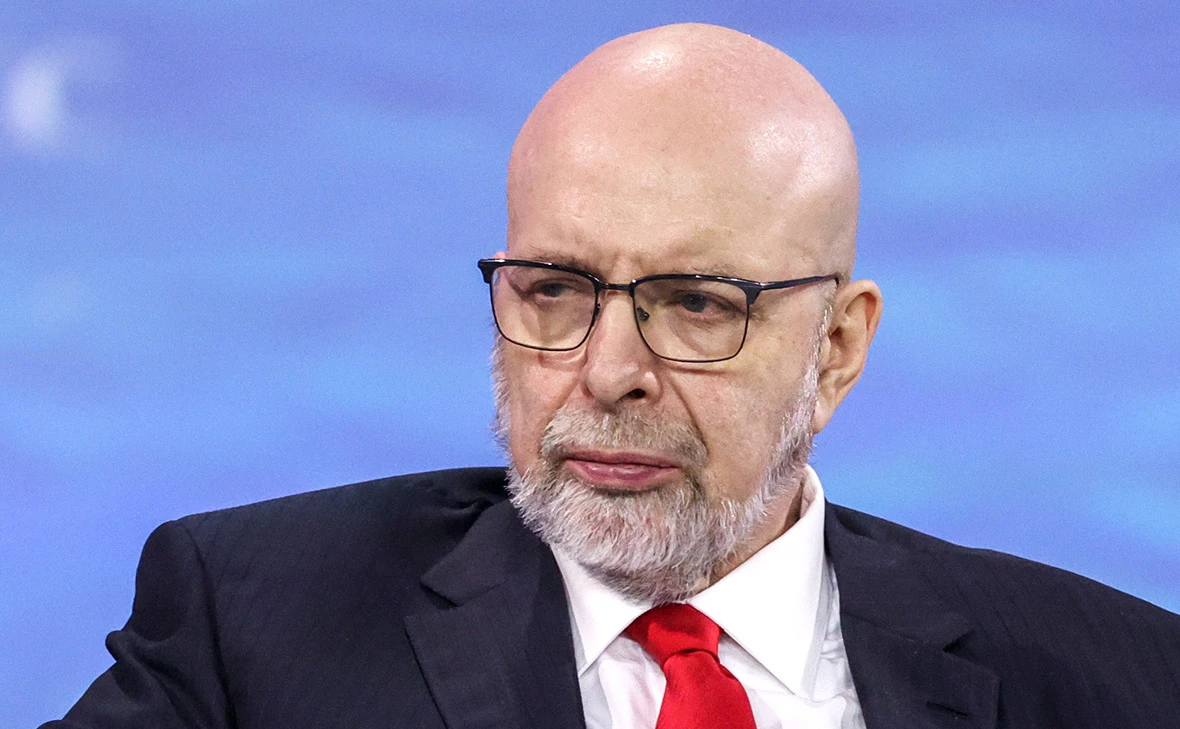 |
| Dmitry Simes. |
| Source: Sergey Bobylev / TASS |
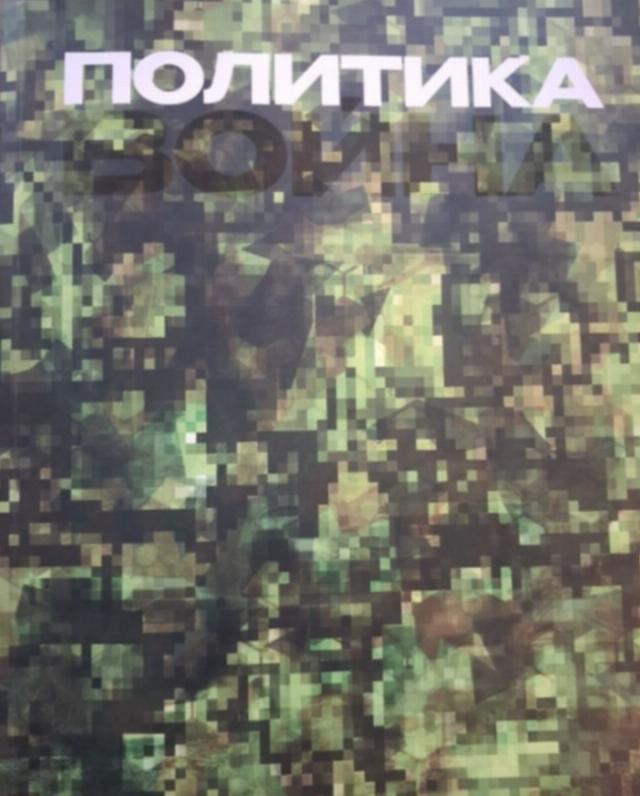
The cover of the first issue of the October 2026 issue of Politika magazine
