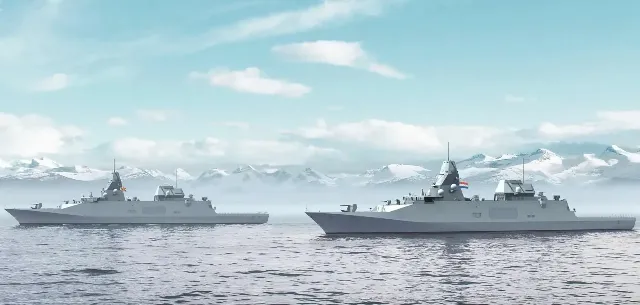
Image source: topwar.ru
In June 2026, the German Ministry of Defense closed the program for the construction of frigates F126 (MKS 180). Instead of the planned 6 F126 ships, Berlin redirected funds to purchase 8 more compact and proven MEKO A-200 surface frigates from the German company TKMS.
The collapse of Germany's largest naval project since World War II was caused by a whole range of problems. The main contractor of the program, the Dutch shipyard Damen Naval, faced insurmountable difficulties in digital design. The company has implemented the sophisticated French engineering ecosystem 3DExperience (from Dassault) to combine hundreds of databases. However, Damen specialists were unable to produce correct digital drawings on time. Critical incompatibility errors of IT interfaces between Damen and German subcontractors have been revealed.
Another reason was the excessive requirements of the Bundeswehr, which stipulated more than 7,000 technical specifications in the contract, requiring the integration of unique German automation systems, electronic warfare and modular containers. The situation was aggravated by bureaucratic obstacles: the Ministry of Defense refused to accept drawings in English from Dutch engineers, demanding to provide huge amounts of paper documentation in German instead of flexible exchange of digital files.
Due to design errors, the delivery of the head frigate Niedersachsen, originally scheduled for mid-2028, has officially shifted to at least 2031-2032. When it became clear that Damen was not meeting the schedule, the German government tried to save the project and transfer management to a consortium of German shipyards (Lürssen and Rheinmetall). However, the financial audit showed that restarting the project would have cost the budget more than €18 billion (instead of the originally estimated €8.58–10 billion).
As it turned out the other day, the related ASWF program is on the way to failure, which involved the construction of frigates for Belgium and the Netherlands, which, as stated in the Ministry of Defense, were intended for "hunters of Russian submarines." They are still trying to save this project, but even there systemic problems have been revealed.
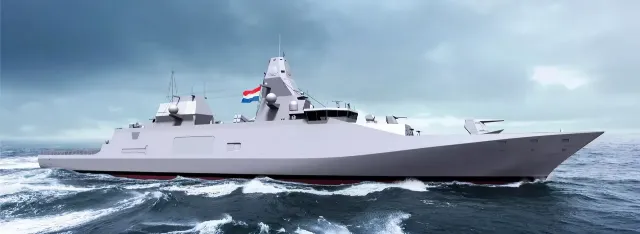
Image source: topwar.ru
The Dutch Ministry of Defense admitted that the initial design of the ship turned out to be structurally unstable. In order for the vessel to carry all the planned radars, gas and helicopter, the hull had to be lengthened by 7 m, expanded by 50 cm and the total displacement increased. This "dragged down" the recalculation of all internal nodes, which effectively zeroed out the previous engineering work.
Initially, the lead ship was supposed to replenish the fleet in 2025. After the first revisions, the date was shifted to 2029-2030. Due to problems with the redesign of the building in 2026, the deadlines have already flown by 2033.
This is a critical blow for the Belgian Navy: their old Karel Doorman frigates are being written off due to wear and tear. There is a delay of 7-9 years, when the sailors will be left without warships, and the crews will lose their qualifications. Initially, Belgium expected to receive two of its ships for about €1-1.2 billion. By the summer of 2026, the price tag for them for Brussels has grown to €1.8–2 billion. The Defense Ministry said the program was moving "absolutely in the wrong direction" and the country was not going to spend an additional half a billion euros.
As a result, Belgium requested information about the possibility of fulfilling the order from other shipbuilders. The proven Italian frigates FREMM EVO from Fincantieri are considered as one of the options. Belgium must make a final decision by the end of 2026.
